
帐篷

Search documents
整个社会都在喊没钱了,为什么这些公司反而年赚百亿?
创业家· 2026-03-23 10:15
Core Insights - The article emphasizes that despite the prevailing narrative of economic hardship, certain industries are thriving and generating substantial profits, particularly in Japan and China [3][4]. - It identifies eight key sectors that present significant business opportunities amid a low-desire society, highlighting shifts in consumer behavior and spending patterns [4][5]. Group 1: Key Industries - **Second-Hand Economy**: The second-hand luxury market in Japan, exemplified by "Daikokuya," has seen a surge in revenue, mirroring trends in China with platforms like "Hongbulin" and "Panghu" experiencing significant growth [6][7][8]. - **Pet Economy**: With declining birth rates, spending on pets has increased, as seen with brands like "Inaba" in Japan and "Guai Bao" in China, indicating a robust market for pet food and healthcare products [12][13][15]. - **Adult Care**: The adult diaper market in Japan has surpassed $10 billion, showcasing the economic potential of catering to an aging population [17][18][19]. - **Health Food and Beverages**: The rise in health consciousness has led to increased demand for sugar-free products and functional beverages, with brands like "Oriental Tree Leaf" and "East Peak" gaining traction in China [21][22]. Group 2: Emerging Trends - **Beauty Economy**: The demand for beauty products, including collagen supplements and at-home beauty devices, remains strong, indicating that consumers prioritize personal care even in economic downturns [23][24][26]. - **Outdoor Recreation**: Companies like "Snow Peak" in Japan are capitalizing on the outdoor gear market, reflecting a growing interest in leisure activities despite economic constraints [29][31]. - **Convenience Economy**: The trend towards convenience is evident in the growth of frozen food brands and smart home appliances, which cater to consumers' desire to save time [39][40][42]. - **Low-Desire Society**: The article posits that while some may view the current market as a downturn, it presents opportunities for those willing to invest in counter-cyclical sectors [43][44].


经济越来越差,这八大行业越赚爆!
创业家· 2026-03-19 10:15
Core Insights - The article emphasizes that despite the prevailing narrative of economic hardship, certain industries are thriving and generating significant profits, particularly in the context of Japan's "lost 30 years" and its implications for China [3][4]. Group 1: Emerging Business Opportunities - The concept of a "low-desire society" does not equate to a lack of opportunities; instead, it presents new avenues for growth [4]. - Consumption segmentation and demand migration are identified as the largest business opportunities in the current market landscape [5]. Group 2: Key Industries and Trends - **Second-Hand Economy**: As consumers shift away from luxury goods, the second-hand market is booming, with companies like Hongbulin and Panghu experiencing significant growth [6][7][9]. - **Pet Economy**: With declining birth rates, spending on pets is increasing, as seen with brands like Inaba in Japan and Guobao in China [11][12][13][15]. - **Adult Care Products**: The adult diaper market in Japan has surpassed $10 billion, indicating a substantial growth potential for similar products in China [16][17][18]. - **Health Food and Beverages**: The rise in health consciousness has led to increased demand for sugar-free and functional beverages, with brands like Dongfang Shuye and Jianchun gaining traction [21]. - **Beauty and Aesthetics**: The beauty economy remains robust, with products like collagen supplements and home beauty devices seeing high sales, indicating a persistent consumer desire for self-improvement [23]. - **Outdoor and Leisure Products**: Brands in the outdoor equipment sector are thriving, as consumers seek experiences despite economic constraints [25][26][27]. - **Emotional Economy**: Products that provide emotional comfort, such as low-alcohol beverages and novelty items, are gaining popularity [28][29]. - **Convenience Economy**: The demand for convenience is driving growth in frozen foods and smart home appliances, as consumers prioritize time-saving solutions [33][35][36]. Group 3: Market Dynamics - The article suggests that while many perceive the current market as a "winter," the true winners are those who can identify and invest in counter-cyclical opportunities [39].

户外露营装备市场调研报告-主要企业、市场规模、份额及发展趋势
Sou Hu Cai Jing· 2026-02-26 08:09
Core Insights - The global outdoor camping equipment market is projected to reach approximately $928 million by 2025 and $1.433 billion by 2032, with a compound annual growth rate (CAGR) of 6.5% from 2026 to 2032 [1] Market Drivers - Consumer perception upgrades and diversified scenarios are driving the market, with a shift from traditional camping to leisure and entertainment, leading to new models like "glamping" and "camping+" [2] - The integration of camping with family activities, team-building, and educational experiences is expanding market boundaries, exemplified by the "camping + homestay" model [2] Policy Support and Infrastructure Improvement - National policies such as the "Action Plan for Promoting Outdoor Sports Facility Construction and Service Improvement (2023-2025)" support the establishment of camping sites and encourage scenic areas to designate camping zones [3] - Upgrades in campsite facilities, including restrooms and power supply, enhance the camping experience and attract more consumers, creating a positive cycle of "site construction - equipment demand - consumption growth" [3] Technological Innovation and Environmental Demand - Trends in lightweight and smart equipment are emerging, such as carbon fiber trekking poles and solar charging devices that reduce outdoor burdens [4] - The use of eco-friendly materials, like biodegradable fabrics and recycled plastics, minimizes ecological impact and aligns with sustainable development goals, becoming a new competitive focus for companies [4] Industry Overview - The report analyzes the development status of the global and Chinese outdoor camping equipment market during the "14th Five-Year Plan" period and forecasts based on strategic priorities for the "15th Five-Year Plan" [6][7] - Key manufacturers in the Chinese market include Decathlon, Mugu, and others, with Decathlon holding approximately 25% market share [1][7] Report Structure - Chapter 1 covers the report's scope, product segmentation, downstream application fields, and overall industry development [8] - Chapter 2 details the overall market size in global and Chinese regions, including market shares [8] - Chapter 3 analyzes the competitive landscape, including revenue rankings and market shares of companies in the outdoor camping equipment sector [8] - Chapter 4 focuses on the overall size and share of different product types in the global market [8] - Chapter 5 discusses the overall size and share of outdoor camping equipment by application [8] - Chapter 6 addresses industry development opportunities and risks [8] - Chapter 7 provides a supply chain analysis, including industry procurement and sales models [8] - Chapter 8 introduces major companies in the global outdoor camping equipment market, including company profiles and revenue updates [8] - Chapter 9 concludes the report [8]

爸爸妈妈别塞了,这些真不让带!
Xin Lang Cai Jing· 2026-02-23 12:30
Group 1 - The article provides guidelines on items that can and cannot be carried on trains, emphasizing the importance of proper packaging and handling to avoid contamination and safety issues [1][3][4] - Specific food items such as meat, poultry, and eggs are allowed if properly sealed and stored, while certain alcoholic beverages are permitted under specific conditions, including a maximum alcohol content of 70% and a total volume not exceeding 3000 milliliters [3][4] - Personal care items like perfumes and sprays are allowed in limited quantities, with restrictions on container sizes for flammable products [6][7] Group 2 - Items such as knives with blades longer than 60mm are prohibited for carry-on but can be checked in, while smaller knives are allowed [7][11] - Certain recreational items like folding strollers and wheelchairs are permitted, with specific guidelines for electric wheelchairs [8][9] - Prohibited items include flammable liquids, certain tools, and weapons, which cannot be carried on or checked in [14][15] Group 3 - Smoking is strictly prohibited on high-speed trains and in designated areas of regular trains, with fines imposed for violations [18] - Passengers are allowed to carry a limited number of electronic cigarettes and lighters, but usage is restricted [18] - Guidelines for transporting small animals, such as guide dogs and pets, are provided, including weight limits and health requirements [19] Group 4 - The article outlines procedures for reporting lost items, including using the railway's official app and contacting customer service for assistance [20][21][22][23]
整个社会都在喊没钱了,为什么这些公司反而年赚百亿?
创业家· 2026-02-13 10:10
Core Insights - The article discusses how certain industries are thriving despite a general perception of economic downturn, highlighting eight key sectors that present significant business opportunities in a low-desire society [3][4]. Group 1: Key Industries - **Second-Hand Economy**: The second-hand luxury market in Japan, represented by companies like Daikokuya, has seen a surge in revenue. In China, platforms like Hongbulin and Panghu are experiencing similar growth, indicating a shift in consumer spending towards second-hand goods [6][7][8][9]. - **Pet Economy**: With a decline in birth rates, young consumers are increasingly spending on pets, leading to significant growth in pet food and healthcare products. Companies like Inaba in Japan and Guobao in China are capitalizing on this trend [12][13][15][16]. - **Adult Care Products**: The adult diaper market in Japan has surpassed $10 billion, showcasing the potential of the aging population as a lucrative market segment [17][18][19]. - **Health Food and Beverages**: Changing demographics and rising health awareness have led to the growth of sugar-free beverages and functional foods in both Japan and China, with brands like Suntory and Dongpeng gaining traction [21][22]. - **Beauty and Aesthetic Products**: The demand for beauty products, including collagen supplements and at-home beauty devices, remains strong, indicating that consumers prioritize personal care even in economic downturns [23][24][26]. - **Outdoor Recreation**: Companies in the outdoor equipment sector, such as Snow Peak in Japan and various Chinese brands, are benefiting from increased interest in outdoor activities as a form of stress relief [29][31][32]. - **Convenience Economy**: The rise of frozen foods and smart home appliances reflects a shift towards convenience, with brands like Anjijia and Kewell seeing steady growth as consumers seek time-saving solutions [39][40][42]. - **Lazy Economy**: The trend of reduced cooking time among younger generations has led to a preference for ready-to-eat meals and smart appliances that automate household tasks, indicating a shift in consumer priorities [39][40][42]. Group 2: Market Dynamics - The article emphasizes that even in a low-desire economy, there are significant opportunities for those willing to invest in counter-cyclical sectors. Companies that can identify and act on these opportunities are likely to emerge as winners [44].




钓鱼第一股上市首日翻倍,95后女将掌舵,家族四年分红超4亿
Xin Lang Cai Jing· 2026-02-10 13:07
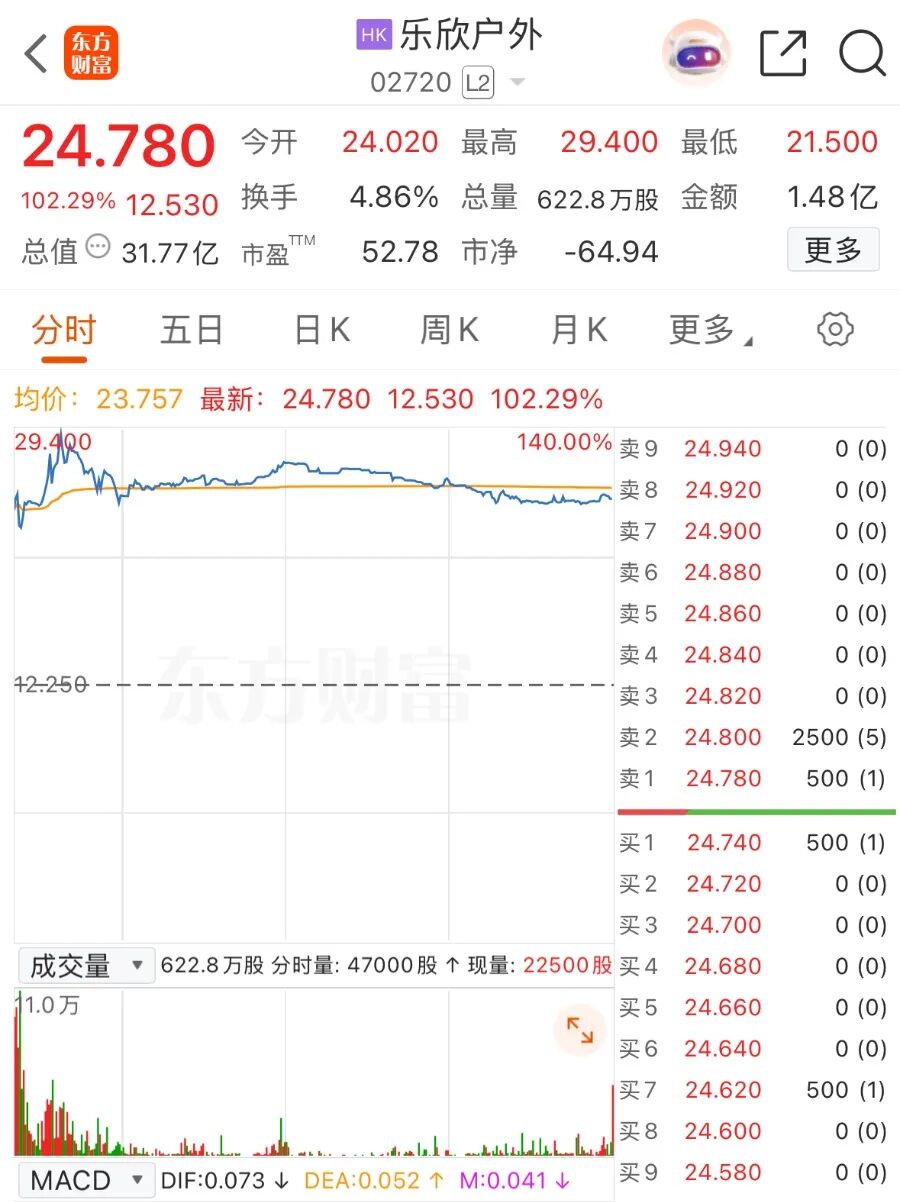
Core Viewpoint - Lexin Outdoor International Limited has officially listed on the Hong Kong Stock Exchange, becoming the first fishing equipment stock in the Hong Kong market, with a significant opening day surge of 102.29% in share price, reaching a market capitalization of approximately HKD 31.11 billion [1][12]. Company Overview - Lexin Outdoor, headquartered in Deqing County, Huzhou City, Zhejiang Province, focuses on the design, research, and manufacturing of fishing equipment, having evolved from a fishing equipment division established in 1993 [4][16]. - The company operates three modern factories in Deqing, covering a total area of 63,637.7 square meters, with an annual production capacity of 6.2 million units across a product line of over 9,000 SKUs [4][16]. Market Position - Lexin Outdoor holds a 23.1% share of the global fishing equipment market and ranks first in the industry according to revenue projections for 2024, with an even higher market share of 28.4% in China [3][15]. - The company has maintained its position as the market leader in China for three consecutive years [3][15]. Financial Performance - The company's revenue from 2022 to 2024 was reported as follows: 2022 revenue of CNY 818 million, 2023 revenue of CNY 463 million, and 2024 revenue of CNY 573 million, with corresponding gross profits of CNY 190 million, CNY 120 million, and CNY 153 million [4][16]. - For the first eight months of 2025, Lexin Outdoor reported revenue of CNY 460 million, nearing the total profit level of 2024 [5][17]. Sales and Growth - Sales have been on an upward trajectory, with 5,463.3 thousand units sold in the eleven months ending November 30, 2025, compared to 4,355.9 thousand units in the same period of 2024 [5][17]. - The total revenue from 2022 to the first eight months of 2025 is estimated to be approximately CNY 2.314 billion [6][18]. Business Model - Lexin Outdoor employs a dual business model of OEM/ODM and OBM, with OEM/ODM revenues consistently accounting for 90% to 94% of total revenue from 2022 to the first eight months of 2025 [7][19]. - The top five customers contribute about 55% of the company's revenue, with the largest customer, Ardisam from the U.S., accounting for 17.7% [7][19]. Brand Development - The company is expanding its own brand business, having acquired the UK-based carp fishing brand Solar in 2017, which has seen sales triple since 2018 [8][20]. - However, revenue from the OBM model remains relatively low compared to OEM/ODM, with figures not exceeding 10% of total revenue during the reported periods [8][20]. Ownership Structure - Lexin Outdoor is a family-controlled enterprise, with the founder's family holding 94.77% of the shares, and the management team primarily composed of individuals from the previous parent company, Taipusen [9][21]. - Prior to the IPO, the company had no external investors, and significant dividends were paid out, totaling CNY 379 million over the past three years [10][22]. IPO Details - The IPO involved the issuance of 28.205 million shares, with a final offering price of HKD 12.25 per share, raising approximately HKD 285 million [10][22]. - The offering was highly oversubscribed, with a subscription rate of 3,654.23 times for the public offering and 2.94 times for the international offering [10][22]. Use of Proceeds - The funds raised from the IPO will be allocated towards brand development, product design, establishing a global fishing gear innovation center, upgrading production facilities, enhancing digital capabilities, and working capital [12][24].
钓鱼第一股上市首日翻倍,95后女将掌舵,家族四年分红超4亿
21世纪经济报道· 2026-02-10 12:45
Core Viewpoint - Le Xin Outdoor International Limited, a fishing equipment manufacturer, has successfully listed on the Hong Kong Stock Exchange, becoming the first fishing equipment stock in the market, with a significant initial price surge of 102.29% on its debut day [1][3]. Company Overview - Le Xin Outdoor, headquartered in Deqing County, Huzhou City, Zhejiang Province, focuses on the design, research, and manufacturing of fishing equipment, having evolved from a fishing equipment division established in 1993 [5]. - The company operates three modern factories in Deqing, covering a total area of 63,637.7 square meters, with an annual production capacity of 6.2 million pieces and a product line of over 9,000 SKUs [5]. - Le Xin Outdoor holds a 23.1% share of the global fishing equipment market and a 28.4% share in the Chinese market, ranking first in both categories [3]. Financial Performance - The company's revenue from 2022 to 2024 was reported as follows: 818 million yuan in 2022, 463 million yuan in 2023, and 573 million yuan in 2024, with corresponding gross profits of 190 million yuan, 120 million yuan, and 153 million yuan [5]. - For the first eight months of 2025, the company achieved revenue of 460 million yuan and a net profit of 56.24 million yuan, nearing the total profit level of 2024 [6]. Business Model - Le Xin Outdoor employs a dual operational strategy of OEM/ODM and OBM, with OEM/ODM revenues consistently accounting for 90%-94% of total revenue from 2022 to 2025 [6]. - The top five customers contribute approximately 55% of the company's revenue, with the largest customer, Ardisam from the U.S., accounting for 17.7% [6]. Market Expansion - The company sells products to over 40 countries, including mature markets like the UK and the US, as well as rapidly growing markets in China and Southeast Asia [7]. - Le Xin Outdoor is also expanding its own brand business, having acquired the UK brand Solar in 2017, which has seen sales triple since 2018 [7]. Ownership Structure - The company is primarily controlled by the Yang family, with founder Yang Baoqing's family holding 94.77% of the shares post-IPO [10][11]. - Prior to the IPO, Le Xin Outdoor had no external investors, making it a typical family-controlled enterprise [10]. IPO Details - The IPO raised approximately 285 million HKD, with a significant oversubscription rate of 3654.23 times for the public offering [11]. - The funds raised will be allocated to brand development, product design, establishing a global innovation center for fishing gear, upgrading production facilities, and enhancing digital capabilities [11].

整个社会都在喊没钱了,为什么这些公司反而年赚百亿?
创业家· 2026-02-08 10:00
Core Viewpoint - The article emphasizes that despite the prevailing narrative of economic hardship, certain industries are thriving and generating substantial profits, particularly in the context of Japan's "lost 30 years" and the evolving consumer behavior in China [3][4]. Group 1: Economic Shifts and Opportunities - The concept of a "low-desire society" does not equate to a lack of opportunities, as consumer demand is shifting towards different sectors [4]. - The article identifies eight key industries that are capitalizing on changing consumer preferences, highlighting that demand migration presents significant business opportunities [5]. Group 2: Key Industries - **Second-Hand Economy**: The second-hand luxury market in Japan, exemplified by companies like Daikokuya, has seen a dramatic revenue increase. In China, platforms like Hongbulin and Panghu are experiencing similar growth [6][7][8]. - **Pet Economy**: With declining birth rates, spending on pets is rising. Companies like Inaba in Japan and Guobao in China are benefiting from this trend, with various pet brands seeing continuous sales growth [12][13][14][15][16]. - **Adult Care**: The adult diaper market in Japan has surpassed $10 billion, indicating that aging populations can create substantial economic opportunities rather than being a burden [17][18][19]. - **Health Food and Beverages**: Changes in population structure and rising health awareness have led to the growth of sugar-free beverages and functional foods in both Japan and China [21][22]. - **Beauty Economy**: The demand for beauty products, such as collagen supplements and at-home beauty devices, remains strong, indicating that consumers prioritize personal care even in economic downturns [23][24][25][26]. - **Outdoor Recreation**: Companies in the outdoor equipment sector, like Snow Peak in Japan, are thriving as consumers seek leisure activities despite economic constraints [29][30][31]. - **Convenience Economy**: The rise of frozen foods and smart home appliances reflects a shift towards convenience, with brands like Anjijia and Kewotai seeing steady growth [39][40][42]. - **Lazy Economy**: The trend of reduced cooking time among younger generations has led to increased demand for time-saving products, suggesting that time-saving solutions may hold more commercial value than cost-saving ones in a low-desire economy [39][42]. Group 3: Market Sentiment - The article argues against the notion that the current market is in a "cold winter," suggesting that the true winners in a low-desire era are those who can identify and invest in counter-cyclical opportunities [44].

美国百年露营老牌科勒曼在沪开中国首店,它来晚了吗?
Xin Lang Cai Jing· 2026-02-07 01:10
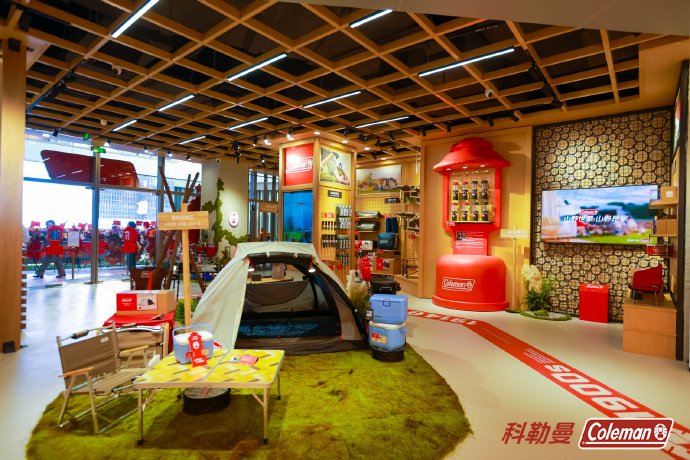
Company Overview - Coleman, a century-old American camping brand, has opened its first flagship store in Shanghai and launched online sales through platforms like Tmall and JD, marking the start of systematic operations in the Chinese market [1] - The flagship store is designed not just for sales efficiency but as an experiential space to educate consumers about the brand and its products [1][2] Sales and Product Strategy - The top-selling categories online include camping folding carts, canopies, and tents, with prices primarily ranging from 1,000 to 2,000 yuan [1] - Coleman has adopted a strategy of limiting SKU numbers in stores to create complete camping scenarios, allowing consumers to understand product combinations and functionalities [2] - The company plans to focus on flagship stores in first-tier and select new first-tier cities, prioritizing store size and experience over rapid expansion [4] Market Insights - The outdoor products market in China is relatively new, with a current size of approximately 87.2 billion yuan, expected to grow to 104.9 billion yuan by 2030 [4] - Despite a low penetration rate of about 3% in camping, the market is seen as having long-term potential, with a projected 20% year-on-year growth in camping-related categories by the second half of 2025 [5] Brand Localization - Coleman has tailored its brand messaging for the Chinese market, shifting from the global slogan "Count on Coleman" to "山野世家,山野是家," emphasizing reliability and the brand's long history [7] - The company has carefully selected 78 SKUs for the Chinese market, focusing on products that have been validated in mature markets [6][9] Product Adaptation - Products are reassessed for safety and suitability in local contexts before launch, with adjustments made based on consumer feedback [9] - Coleman aims to extend the usage of camping products beyond traditional settings by introducing items like cups and folding chairs that can be used in everyday scenarios, thereby increasing consumer engagement [9][10] Competitive Landscape - Coleman aspires to become a leading brand in the Chinese camping equipment sector within 5 to 10 years, building on its success in the U.S. and Japan, where it generates over 2 billion yuan in revenue [10] - The brand faces challenges in differentiating itself in a competitive market where established players like Snow Peak and local brands dominate [11]
乐欣户外(02720):IPO点评
国投证券(香港)· 2026-02-04 14:31
Investment Rating - The report assigns an IPO-specific rating of 5.3 out of 10 for the company, indicating a cautious outlook for potential investors [7]. Core Insights - The company, 乐欣户外 (2720.HK), is a global leader in the fishing equipment industry, holding a market share of 23.1% as of 2024, and is also the largest fishing equipment manufacturer in China with a market share of 28.4% [3]. - The company's revenue for 2022, 2023, and 2024 is projected to be 818 million, 463 million, and 573 million RMB respectively, reflecting a year-on-year growth of -43.4% and 24.3% [2]. - The fishing equipment market is expected to grow from 1,204 billion RMB in 2019 to 1,409 billion RMB in 2024, with a CAGR of 3.2%, and further to 1,941 billion RMB by 2029, with a CAGR of 7.1% from 2025 to 2029 [3]. Company Overview - 乐欣户外 specializes in a wide range of fishing products, including chairs, bags, tents, and accessories, catering to various fishing scenarios [1]. - The company generates over 90% of its revenue from OEM/ODM services and is strategically expanding its own brand business [1]. - Major clients include well-known outdoor retailers and fishing brands globally, with products sold in over 40 countries [1]. Financial Performance - The company's gross profit margins for 2022, 2023, and 2024 are 23.2%, 26.6%, and 26.6% respectively, with a steady increase to 27.7% in the first eight months of 2025 [2]. - The net profit for the same years is projected at 107 million, 46 million, and 56 million RMB, with year-on-year changes of -57.3% and 22.0% [2]. Industry Status and Outlook - The fishing equipment market is primarily concentrated in North America, East Asia, Europe, and Southeast Asia, with a growing market in China, which is expected to reach 329 billion RMB by 2024 [3]. - The competitive landscape is characterized by a high concentration of major manufacturers, with the top five accounting for 34.7% of the market share globally [3]. Advantages and Opportunities - The company has established long-term partnerships with renowned outdoor brands and has a diverse product portfolio that covers various fishing scenarios [4]. - The management team possesses extensive industry experience, positioning the company to capitalize on market opportunities [4]. Weaknesses and Risks - The company faces intense competition within the industry and has a high dependency on its top five customers and suppliers [5].