对冲交易

Search documents
能化:伊朗局势骤紧,对能化品种影响分析
Guo Mao Qi Huo· 2026-03-03 01:02
1. Report Industry Investment Rating - The report does not provide an industry investment rating. 2. Core Viewpoints of the Report - The joint military strike by the US and Israel against Iran has led to a sudden escalation of the situation in the Middle East. Iran's closure of the Strait of Hormuz and large - scale retaliation have significantly affected energy, shipping, and financial markets [1][22]. - In the short - term, market volatility will be rapidly amplified, and a "gold - oil rising together, risk assets under pressure" pattern may emerge. It is recommended to reduce speculation, increase risk awareness, and shift from unilateral strategies to hedging transactions [3][28][29]. 3. Summary by Relevant Catalogs 3.1 Iran's Tense Situation and Strait Closure - On February 28, 2026, the US and Israel launched a large - scale air strike on Iran. Iran retaliated, and the conflict caused casualties and damage. Iran's Supreme Leader Khamenei died, and the Strait of Hormuz was closed [8]. 3.2 Middle East and Iranian Oil Supply - The Middle East is a major oil - producing region, accounting for over 1/3 of global crude oil production. As of January 2026, the daily crude oil production of OPEC member countries in the Middle East was about 2,410 million barrels. Saudi Arabia is the second - largest oil - producing country globally, and Iran is the seventh - largest, with a daily production of 313 million barrels [9]. 3.3 Impact Analysis of Closing the Strait of Hormuz - The Strait of Hormuz is a key waterway connecting the Persian Gulf and the Indian Ocean. It is of great strategic and economic significance, with countries around it having large oil and gas reserves. It is the second - largest global seaborne oil channel, with a daily oil transport volume of 20.3 million barrels, accounting for 27% of global oil maritime trade [11][12][19]. - In 2025, Asian countries were the main destinations for crude oil transported through the Strait of Hormuz. China, India, South Korea, and Japan together accounted for about 69% of the total crude oil transported through the strait [21]. 3.4 Impact Analysis of Iran's Situation on Energy - Chemical Products and Trading Strategies 3.4.1 Impact on Energy - Chemical Products - The situation in Iran has a direct and severe impact on the energy market. The closure of the Strait of Hormuz may lead to a daily supply gap of about 18 million barrels of crude oil globally and interrupt about 100 million tons of LNG trade annually. It also affects the supply of fuel oil, methanol, etc., and strengthens the cost support of downstream chemical products [1][22][25]. - The shipping market will be affected. The closure risk of the Strait of Hormuz will increase shipping costs, and the war - risk premium for oil tankers may rise by over 300%. Container shipping companies may detour or suspend services, pushing up freight rates [2][26]. - The escalation of the situation in Iran will impact global risk appetite. In the short - term, the market may show a pattern of "gold and oil rising together, risk assets under pressure", and gold's safe - haven property will be more prominent [2][26]. 3.4.2 Trading Strategies - In the short - term, market volatility will increase. It is recommended to reduce speculation, increase risk awareness, and wait for the market to develop before taking appropriate actions. It is also suggested to shift from unilateral strategies to hedging transactions, such as long - crude - oil and short - chemical - products operations during the escalation of the situation and the opposite when the situation cools down [3][28][29].
股指期货和融资融券:对冲交易的两大工具详解
Sou Hu Cai Jing· 2025-11-10 05:23
Group 1 - Core concept of hedging trading is to reduce risk and potentially profit even in declining markets [1] - Stock index futures are a financial product linked to stock indices, allowing investors to control large positions with a small amount of capital [2] - The leverage effect of stock index futures allows investors to control a contract worth 1 million with only 180,000 as margin, leading to high potential returns [2][3] Group 2 - Margin trading allows investors to borrow funds or stocks to increase their trading capacity, enabling participation with less capital [5] - Two main strategies in margin trading include borrowing money to buy stocks and borrowing stocks to sell short, both aiming to profit from market movements [6][7] - Both stock index futures and margin trading share the characteristic of enabling profits during market declines, enhancing the appeal of hedging strategies [8] Group 3 - Stock index futures and margin trading are powerful financial tools with leverage effects, allowing for larger trades with less capital [9] - Both tools enable dual-direction trading, allowing profits from both rising and falling markets [9] - Understanding the principles and risks associated with these tools is crucial for cautious operation [9]


复盘打新:胜兵先胜后求战,败兵先战后求胜
Ge Long Hui· 2025-05-26 04:34
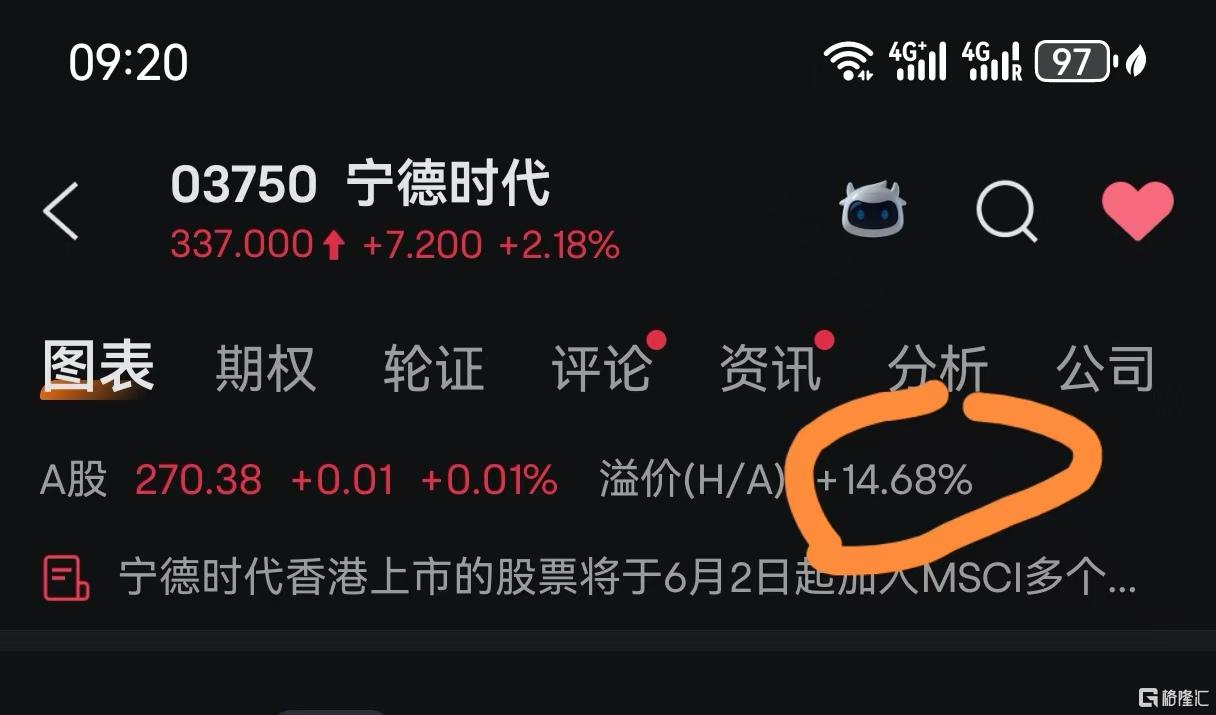
Group 1 - The core message emphasizes that the focus should be on the stocks that are well-understood and the amount of shares acquired, rather than the performance of every individual stock [1] - The article highlights the significant gains from specific stocks such as 恒瑞医药 (Hengrui Medicine), 宁德时代 (CATL), and others, indicating that these stocks have contributed substantially to overall profits [1] - The importance of the dark market and initial trading days is noted, suggesting that while these factors are crucial, they are ultimately beyond control [2] Group 2 - The article references the concept of risk management, particularly in relation to price premiums and the unpredictability of market outcomes [4] - It discusses the strategy of hedging, where the author speculates on the price premium of 宁德时代 (CATL) and engages in both shorting and going long on the stock to mitigate risks [4][5] - The article mentions the importance of time cost in trading, particularly in short selling, and suggests that resolving trades within a month is ideal [6] Group 3 - The article advises a strategic approach to new stock investments, likening it to a lion's hunting strategy, where most time is spent in contemplation and only a small portion is dedicated to decisive action [6] - It suggests that some new stocks may not warrant attention, indicating a selective approach to investment opportunities [6]