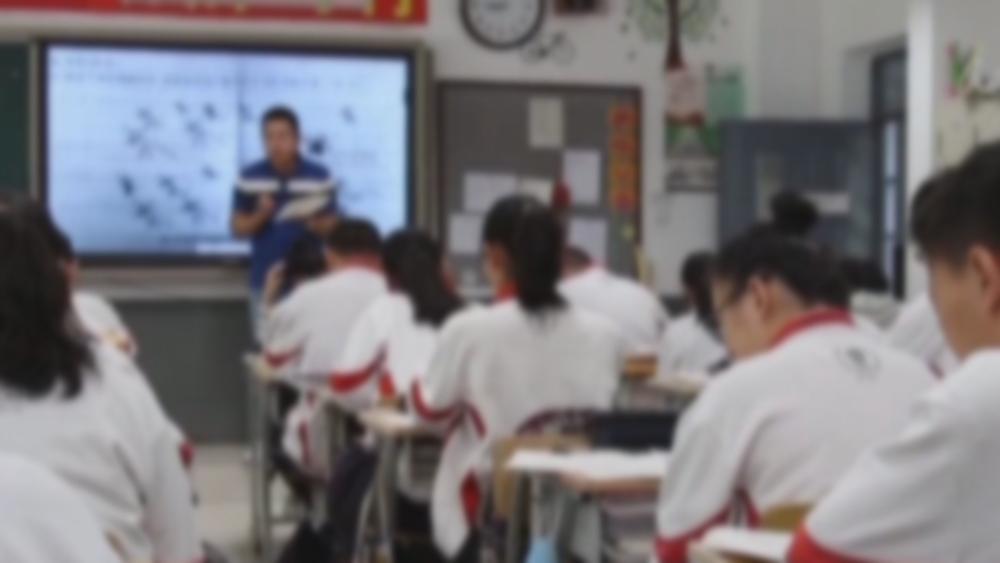
小初高贯通培养

Search documents
吉林省将试点开展小初高贯通培养
Xin Lang Cai Jing· 2026-02-10 06:39
Core Viewpoint - The Jilin Provincial Education Work Conference emphasizes the goals for the 2026 "14th Five-Year Plan" to ensure a high-quality start, focusing on advancing, breaking through, reducing gaps, contributing, and maintaining stability [1] Group 1: Implementation of Educational Initiatives - The "One Project" of moral education will be implemented, enhancing ideological and political education across all educational levels and promoting physical health initiatives [1] - The integration of sports, technology, and arts into holiday management will be supported, alongside the establishment of family education forums [1] Group 2: Improvement of Educational Services - A comprehensive reform of the management mechanism for primary and secondary school teachers will be executed, with a focus on enhancing the quality of education and expanding access to quality high schools [2] - The introduction of small class teaching in rural compulsory education schools will be piloted, and the "Jilin Cloud School" initiative will be accelerated [2] Group 3: Higher Education Reform - Higher education resources will be optimized to align with Jilin's modern industrial system, promoting the development of application-oriented universities and specialized disciplines [2] - The expansion of quality undergraduate admissions and reforms in the specialized examination process will be prioritized [2] Group 4: Integration of Education, Technology, and Industry - A mechanism linking enrollment, talent cultivation, and employment will be established, fostering collaboration between universities and key local enterprises [3] - The focus will be on developing talent in strategic emerging industries, enhancing the effectiveness of technology transfer [3] Group 5: Vocational Education Development - The "Double Excellence Plan" for vocational education will be initiated, targeting high-skill talent cultivation in key sectors such as tourism and green energy [4] - The establishment of industry-education integration communities will be promoted to meet the demands of urban development [4] Group 6: Teacher Development - A long-term mechanism for teacher ethics and professional development will be established, emphasizing the importance of teacher quality and support [4] Group 7: International Cooperation in Education - Opportunities for international collaboration in higher education will be leveraged, particularly in preparation for the 2027 Winter Universiade and partnerships with universities in Russia and Europe [4] Group 8: Governance and Integrity in Education - Strengthening party leadership in educational institutions and ensuring accountability in governance will be prioritized to maintain a clean educational environment [4]

县中振兴,这次不一样
21世纪经济报道· 2025-09-26 04:42
Core Viewpoint - The "County Middle School Revitalization Action Plan" has been officially issued, aiming to improve educational equity and reduce the excessive focus on exam results and competition in county-level education [1][2]. Group 1: Current Issues in County Education - There is a trend in some county schools to concentrate educational resources on a few top students, which undermines educational fairness [2][4]. - The concept of "cloud classes" has emerged, where students in county schools access lessons from prestigious partner schools via online platforms, but this often leads to a dilution of local teaching quality and interaction [4][5]. - Some county schools are creating "cloud classes" that only serve a small number of students, reinforcing a "Matthew effect" where the rich get richer in terms of educational resources [4][5]. Group 2: Policy Recommendations - There is a strong call to correct the tendency to prioritize exam results, emphasizing the need for a more diverse educational approach that includes sports, arts, and vocational training [8][9]. - The evaluation of county schools should shift from a results-based assessment focused solely on exam scores to a process-oriented evaluation that considers the quality of education across various subjects [9]. - The implementation of digital education and integrated curriculum models should be aligned with educational policies to promote balanced development across all educational levels [7][8].
县中振兴,这次不一样
2 1 Shi Ji Jing Ji Bao Dao· 2025-09-25 12:31
Core Viewpoint - The "County Middle School Revitalization Action Plan" has been officially issued to improve educational equity and address the over-concentration of resources on a few top students, which undermines educational fairness and violates educational principles [1][2]. Group 1: Educational Policy and Reform - The plan aims to shift the resource allocation from an exam-oriented approach to a more balanced educational model, reducing competition and anxiety among students [2][12]. - The initiative emphasizes the need to correct the excessive pursuit of enrollment rates and to ensure that educational practices align with established policies and educational laws [12][14]. Group 2: Digital Education and "Cloud Classes" - "Cloud classes" are introduced as a means to connect students in county schools with renowned high schools through online learning, but they risk diluting local teaching quality and interaction [5][7]. - Some county schools have reported high average scores in "cloud classes," with one class achieving an average score of 623, indicating a focus on elite student performance [4][3]. Group 3: Talent Development and Competition - There is a trend of establishing "youth classes" in high schools that recruit elementary students based on competition results, which undermines policies aimed at reducing academic pressure [9][11]. - High salaries are being offered to competition coaches in county schools, with some earning over 300,000 yuan, reflecting a shift towards a competitive, results-driven educational environment [11]. Group 4: Holistic Education Approach - Experts advocate for a diversified development approach in county schools, emphasizing the importance of physical education, arts, and vocational training alongside academic subjects [15][16]. - The evaluation of county schools should transition from solely focusing on enrollment rates to a more comprehensive assessment of educational quality and student development [16].