就业错配

Search documents
关注地方两会丨 “人员不好招”与“工作不好找”怪圈何解?姜雪峰委员建言从教育改革着手
Xin Hua Cai Jing· 2026-02-02 15:05
Core Viewpoint - The mismatch between job supply and demand is a result of industrial transformation, technological revolution, and generational change, necessitating policy collaboration to align talent supply with demand [1][2]. Group 1: Causes of Mismatch - The current global landscape is undergoing profound adjustments, with a new wave of technological revolution accelerating industrial upgrades, leading to the disappearance of traditional jobs and the emergence of new demands [2]. - The arrival of the artificial intelligence era is significantly reshaping operational logic across industries, requiring a redefinition of traditional roles and the emergence of new positions, while the talent supply system has not fully adapted to this rapid change [2]. - The employment perspectives of the "Z generation" (born between 1995 and 2009) have shifted significantly, influenced by their upbringing in the digital age, leading to changes in job selection criteria and societal recognition [3]. Group 2: Solutions for Mismatch - Addressing the employment mismatch requires fundamental reforms in the education system, enhancing practical course offerings, and adopting a problem-oriented educational model to improve students' comprehensive abilities [4]. - The establishment of a dual mentorship system involving both academic and industry experts is crucial for aligning education with industry needs, fostering a blend of academic and practical skills in students [4]. - Implementing a full-process internship certification system and creating policies that connect academic training with industry development are essential for bridging the gap between education and employment [5]. Group 3: Building a Stable Employment Ecosystem - Youth employment requires not only alignment from employers but also supportive social policies, such as increasing the supply of affordable rental housing to alleviate concerns for young professionals [6]. - Enhancing the evaluation system for youth innovation and entrepreneurship, along with establishing recognition mechanisms, can encourage more young individuals to engage in industrial innovation [6]. - A collaborative effort involving educational reform, industry engagement, and policy support is necessary to transform structural employment challenges into opportunities for high-quality development [7].
岗位没有消失,但好工作更难找了
经济观察报· 2026-01-07 11:10
Group 1 - The core issue of employment in 2025 is not the disappearance of jobs, but rather the decreasing availability of "good jobs" that are easy to find, easy to do, and worth doing [2][12] - The employment situation is characterized by a divergence between macro stability and micro tension, leading to a highly emotional and structurally imbalanced social issue [2][4] - The employment landscape is influenced by three main forces: the deep transformation of industrial structure, increased uncertainty in economic growth, and weak consumer recovery affecting traditional employment sectors [5][6] Group 2 - In 2025, the number of college graduates is projected to reach 12.22 million, continuing a trend of record-high figures, which adds pressure to the job market [7] - The youth unemployment rate remains high, fluctuating between 16% and 18% for those aged 16-24, significantly above the overall unemployment rate of around 5% [7][8] - The trend of risk-averse choices among youth is evident, with a record number of 3.718 million applicants for national civil service exams, surpassing graduate school applications for the first time in over a decade [7][8] Group 3 - The current employment issue is fundamentally one of "mismatch" rather than "disappearance," with a significant portion of the workforce unable to find suitable positions due to skill and expectation mismatches [12][14] - There is a notable skills mismatch, where the demand for complex, integrated skills is rising, while many workers possess only basic or single-task skills [14] - The mismatch extends to expectations, with young people seeking job stability and security that the current market cannot adequately provide [14][15] Group 4 - The impact of artificial intelligence (AI) on employment is a critical theme, leading to job polarization rather than simple job loss, with high-end positions expanding while middle-skill jobs are compressed [21][23] - AI is creating new opportunities in technology-intensive roles, while also enhancing productivity for individual workers who can leverage AI tools [23][24] - The growth of flexible employment and new job forms is becoming a significant channel for income generation, with the government actively promoting these trends [24][26] Group 5 - The early return of migrant workers to rural areas in 2025 is attributed to weak demand in construction and manufacturing, leading to job insecurity and wage delays [28][29] - The trend of migrant workers returning home reflects a long-term shift, with a decline in the number of interprovincial migrant workers and a growing preference for local employment opportunities [30] - The employment risks faced by migrant workers have shifted from merely finding work to concerns about job security and income reliability [30] Group 6 - The coexistence of "lying flat" and "involution" reflects the rational choices of workers in a competitive job market, where high-quality job growth lags behind labor supply [32][33] - The phenomenon of "lying flat" arises when the marginal returns of effort diminish, leading workers to reduce their input in a low-reward environment [32][33] - The interplay of these dynamics indicates a complex employment landscape where individual rational choices can lead to systemic inefficiencies [35][36]

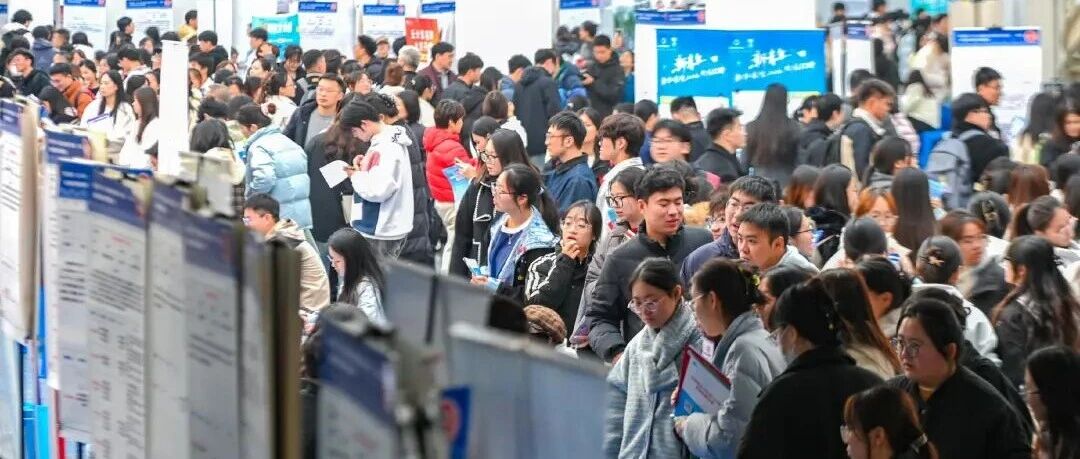
“压力并非只是感觉”,2025年中国就业市场怎么了
Jing Ji Guan Cha Wang· 2026-01-07 08:32
Group 1 - The core issue of employment in 2025 is characterized by a macroeconomic stability contrasted with individual feelings of insecurity, indicating a structural imbalance in the job market [2][3] - Employment opportunities are not disappearing, but the availability of "good jobs" that are easy to find and secure is declining [2][3] Group 2 - The transformation of industrial structure is leading to a decrease in employment absorption capacity in traditional labor-intensive sectors, while new industries are still in a phase of selective hiring [4] - Economic growth is slowing down, and uncertainty is increasing, causing companies to adopt a more cautious approach to hiring [4] - Weak consumer recovery is limiting the expansion of traditional employment sectors, leading to conservative hiring practices [4] Group 3 - The supply-side pressure is unprecedented, with the number of college graduates reaching 12.22 million in 2025, continuing a trend of record-high graduate numbers [5] - The youth unemployment rate remains high, fluctuating between 16% and 18% for those aged 16-24, significantly above the overall unemployment rate of around 5% [6] - Risk-averse choices among youth are increasing, with more opting for civil service exams and delayed employment [6] Group 4 - The labor participation rate has declined by approximately 1.9% to 2.3% from pre-pandemic levels, indicating a significant number of individuals exiting the labor market [8] - Despite an increase in the share of labor compensation in GDP, workers feel little improvement in income, with disparities in income growth across different sectors [9] Group 5 - The employment issue is fundamentally one of "mismatch" rather than "disappearance," with a significant portion of the workforce unable to find suitable positions due to skill mismatches [10] - There is a notable mismatch in expectations, with youth seeking job stability and security that the market cannot adequately provide [11] Group 6 - The impact of AI on employment is significant, leading to job polarization where high-skill jobs are expanding while middle-skill jobs are being compressed [15][16] - New job opportunities are emerging in AI-related fields, but there is a growing gap in the skills required for these positions [15][16] Group 7 - Flexible employment and new job forms are expanding, becoming a crucial channel for income generation, yet they face challenges such as income volatility and lack of social security [17] - The introduction of mandatory social insurance regulations reflects the need for adaptation in the face of diverse employment forms [18] Group 8 - The early return of migrant workers to rural areas is driven by weak demand in construction and manufacturing, highlighting the changing dynamics of labor mobility [20][21] - The employment risks for migrant workers have shifted from simply finding work to concerns about job security and income reliability [22] Group 9 - The coexistence of "lying flat" and "involution" reflects the rational choices of workers in a competitive job market, where the quality of job growth lags behind labor supply [23][24] - The structural employment issues in 2025 necessitate a multifaceted policy approach that addresses income distribution, consumption, and labor market dynamics [25][26]