岗位极化

Search documents
岗位没有消失,但好工作更难找了
虎嗅APP· 2026-01-08 13:50
Core Viewpoint - The employment situation in 2025 is characterized by a paradox where macroeconomic indicators show stability, but individual experiences of employment are increasingly negative, leading to a perception of a declining availability of desirable jobs [4]. Group 1: Structural Challenges - The transformation of industrial structure is deepening, with traditional labor-intensive sectors losing their capacity to absorb employment, while new industries like AI and digital economy are still in a phase of selective hiring [6]. - Economic growth is slowing down, and uncertainty is increasing, causing companies to adopt more cautious hiring practices, leading to a conservative and flexible employment demand [7]. - Weak consumer recovery is limiting the expansion of traditional employment sectors, with rising operational costs squeezing profit margins for small service businesses, resulting in a trend of "less hiring, slower hiring, and short-term hiring" [7]. Group 2: Key Facts - In 2025, the number of college graduates reached 12.22 million, marking a record high, with projections indicating this number will remain above 12 million for the next decade [9]. - The youth unemployment rate for those aged 16-24 is persistently high, fluctuating between 16% and 18%, significantly above the overall unemployment rate of around 5% [9]. - There is a notable increase in risk-averse choices among youth, with 3.718 million candidates applying for national civil service exams in 2026, surpassing the number of graduate school applicants for the first time in over a decade [10]. Group 3: Employment Mismatch - The current employment issue is fundamentally one of mismatch rather than disappearance, with a significant portion of the workforce unable to find suitable positions due to skill and expectation mismatches [14]. - Skills mismatch is evident as the demand for complex, integrated skills rises, while the supply of general skills remains abundant, leading to difficulties for highly educated workers to find appropriate roles [14]. - Expectation mismatches are also prevalent, with young people seeking job stability and security that many available positions do not offer, leading to a concentration of talent in stable but less innovative sectors [15]. Group 4: AI's Impact on Employment - AI is reshaping the employment landscape, leading to job polarization where high-end positions are expanding while middle-skill jobs are being systematically compressed [20][21]. - New opportunities are emerging in AI-related fields, with a growing demand for technical roles such as algorithm training and data annotation, indicating a shift in the types of skills that are valued in the labor market [22]. - The rise of flexible employment and new job forms is becoming a significant channel for income generation, with the government actively promoting these trends as part of its long-term economic strategy [24]. Group 5: Rural Employment Trends - The early return of migrant workers to rural areas in 2025 is attributed to weak demand in construction and manufacturing, leading to increased job insecurity and financial pressures on families [29]. - The trend of declining inter-provincial migrant workers is evident, with the number dropping from 78.67 million in 2014 to 68.4 million in 2024, reflecting changing attitudes towards urban employment [30]. - The employment risks for migrant workers have shifted from merely finding work to concerns about job security and fair compensation, highlighting the need for policies that address these emerging challenges [31].


岗位没有消失,但好工作更难找了
3 6 Ke· 2026-01-07 13:00
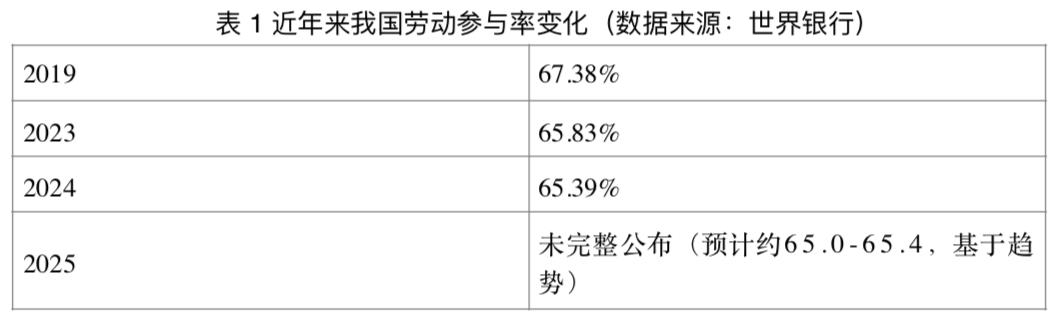
Core Viewpoint - The employment situation in 2025 is characterized by a paradox where macroeconomic indicators show stability, but individual experiences of employment are increasingly negative, leading to a perception of a structural imbalance in the job market [1] Group 1: Long-term Structural Dilemmas - The transformation of industrial structure is reducing the employment capacity of traditional labor-intensive sectors while new industries like AI and digital economy are still in a phase of selective hiring, limiting widespread job absorption [2] - Economic growth is slowing down, leading to cautious hiring practices among companies, with a tendency to outsource jobs rather than hire directly [2] - Weak consumer recovery is hindering the expansion of traditional employment sectors, with rising operational costs squeezing profit margins for small service businesses [2][3] Group 2: Key Facts Indicating Pressure - The number of college graduates in 2025 is projected to reach 12.22 million, marking a historical high and indicating sustained pressure on the job market [4] - The youth unemployment rate for ages 16-24 is fluctuating between 16% and 18%, significantly higher than the overall unemployment rate of around 5% [4] - There is a notable increase in risk-averse choices among youth, with a record number of applicants for civil service exams surpassing those for graduate studies [4] Group 3: Employment Mismatch - The current employment issue is characterized as a mismatch rather than a disappearance of jobs, with a significant portion of the workforce experiencing "hidden unemployment" due to various factors [5][9] - The labor participation rate has declined by approximately 1.9% to 2.3% from pre-pandemic levels, indicating a substantial number of individuals exiting the labor market [7] - Despite an increase in the share of labor compensation in GDP, workers feel little improvement in their income, highlighting a disparity between macroeconomic data and individual experiences [7] Group 4: Youth Employment Dilemmas - The rising educational qualifications of youth are not translating into job opportunities, leading to a rational choice of pursuing stable government jobs as a form of risk aversion [13] - The influx of educated individuals into low-stability sectors exacerbates competition and limits innovation in market-driven sectors [14] Group 5: Impact of AI on Employment - AI is reshaping the job market, leading to job polarization where high-skill positions are expanding while middle-skill jobs are being compressed [15][16] - New job opportunities are emerging in AI-related fields, but there is a growing skills gap as traditional roles decline [15] Group 6: Flexible Employment Trends - Flexible employment and new job forms are expanding, becoming a significant channel for income generation, yet they face challenges such as income volatility and lack of social security [17] - Recent legal changes are aimed at improving the regulatory framework for gig workers, but the implementation remains complex [18][19] Group 7: Migrant Worker Trends - An early wave of migrant workers returning home is observed, driven by weak demand in construction and manufacturing sectors, leading to increased social pressures in rural areas [20][21] - The trend reflects a long-term shift in labor dynamics, with fewer migrant workers willing to endure the risks associated with urban employment [21] Group 8: Employment Market Dynamics - The employment landscape in 2025 is marked by contradictions, with structural issues becoming more pronounced as technological advancements disrupt traditional job markets [24] - Policymakers face a critical moment to reshape employment governance and address the complexities of the labor market [25]
岗位没有消失,但好工作更难找了
经济观察报· 2026-01-07 11:10
Group 1 - The core issue of employment in 2025 is not the disappearance of jobs, but rather the decreasing availability of "good jobs" that are easy to find, easy to do, and worth doing [2][12] - The employment situation is characterized by a divergence between macro stability and micro tension, leading to a highly emotional and structurally imbalanced social issue [2][4] - The employment landscape is influenced by three main forces: the deep transformation of industrial structure, increased uncertainty in economic growth, and weak consumer recovery affecting traditional employment sectors [5][6] Group 2 - In 2025, the number of college graduates is projected to reach 12.22 million, continuing a trend of record-high figures, which adds pressure to the job market [7] - The youth unemployment rate remains high, fluctuating between 16% and 18% for those aged 16-24, significantly above the overall unemployment rate of around 5% [7][8] - The trend of risk-averse choices among youth is evident, with a record number of 3.718 million applicants for national civil service exams, surpassing graduate school applications for the first time in over a decade [7][8] Group 3 - The current employment issue is fundamentally one of "mismatch" rather than "disappearance," with a significant portion of the workforce unable to find suitable positions due to skill and expectation mismatches [12][14] - There is a notable skills mismatch, where the demand for complex, integrated skills is rising, while many workers possess only basic or single-task skills [14] - The mismatch extends to expectations, with young people seeking job stability and security that the current market cannot adequately provide [14][15] Group 4 - The impact of artificial intelligence (AI) on employment is a critical theme, leading to job polarization rather than simple job loss, with high-end positions expanding while middle-skill jobs are compressed [21][23] - AI is creating new opportunities in technology-intensive roles, while also enhancing productivity for individual workers who can leverage AI tools [23][24] - The growth of flexible employment and new job forms is becoming a significant channel for income generation, with the government actively promoting these trends [24][26] Group 5 - The early return of migrant workers to rural areas in 2025 is attributed to weak demand in construction and manufacturing, leading to job insecurity and wage delays [28][29] - The trend of migrant workers returning home reflects a long-term shift, with a decline in the number of interprovincial migrant workers and a growing preference for local employment opportunities [30] - The employment risks faced by migrant workers have shifted from merely finding work to concerns about job security and income reliability [30] Group 6 - The coexistence of "lying flat" and "involution" reflects the rational choices of workers in a competitive job market, where high-quality job growth lags behind labor supply [32][33] - The phenomenon of "lying flat" arises when the marginal returns of effort diminish, leading workers to reduce their input in a low-reward environment [32][33] - The interplay of these dynamics indicates a complex employment landscape where individual rational choices can lead to systemic inefficiencies [35][36]