
工业节水

Search documents
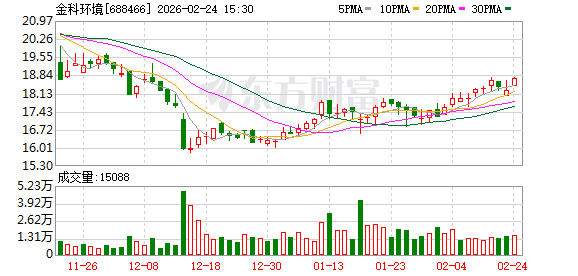
政策红利释放 金科环境水处理机器人“新水岛 ”领航工业节水变革
Zheng Quan Ri Bao Wang· 2026-02-24 07:56
Core Viewpoint - The release of the "Industrial Water Conservation Management Measures (Draft for Comments)" establishes a comprehensive framework for industrial water management, encouraging companies like Jinke Environment Co., Ltd. to leverage AI and advanced technologies for water conservation and resource recycling [1][2]. Group 1: Policy Direction and Technological Integration - The new policy emphasizes the importance of smart management in water usage, promoting the integration of AI, 5G, big data, and IoT technologies for remote control and optimization of water equipment [2]. - Jinke Environment has developed the "Water Radish AI Intelligent System," which enhances the entire lifecycle management of water plants through AI algorithms, achieving industry-leading accuracy in leak detection and maintenance [2][5]. Group 2: Innovative Water Conservation Solutions - The policy encourages the adoption of advanced water-saving technologies and equipment, guiding the innovation of industrial water conservation technologies [3]. - Jinke Environment's "New Water Island" water treatment robot exemplifies advanced water-saving equipment, significantly reducing construction time by 90% and operational costs by 50% compared to traditional methods [3][4]. Group 3: Resource Recycling Strategy - The policy mandates a comprehensive approach to regulate industrial water usage, pushing companies to enhance efficiency and expand the use of unconventional water sources [4]. - Jinke Environment's resource recycling strategy aims to achieve approximately 70% water reuse within systems, drastically reducing the need for fresh water from 100% to about 30% [4]. Group 4: Market Validation and Future Prospects - The introduction of AI in water treatment is transforming the industry from traditional engineering models to standardized, scalable solutions, addressing key industry challenges [5][6]. - Jinke Environment's "AI + Product" model is positioned to help industrial enterprises meet stringent water conservation requirements, contributing to the high-quality development of the industrial water conservation sector [6].

政策红利释放 金科环境水处理机器人“新水岛®”领航工业节水变革
Zheng Quan Ri Bao Wang· 2026-02-24 07:45
Core Viewpoint - The recently released "Industrial Water Conservation Management Measures (Draft for Comments)" establishes a comprehensive framework for industrial water management, encouraging companies like Jinke Environment Co., Ltd. to leverage AI and advanced technologies for efficient water use and resource recycling [1][6]. Group 1: Policy Guidance and Smart Control - The new policy emphasizes the need for smart water management, urging industrial enterprises to adopt intelligent water use systems utilizing technologies such as 5G, AI, big data, and IoT for remote control and optimization of water equipment [2]. - Jinke Environment has integrated AI with water-saving technologies, developing the "Water Radish® AI Intelligent System" to enhance the entire lifecycle management of water plants, achieving industry-leading precision in leak detection and maintenance [2][5]. Group 2: Innovative Water-Saving Technologies - The policy promotes the adoption of advanced water-saving technologies and equipment, guiding industrial enterprises to improve water resource efficiency [3]. - Jinke Environment's "New Water Island® Water Treatment Robot" exemplifies this innovation, significantly reducing construction time and land use while enabling a 90% reduction in operational personnel and a 50% decrease in lifecycle costs [3]. Group 3: Comprehensive Water Use Regulation - The policy establishes strict regulations for industrial water use, mandating technological and managerial improvements to enhance water efficiency and expand the use of unconventional water sources [4]. - Jinke Environment's resource recycling strategy aims to achieve approximately 70% water reuse within systems, drastically reducing the need for fresh water from 100% to about 30% [4]. Group 4: Market Opportunities and Growth - Following the implementation of the new water conservation policy, industrial enterprises will face stringent water quota management, making water-saving technology upgrades essential [6]. - Jinke Environment's "AI + Product" model for efficient water plant operations is expected to drive significant growth in the industrial water conservation sector, contributing to high-quality development in the industry [6].
政策红利释放 金科环境水处理机器人“新水岛”领航工业节水变革
Zheng Quan Ri Bao· 2026-02-24 07:36
Core Viewpoint - The recently released "Industrial Water Conservation Management Measures (Draft for Comments)" establishes a comprehensive framework for industrial water management, encouraging companies like Jinke Environment Co., Ltd. to leverage AI and advanced technologies for efficient water use and resource recycling [2][8]. Group 1: Policy Guidance and Technological Innovation - The new policy emphasizes the importance of smart management in water conservation, urging industrial enterprises to adopt intelligent water management systems utilizing technologies such as 5G, AI, big data, and IoT [3]. - Jinke Environment has proactively integrated AI with water-saving technologies, developing the "Water Radish® AI Intelligent System" to enhance the operational efficiency of water plants throughout their lifecycle [3][7]. Group 2: Advanced Water Treatment Solutions - Jinke Environment has introduced the "New Water Island® Water Treatment Robot," which exemplifies advanced water-saving equipment as advocated by the new policy, significantly reducing construction time and operational costs compared to traditional water treatment facilities [4][7]. - The New Water Island® system can be assembled and operational within 15 days, saving 90% in land use and reducing lifecycle costs by 50% through a 24/7 unmanned operation model [4]. Group 3: Resource Recycling Strategy - The policy mandates strict water usage regulations for industrial enterprises, pushing for enhanced water efficiency and the use of unconventional water sources [6]. - Jinke Environment's resource recycling strategy aims to achieve approximately 70% water reuse within systems, drastically reducing the need for fresh water from 100% to about 30% [6]. Group 4: Market Opportunities and Growth Potential - Following the implementation of the new water conservation policy, industrial enterprises will face stringent water quota management, making water-saving technology upgrades essential [8]. - Jinke Environment's AI-driven operational model is expected to facilitate significant water resource savings for industrial enterprises, contributing to the high-quality development of the industrial water conservation sector and creating substantial market growth opportunities [8].

能源早新闻丨工信部召开光伏行业企业家座谈会:当前形势下,“反内卷”是光伏行业规范治理的主要矛盾,坚决破除“内卷式”竞争
中国能源报· 2026-01-29 22:33
Industry Focus - The Ministry of Industry and Information Technology held a symposium for photovoltaic industry entrepreneurs, emphasizing the need to eliminate "involutionary" competition in the sector. The meeting highlighted that the current situation requires a focus on "anti-involution" as the main contradiction in industry governance, with various departments collaborating to promote healthy competition and rational development through market-oriented and legal measures [2]. Domestic News - The National Forestry and Grassland Administration and the National Energy Administration issued a notice supporting the scientific layout of wind farm projects, clarifying requirements for project upgrades and the use of forest and grassland [3]. - The Ministry of Industry and Information Technology released a draft for the "Industrial Water Conservation Management Measures," encouraging industrial enterprises with annual water usage exceeding 100,000 cubic meters to appoint water managers [3]. - During the Spring Festival, the Ministry of Transport announced measures to optimize charging services for new energy vehicles, including the installation of mobile emergency charging equipment [3]. Infrastructure Development - By the end of 2025, a total of 71,500 electric vehicle charging guns will be installed at highway service areas, with an increase of 20,000 units planned for that year, significantly enhancing charging service capabilities [4]. - The number of high-tech enterprises in the Yangtze River Delta Integration Demonstration Zone has increased to 3,713, which is 2.4 times the number at the end of 2019, indicating strengthened integration of innovation and industry chains [4]. - A photovoltaic project in the Xiaojin River Basin in Sichuan has begun operation, with an annual power generation of approximately 280 million kilowatt-hours, enough to meet the annual electricity needs of about 140,000 households, while saving 87,000 tons of standard coal and reducing carbon dioxide emissions by about 262,500 tons [4]. Company News - Three Gorges Water Conservancy reported a 12.66% year-on-year increase in power generation for the year 2025, with a total generation of 2.371 billion kilowatt-hours. The total on-grid power was 2.343 billion kilowatt-hours, up 12.70%, while the sales volume was 1.427 billion kilowatt-hours, showing a slight increase of 0.17% [7].

中安联合零排技术入选国家目录
Zhong Guo Hua Gong Bao· 2025-12-26 04:22
Group 1 - The core viewpoint of the article highlights that Zhong'an United Coal Chemical Co., Ltd. has developed a complete technology for zero discharge and resource utilization of high-salinity wastewater, which has been included in the "Directory of Industrial Water-Saving Processes, Technologies, and Equipment Encouraged by the State (2025 Edition)" [1] Group 2 - The coal chemical industry has long faced challenges in treating high-salinity wastewater, with traditional processes being costly and having low salt recovery rates [1] - Zhong'an United Coal Chemical Co., Ltd. is located near the ecologically sensitive Huai River, necessitating stringent environmental protection requirements and the need to overcome industry bottlenecks such as large fluctuations in salt-nitrate ratios and low high-salinity water reuse rates [1] Group 3 - The company utilized the "Ten Dragons" technology research platform of Sinopec, collaborating with various research institutions to innovate and solve industry bottlenecks [1] - The developed technology includes a series of processes: pretreatment, reverse osmosis concentration, nanofiltration salt concentration, and thermal quality crystallization, enabling the treatment of over 180,000 tons of high-salinity wastewater annually [1] - The technology achieves a 100% freshwater reuse rate and recovers over 7,000 tons of industrial salt each year, generating nearly 90 million yuan in indirect economic benefits annually [1]
金科环境资源化模式与新水岛 节水装备为工业节水减排提供可复制商业范本
Zheng Quan Ri Bao Wang· 2025-10-29 13:44
Core Insights - The recent inspection of the Wuxi Xishan Zhonghe High-Quality Reclaimed Water Plant and Wuxi Longting New Water Island 2.0 project highlights innovative business models and technological breakthroughs in wastewater resource utilization by Jinko Environment [1][2] Group 1: Project Overview - The Wuxi Xishan Zhonghe Water Plant, established in 2021, has a daily processing capacity of 20,000 tons, utilizing a dual membrane core process of "ultrafiltration + reverse osmosis" to convert industrial wastewater into high-quality reclaimed water for sectors like PCB electronics and thermal power [1] - The Longting New Water Island 2.0 project, covering only 300 square meters, achieves a stable daily output of 5,000 tons of high-quality reclaimed water, showcasing a significant industrial transformation by enabling rapid construction akin to automobile manufacturing [2] Group 2: Business Model and Innovation - Jinko Environment has developed a closed-loop business model that integrates investment, operation management, and product sales, allowing reclaimed water to be supplied directly to industrial parks, reducing water costs for enterprises and generating stable revenue [1] - The New Water Island 2.0 project employs a prefabricated core module and rapid on-site assembly, achieving a 90% reduction in construction time, area, and operational personnel, along with a 50% decrease in lifecycle costs, thus revolutionizing traditional water project execution [2] Group 3: Industry Impact and Recognition - The innovative practices of Jinko Environment in these projects exemplify the path of industrial water conservation through "technological innovation + model reconstruction," addressing the challenges of high water costs and wastewater management while supporting regional environmental capacity and industrial upgrades [2] - The association plans to actively promote these advanced experiences to contribute to the green and high-quality development of the industrial sector [2]
湖南组织开展工业用水效率达到国家用水定额先进值企业水资源税减征优惠工作
Shui Li Bu Wang Zhan· 2025-08-05 14:26
Core Viewpoint - The Hunan Provincial Water Resources Department, along with other governmental bodies, has announced a tax reduction initiative for industrial enterprises that meet specific water efficiency criteria, aiming to promote water conservation and efficiency in the industrial sector [1] Group 1: Tax Reduction Initiative - A notification has been issued to establish a list of industrial enterprises eligible for a 20% reduction in water resource tax, contingent upon meeting certain criteria [1] - Eligible enterprises must possess a water extraction permit, pay water resource tax, and demonstrate compliance with water efficiency standards set by the national quota [1] - The initiative is designed to incentivize industrial companies to adopt water-saving technologies and improve water usage efficiency [1] Group 2: Implementation Process - Enterprises that meet the criteria can apply for the tax reduction through the relevant water administration authorities within a specified timeframe [1] - The process involves review and verification by water administration, finance, industrial and information technology, and tax departments before the final list of eligible taxpayers is published [1] Group 3: Broader Implications - The tax reduction initiative is part of a broader strategy to promote water conservation and the establishment of a water-saving society [1] - It aims to encourage industrial enterprises to actively engage in water-saving practices, thereby contributing to industrial water conservation and emission reduction efforts [1]
这些企业为何能够减免20%水资源税?
Zhong Guo Huan Jing Bao· 2025-05-09 03:10
Core Insights - Jiangsu Province has announced a list of 72 industrial enterprises that achieved advanced water efficiency standards for 2024, which will benefit from a 20% reduction in water resource tax for 2025 as part of a national initiative [1][2] - The initiative aims to enhance water efficiency in industrial sectors, which account for approximately 16.2% of the total water usage in China, highlighting the importance of improving water efficiency to address supply-demand conflicts and ensure ecological safety [2] Group 1: Policy and Implementation - The policy is a practical measure to implement the "Water Resource Tax Reform Pilot Implementation Measures" jointly released by the Ministry of Finance, State Taxation Administration, and Ministry of Water Resources [1] - Only 0.1% of industrial enterprises in Jiangsu will benefit from the tax reduction policy, indicating that most companies have not yet met the advanced water efficiency standards [2] Group 2: Industry Challenges - High water consumption and emissions in industries such as electricity and chemicals significantly impact overall industrial water usage, with some regions like Hebei having over 70% of their industrial water consumption from high-water-use sectors [3] - Concerns about the initial investment costs for water-saving facilities may deter companies from adopting these measures, necessitating support from local authorities to provide data on tax burdens and production cost changes [4] Group 3: Future Directions - The Ministry of Water Resources and other departments have proposed mandatory water quotas for high-water-use and high-emission industries to enhance water efficiency [3] - Local governments are encouraged to create benchmark enterprises for water conservation and facilitate learning opportunities for water-intensive companies to leverage tax benefits and improve efficiency [4] - A rigorous review process for the list of enterprises achieving advanced water efficiency standards is essential, along with ongoing monitoring and support to ensure accurate reporting and improvement in water usage [4]