
工业4.0技术

Search documents
跨越半世纪的工业大退潮,美国造船能力是如何被中国甩开230倍!
Sou Hu Cai Jing· 2026-02-13 05:09
Core Viewpoint - The decline of the U.S. shipbuilding industry is starkly illustrated by the comparison with China's rapid advancements, highlighting a 230-fold gap in capabilities, particularly in military shipbuilding [1][9]. Group 1: Historical Context - The decline of the U.S. shipbuilding industry began as early as the 1950s and 1960s, long before China's shipbuilding capabilities developed [3]. - Post-World War II, Japan and South Korea gained a competitive edge in the global commercial shipbuilding market due to government support and cost advantages, leading to the U.S. losing its market share [3]. - By the 1970s, the U.S. held an 8% share of the global commercial shipbuilding market, which has now dwindled to nearly zero by 2024 [3]. Group 2: Current Challenges - The U.S. shipbuilding industry faces significant challenges, including an aging workforce with an average age of 52, and a lack of interest from younger generations in joining the industry [3]. - The supply chain for U.S. shipbuilding is fragmented, with a low integration rate of only 41%, and labor costs are 4.3 times higher than those in China [3][8]. - Trade protection policies, such as the Jones Act, have failed to revitalize the U.S. shipbuilding industry and instead contributed to its decline by limiting competitiveness in the international market [3]. Group 3: Technological Advantages - Despite challenges in the commercial sector, the U.S. retains significant advantages in high-end military shipbuilding technologies, including nuclear power, stealth technology, and advanced weapon systems [5]. - The U.S. excels in smart manufacturing and industrial 4.0 technologies, which are crucial for military applications, although automation in civilian shipbuilding lags behind [5]. Group 4: Future Prospects - The U.S. theoretically retains some wartime mobilization capabilities, supported by the Defense Production Act, but practical challenges remain in rapidly scaling up production capacity [8]. - The U.S. has only four military shipyards left, and the significant barriers to quickly expanding capacity include labor shortages, supply chain disruptions, and aging infrastructure [8]. - The inconsistency of U.S. government policies poses a major obstacle to long-term investment in the shipbuilding industry, contrasting sharply with China's stable and strategic industrial policies [9].


印度两贸易协定搅动全球能化市场
Zhong Guo Hua Gong Bao· 2026-02-10 03:38
Group 1 - India has made significant progress in trade negotiations, reaching agreements with the EU and the US, marking a major shift in its foreign trade strategy [1] - The agreements involve substantial tariff reductions, with over 90% of bilateral tariffs being cut, and commitments in sectors like automotive and wine, alongside strategic cooperation in defense and technology [1] - India has pledged to procure $500 billion worth of US goods and cease oil purchases from Russia, shifting its imports to the US and Venezuela [1][2] Group 2 - India's commitment to stop purchasing Russian oil will significantly alter the global crude oil trade, as it was previously importing about 40% of its oil from Russia [2] - The shift in oil sourcing will impact India's domestic refining costs, as it transitions from cheaper Russian oil to potentially more expensive US oil or Venezuelan heavy crude [2] - The Indian chemical industry is expected to face cost pressures due to changes in feedstock sourcing, which may affect its competitiveness in export markets [2] Group 3 - The EU's stringent environmental and chemical management standards will likely influence India's industrial standards, necessitating compliance for Indian manufacturers to benefit from tariff reductions [3] - The trade agreements may drive India’s chemical industry towards higher value-added production and innovation, supported by investments from Europe in green energy and advanced materials [3] - The Indian chemical sector is at a critical transformation point, moving from scale-driven growth to value-led and innovation-driven models, influenced by sustainability and digitalization [3] Group 4 - The Indian chemical market is projected to grow from $220 billion in 2023 to between $400 billion and $450 billion by 2030, with potential to reach $850 billion to $1 trillion by 2040 [4] - The growth is driven by increasing per capita consumption of polymers, which is currently low at 15 kg, and geopolitical shifts that position India as a strategic alternative to China [4] - The demand for petrochemical products in India is expected to grow at an annual rate of 8% to 10%, outpacing GDP growth, fueled by urbanization and infrastructure development [4] Group 5 - S&P predicts that under the influence of the trade agreements, India's petrochemical demand will have a compound annual growth rate of 8% over the next decade, potentially surpassing the US to become the second-largest polyethylene market by 2034 [5]
区领导走访调研重点企业
Sou Hu Cai Jing· 2025-11-12 01:13
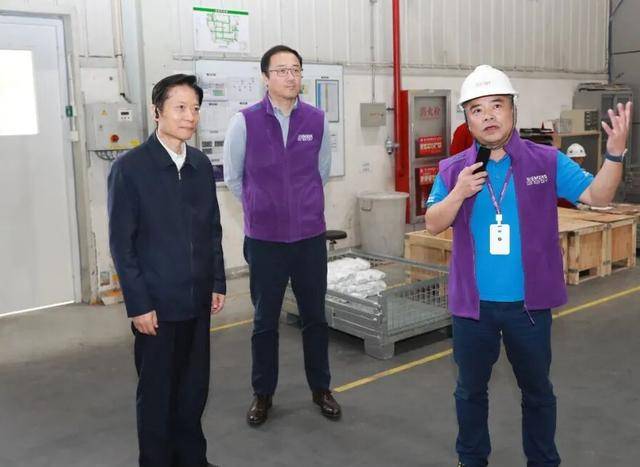
Group 1: Siemens Energy High Voltage Switchgear Co., Ltd. - Siemens Energy High Voltage is a core joint venture of Siemens Energy in China, located in Shanghai's Minhang Economic and Technological Development Zone [3] - The company utilizes lean management and digital manufacturing technologies, achieving an annual production capacity of over 1,000 high-voltage switchgear devices [3] - Siemens Energy High Voltage is involved in several major domestic power infrastructure projects while integrating into Siemens Energy's global technology system [3] Group 2: ABB High Voltage Motor Co., Ltd. - ABB High Voltage Motor is a wholly-owned subsidiary of ABB (China) Investment Co., Ltd., primarily producing high-quality high-voltage motors and generators [4] - The Minhang factory manufactures various types of high-voltage induction motors, wind power generators, explosion-proof motors, and customized synchronous motor solutions, serving industries such as chemicals, oil and gas, power generation, and mining [4] - The company aims to align its technological advantages and market strategies with Minhang District's industrial orientation and development blueprint [4] Group 3: Government Support and Development Goals - The Minhang District is focused on building a more complete industrial ecosystem and providing strong support for enterprise development [3][4] - The district aims to create a trillion-level industrial cluster, leveraging the opportunity of the "Shanghai Advanced Energy Equipment Industry Cluster" [4] - Minhang will optimize the business environment and ensure that talent policies are effectively implemented to support innovation and stability for enterprises [4]

土耳其线下餐饮店对纸包装需求分析
Sou Hu Cai Jing· 2025-05-20 13:34
Core Viewpoint - The demand for paper packaging in Turkey's food service industry is significantly increasing as a sustainable alternative to plastic, driven by rising environmental awareness and government initiatives [1][2][15]. Group 1: Market Growth and Demand - Turkey's offline food service market is experiencing robust growth, with increasing consumer demand for dining services, both for takeout and dine-in [1]. - The large domestic market in Turkey supports the continuous growth of the food service sector, where paper packaging plays a crucial role across various establishments, including cafes, fast food outlets, and fine dining restaurants [1]. - Paper packaging not only meets basic service needs but also enhances brand image and consumer experience through attractive designs and printing [1]. Group 2: Government Initiatives - The Turkish government has implemented policies to promote green packaging, including the "Green Packaging Action Plan," which provides subsidies for companies using recyclable materials and water-based inks [2]. - This initiative encourages local businesses to upgrade their technologies and broadens the application of paper packaging in the food service industry [2]. Group 3: Consumer Preferences - Turkish consumers are increasingly demanding higher standards for food packaging, focusing on aesthetics, environmental friendliness, and practicality [3][5][7]. - There is a growing preference for biodegradable materials and water-based ink printed paper packaging, which are perceived as environmentally friendly and safer for health [5]. - Consumers expect paper packaging to have good preservation, moisture resistance, and oil resistance, especially for takeout services [7]. Group 4: Technological Innovations - Technological advancements, particularly in Industry 4.0 and smart packaging, are driving innovation in Turkey's paper packaging market [9][10]. - The introduction of advanced production equipment and techniques, such as digital printing and automation, enhances production efficiency and product quality [10]. - Smart packaging technologies, including RFID and temperature-sensitive labels, are being integrated into paper packaging to improve logistics tracking and consumer experience [10]. Group 5: International Trade Opportunities - Turkish food service companies can leverage export opportunities for eco-friendly paper packaging products in the international market, capitalizing on the global shift towards sustainable packaging [12]. - Importing advanced paper packaging technologies and products from abroad can elevate the overall quality of Turkey's paper packaging market, meeting consumer demands for high-quality and personalized packaging [14]. Group 6: Challenges and Opportunities - Despite the growth in demand for paper packaging, challenges such as rising raw material costs and increased environmental standards are impacting production costs [15]. - The competitive market landscape necessitates continuous improvement in product quality and service levels to capture market share [15]. - The strengthening of global environmental policies and rising consumer interest in sustainable packaging present significant growth opportunities for Turkey's paper packaging market [15]. Group 7: Upcoming Events - The third Paper Eurasia International Printing, Packaging, and Paper Industry Exhibition will take place in Istanbul from May 6-8, 2026, serving as a key platform for industry stakeholders to explore market demands and establish partnerships [17].
