
市场价值重估

Search documents
2.4万套银行房产急抛售,楼市要崩盘了吗?
Sou Hu Cai Jing· 2025-11-13 00:21
Core Insights - The article highlights a significant shift in the banking sector, where financial institutions are increasingly acting as real estate agents, leading to a large-scale asset liquidation in the housing market [1][3]. Group 1: Market Dynamics - Banks are listing a substantial number of properties, with Sichuan Rural Credit offering 24,000 units, indicating a systemic issue with non-performing assets [5]. - The trend of banks selling off properties is particularly pronounced in new first-tier cities, which account for 38% of listings, while lower-tier cities primarily feature residential properties with inadequate infrastructure [5]. - The phenomenon of "bank direct supply housing" is characterized by a significant price drop, with some properties being auctioned at 50% of their market value [3][6]. Group 2: Debt and Loan Issues - The article discusses a concerning trend of increasing non-performing loans, with a 217% year-on-year rise in corporate bad loans secured by real estate [6]. - A notable percentage of residential mortgage collateral is now classified as "negative equity," with 19% of properties having a mortgage balance exceeding their market value [8]. - The cycle of falling property prices leading to increased defaults and subsequent bank sell-offs is creating a vicious cycle that challenges the financial system's risk management capabilities [8]. Group 3: Asset Management Strategies - Banks are adopting a strategy of differentiating between low-quality and high-quality assets, with prime properties in core locations being retained while lower-quality assets are liquidated [9]. - The article suggests that banks are using a "price for volume" strategy to prevent a spiral decline in asset prices, as evidenced by a 25% average price drop in bank direct sales compared to a 38% drop in the auction market [9]. - The potential for a new equilibrium in the market is discussed, with possibilities including the securitization of commercial real estate and the establishment of a three-tier housing system [10]. Group 4: Future Scenarios - Three potential scenarios for the market's future are outlined: a soft landing through government collaboration, a liquidity trap leading to price crashes, and a new balanced market structure [10]. - The article emphasizes that the current wave of bank asset sales presents both risks and opportunities for buyers, with some able to purchase properties at significant discounts while others may face long-term vacancies due to poor property conditions [10].

A股:16亿黄金级肉签公布中签结果,意外惊喜奖,股民中签或有纠结!
Sou Hu Cai Jing· 2025-10-21 02:01
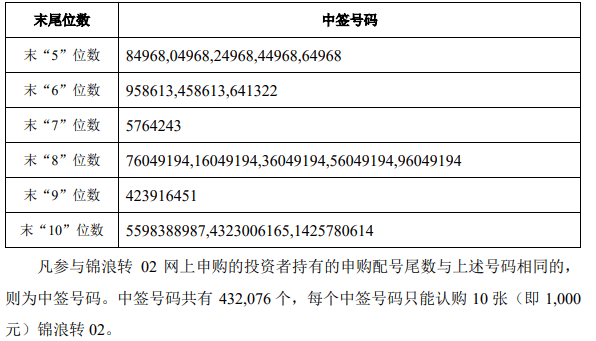
Group 1 - The core point of the news is the unexpected success of the bond issuance by Jinlang Technology, with over 432,000 winning numbers for the convertible bond Jinlang 02, attracting many retail investors [1] - The current stock price of Jinlang Technology is 76.38 yuan, with a conversion price of 89.82 yuan and a conversion value of 85.04 yuan, indicating a low conversion value which is rare in recent times [1] - Despite the low conversion value, the bond has a high rating of AA, suggesting that investors may still achieve positive returns from the new convertible bond, even if it experiences a slight decline [1] Group 2 - There is a possibility that the market may rise during the period between the winning announcement and the bond's listing, potentially increasing the conversion value of Jinlang 02 and enhancing investor returns [2] - The current market sentiment is cautious, with many investors hesitant due to the index nearing a ten-year high, reflecting a lingering "bear market mentality" among seasoned investors [3] - The banking sector, particularly state-owned banks like Agricultural Bank, is showing signs of recovery, breaking out of a long period of low valuations and indicating a potential re-evaluation of low valuation, high dividend assets [5]

又有绩优主动基金宣布限购
Zhong Zheng Wang· 2025-08-06 05:05
Group 1 - Central viewpoint: Several actively managed funds are implementing subscription limits to control product scale and protect existing investors' interests [1][2] - Zhongou Digital Economy Mixed Fund announced a subscription limit of 1 million yuan per day per account, with a return rate exceeding 150% in the past year [1] - Yongying Fund and GF Fund also announced similar subscription limits for their high-performing funds, with returns of over 65% and 147% respectively in the past year [1] Group 2 - Industry experts suggest that subscription limits help mitigate the "too big to turn" issue and prevent arbitrage activities involving suspended stocks [2] - Allianz Fund's research department anticipates that the current market fluctuations will not alter the upward trend, as the stock market enters a new value reassessment cycle [2] - There is an expectation of significant excess returns from quality technology assets in the third quarter [2]