
平台服务型生态企业

Search documents
海尔连续17年领跑全球大型家用电器品牌零售量
Xin Lang Cai Jing· 2026-01-08 03:07
Core Insights - Haier has maintained its position as the world's largest home appliance brand by retail volume for 17 consecutive years, with significant growth in market share from 6.3% to 12.1% since 2009, demonstrating strong resilience and stability [1] - The company's growth is attributed to its smart home strategy, transitioning from merely selling appliances to providing a platform service ecosystem that enhances user experience through software-defined scenarios [1] Group 1: Performance and Strategy - Haier's global market share has seen a consistent increase, achieving five consecutive years of growth [1] - The "126" strategy focuses on user-centric innovation, establishing a smart home channel, two major platforms for customer engagement, and six core capabilities including globalization and digitalization [3][4] Group 2: Globalization and High-End Positioning - Haier's globalization involves enhancing capabilities across sales, marketing, service, logistics, procurement, R&D, and manufacturing, with successful product iterations tailored to local markets [4] - The high-end strategy is exemplified by successful product launches, such as the "Lazy Three-Tub Washing Machine," which achieved over 1 million units sold in three quarters [6] Group 3: Digitalization and Smart Technology - Haier aims for "extreme efficiency" through full-process digital transformation, improving operational efficiency and customer satisfaction with 80% of products delivered directly to users [6] - The company is advancing from product intelligence to scenario intelligence, integrating AI capabilities into home appliances for enhanced user interaction [7] Group 4: Ecosystem and Sustainability - Haier's smart home ecosystem connects over 66 million resources, providing comprehensive services across various life scenarios, including a new "people-car-home" ecosystem [9] - The company is committed to ESG principles, with initiatives aimed at achieving carbon neutrality by 2050 and offering energy-efficient products that exceed current standards [9]


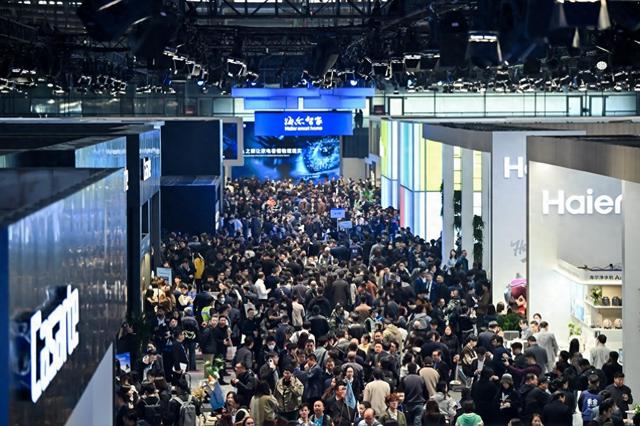
海尔智家向平台服务型生态企业转型
Jin Tou Wang· 2025-12-31 09:40
Core Viewpoint - The global home appliance industry is navigating challenges and transformations, shifting from a "product-centric" and "channel-centric" era to a "user-centric" phase, where understanding and efficiently engaging users will differentiate companies [1] Group 1: Industry Challenges and Transformations - The global market faces slow economic growth and increased trade barriers, while domestic competition intensifies due to inventory battles [1] - The rise of AI presents new opportunities for transformation within the industry [1] Group 2: Haier Smart Home's Transformation - Haier Smart Home is undergoing a significant transformation towards a user-centered model, aiming to become a platform service-oriented ecological enterprise [1] - The company is focusing on four major transformations: unified warehouse TC, user platform, digital stores, and smart home solutions [1][2] Group 3: Unified Warehouse TC - Haier Smart Home is reshaping customer models through unified warehouse TC, improving inventory management and delivery optimization, resulting in over 80% of products reaching users directly and a 10% improvement in order response time [2] Group 4: User Platform - The user platform allows for full lifecycle management, currently engaging 410 million users, with over 14.5 million users receiving proactive care through AI [2] Group 5: Digital Stores - The company is developing intelligent retail stores based on digital AI capabilities, enhancing operational efficiency by integrating the entire process from selection to settlement [2] Group 6: Smart Home Solutions - Haier Smart Home is transitioning to a model defined by software, focusing on smart home, smart vehicles, and smart travel, with the Haier APP serving as the primary entry point for a comprehensive smart living platform [2][3] Group 7: Future Outlook - Haier Smart Home aims to evolve from a manufacturing entity to an open service platform driven by user-centricity, data, and ecosystem support, collaborating with partners to create new experiences [3]