
广佛同城化

Search documents
广州都市圈步入2.0时代:通勤圈、生活圈之外,如何打造产业圈
2 1 Shi Ji Jing Ji Bao Dao· 2026-02-27 13:20
Core Insights - The Guangzhou-Foshan intercity metro line, known as the Guangfo Line, has significantly improved commuting efficiency between the two cities, with daily ridership expected to reach 199.4 million by the end of 2025 [1][4] - The Guangdong provincial government has outlined plans to enhance the Guangzhou metropolitan area by optimizing commuting, living, and industrial circles, emphasizing the need for better coordination across administrative regions [2][12] - Despite advancements in transportation infrastructure, industrial collaboration between Guangzhou and Foshan remains limited, necessitating deeper integration to fully leverage each city's strengths [11][12] Transportation Infrastructure - The Guangfo Line, operational since 2010, is the first intercity metro in China, facilitating direct access between key areas in Guangzhou and Foshan [1][3] - By 2025, the daily commuting population between Guangzhou and Foshan is projected to reach 39 million, with ongoing projects like the Guangfo West Ring Line and additional metro lines enhancing connectivity [7][11] - The Guangzhou metro network has expanded to 420 kilometers, linking multiple cities and creating a comprehensive urban transit system [5][7] Urban Integration - The integration of commuting and living circles is progressing, with a significant increase in cross-city travel for work and leisure, indicating a shift towards a more interconnected urban lifestyle [4][10] - The establishment of various transportation links has led to a "half-hour living circle," making it easier for residents to access services and amenities across both cities [8][12] Industrial Collaboration - Current industrial cooperation primarily focuses on research and development, with initiatives like the establishment of innovation parks and technology incubators in Foshan [11][12] - There is a need for more profound industrial integration, as existing collaborations are often superficial and do not fully exploit the potential of both cities' economic strengths [12][14] - Recommendations include reforming administrative evaluation systems to encourage cross-city collaboration and establishing shared economic benefits to foster deeper industrial ties [12][13]

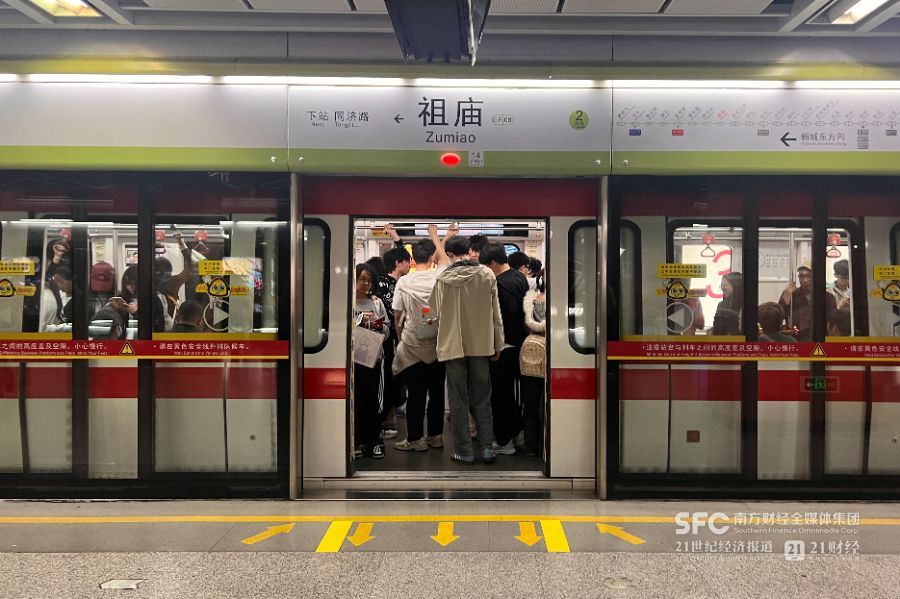
拟今年建成!这条城际铁路将贯通广佛中心城区
Nan Fang Du Shi Bao· 2026-02-02 08:16
Group 1 - The completion of the main structure of the Dalan Station marks a significant milestone in the construction of the Guangzhou-Foshan West Ring Intercity Railway, which is the first intercity railway in the Guangdong-Hong Kong-Macao Greater Bay Area led by Guangzhou [1] - The project will connect key hubs such as Foshan West Station, Guangzhou North Station, and Baiyun Airport, facilitating efficient intercity travel and contributing to the realization of a "half-hour living circle" in the Guangzhou-Foshan area [2] - The entire line spans approximately 47 kilometers and includes seven stations, with the completion of civil engineering works paving the way for subsequent electromechanical installation and decoration phases [1][2] Group 2 - The Guangzhou-Foshan West Ring Railway is expected to enhance the integration of urban functions and spaces between Guangzhou and Foshan, effectively expanding the city's capabilities [2] - The construction of the Deep River Railway, another key project in the Greater Bay Area, is also progressing, with significant milestones achieved in the construction of the Guangzhongjiang Grand Bridge [3] - The Deep River Railway aims to connect the Shenzhen Qianhai Free Trade Zone with the Guangzhou Nansha Free Trade Zone, promoting regional development and economic diversification [3]
广佛西环城际铁路全线车站封顶 助力大湾区“一小时交通圈”建设
Xin Lang Cai Jing· 2026-02-01 00:43
Core Viewpoint - The completion of the main structure of the Guangfo West Ring project marks a significant step towards enhancing the transportation network in the Guangdong-Hong Kong-Macao Greater Bay Area, facilitating a "one-hour transportation circle" [2][3] Group 1: Project Overview - The Guangfo West Ring line, part of the Pearl River Delta intercity rail transit network, connects key urban areas including Foshan and Guangzhou, covering a total length of approximately 47 kilometers [2] - The project includes seven new stations: Shizhong East, Dalan, Guanjiao South, Hegui, Tanbu, Huadu Port, and Shenshan North, with all civil structures now completed [2] Group 2: Impact on Transportation - Upon completion, the Guangfo West Ring will provide direct and rapid connections between Foshan West Station, Guangzhou North Station, and Baiyun Airport, enhancing intercity travel efficiency [3] - The project aims to support the realization of a "half-hour living circle" in the Guangfo area and contribute to the high-quality development of rail transit in the Greater Bay Area [3]
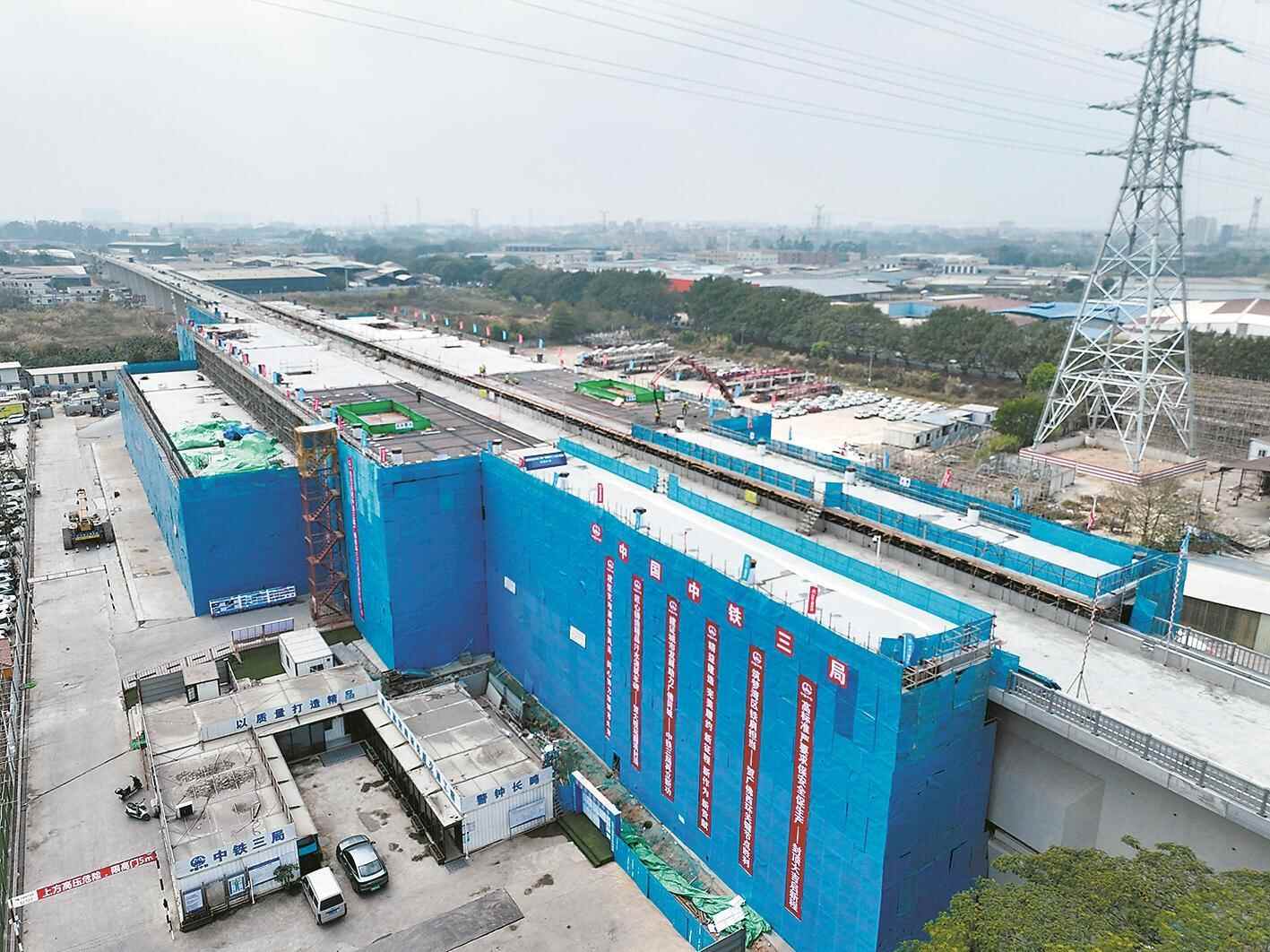
地铁首通15周年,广佛同城呼唤新动力
2 1 Shi Ji Jing Ji Bao Dao· 2025-10-20 03:36
Core Viewpoint - The integration of Guangzhou and Foshan is essential for urban development, with a focus on enhancing their collaboration through urbanization efforts, particularly as they celebrate the 15th anniversary of the Guangzhou-Foshan metro line [1][2]. Group 1: Historical Context and Achievements - The Guangzhou-Foshan metro, inaugurated on November 3, 2010, marked the beginning of significant urban integration, attracting national attention [1]. - Over the past 15 years, the economic output of Guangzhou and Foshan has consistently increased, with daily cross-city commuters reaching 375,000 [1]. - The collaboration between the two cities has led to the establishment of multiple metro lines and high-level cooperation, contributing to the accumulation of quality resources [1]. Group 2: Future Opportunities and Challenges - Despite past achievements, there remains room for improvement in the Guangzhou-Foshan integration, with fewer groundbreaking initiatives in recent years compared to earlier developments [2]. - The recent policy from the Central Government emphasizes the need for modern urban agglomeration development and the establishment of effective mechanisms for urban integration [2]. - Future opportunities for integration include upgrading transportation networks, deepening regional collaboration, and enhancing industrial cooperation, which require significant institutional and mechanism innovations [2][3]. Group 3: Vision for Urban Integration - The future of Guangzhou-Foshan integration is built on a solid foundation of past cooperation and a shared commitment to addressing new challenges [3]. - As the cities evolve from a "dual city" model to a more unified approach, their successful integration will not only benefit their own development but also serve as a model for urban modernization in China [3].

广佛通只在佛山有优惠,在广州没有?网友建议改名,公司回应
Nan Fang Du Shi Bao· 2025-09-05 11:07
Core Viewpoint - The "Guangfo Tong" transportation card offers discounts only within Foshan, leading to public confusion regarding its benefits in Guangzhou, prompting suggestions for rebranding and improved discount policies [1][2]. Group 1: Discount Policies - The current discount policy in Guangzhou allows passengers to enjoy an 80% discount on fares between 80 to 200 yuan and a 50% discount on amounts exceeding 200 yuan for public transport, including metro and certain bus lines [1]. - The Foshan Transportation Group acknowledges the differences in discount schemes between Foshan and Guangzhou but clarifies that "Guangfo Tong" cardholders can still benefit from the same fare discounts as "Yangcheng Tong" cardholders in Guangzhou [1]. Group 2: Naming and Strategic Significance - The name "Guangfo Tong" was established in 2006 as part of the Guangfo integration strategy, symbolizing deep connectivity between the two cities and representing a significant achievement in breaking down administrative barriers [2]. - The term "Tong" in the name emphasizes the transportation interconnectivity and the practical outcomes of the Guangfo integration process [2].
广佛边界规划了18年的大桥何时动工?回应:正持续推进立项
Nan Fang Du Shi Bao· 2025-08-05 00:34
Core Viewpoint - The construction of the Chenxiang Bridge, a key infrastructure project aimed at enhancing connectivity between Guangzhou and Foshan, has faced significant delays, with planning and environmental assessments extending over 18 years, raising concerns about the pace of urban integration in the region [1][2][9]. Group 1: Project Background - The Chenxiang Bridge is part of a broader initiative to facilitate urban integration between Guangzhou and Foshan, which has been a focus since the early 2000s [6][7]. - The bridge is intended to connect key areas in both cities, enhancing transportation and economic interactions, particularly for the densely populated Jinsha Island area [3][8]. Group 2: Current Status and Challenges - As of 2024, the project has not yet commenced construction, despite plans for it to start in January 2025 and be completed by December 2028 [4][11]. - The project has been stalled due to complex issues related to environmental protection, public opposition, and the need for extensive planning and coordination between the two cities [9][10][12]. Group 3: Public Sentiment and Impact - Local residents express frustration over the prolonged delays, highlighting ongoing traffic congestion and the inadequacy of existing transportation infrastructure [5][6]. - The population in the Jinsha area has grown to nearly 400,000, intensifying the demand for improved transportation links [8][14]. Group 4: Future Prospects - Experts suggest that the successful construction of the Chenxiang Bridge is crucial for the future development of the Guangzhou-Foshan metropolitan area, emphasizing the need for collaborative efforts between the two cities to overcome bureaucratic hurdles [12][13][14]. - The bridge is seen as a vital component in achieving the broader goals of urban integration and economic development in the region, with potential benefits for local residents and businesses [8][14].
都市评:政府要兑现承诺也要重新审视广佛同城
Nan Fang Du Shi Bao· 2025-08-05 00:34
Core Viewpoint - The construction of the Shenxiang Bridge has faced repeated delays, raising concerns about the fulfillment of commitments and the implications for regional development in the Guangzhou-Foshan area [1] Infrastructure Development - The Shenxiang Bridge's construction challenges reflect deeper contradictions in regional collaborative development, particularly as the year marks the conclusion of the "14th Five-Year Plan" for the Guangzhou-Foshan area, which aims for a GDP of approximately 5 trillion yuan [1] - Infrastructure connectivity is deemed essential for achieving the goal of half-hour access within the core urban areas and one-hour access across the entire region [1] Government Credibility - Delaying cross-city projects due to short-term financial considerations could undermine government credibility and hinder the progress of the Guangzhou-Foshan integration [1] Urbanization Trends - The era of urban agglomeration has arrived, with recent central government meetings emphasizing the need to enhance cities' capacity for population and economic development through modern urban clusters and metropolitan areas [1] - The inclusion of Foshan into the Guangzhou metropolitan area in 2023 signifies a new phase of integrated development between the two cities [1] Future Directions - The Guangzhou and Foshan governments need to reassess the contemporary challenges of urban integration, with a focus on transportation as a priority for future development [1]