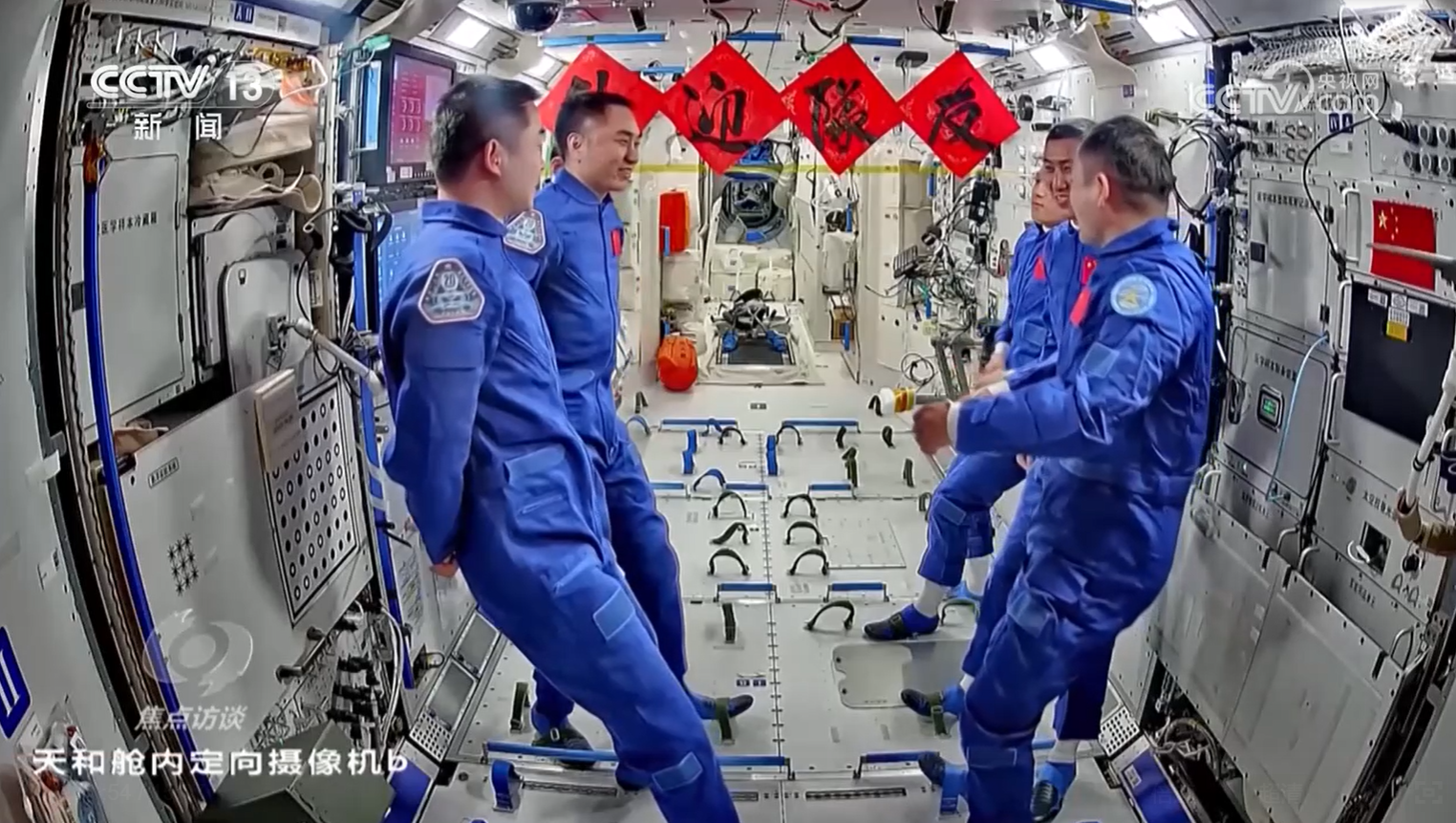
应急发射

Search documents
天地接力二十天
Ren Min Wang· 2026-01-11 22:43
Core Viewpoint - The successful emergency launch of the Shenzhou spacecraft highlights China's commitment to astronaut safety and rapid response capabilities in the face of unexpected challenges [1][2][3]. Group 1: Incident Overview - A crack was discovered on the Shenzhou 20 spacecraft's window, prompting immediate assessment and decision-making by the China Manned Space Engineering Office [1][2]. - The crack was determined to be a through-crack, compromising the safety of the spacecraft during re-entry [2][3]. - Experts quickly convened to evaluate the implications of the crack on the spacecraft's structural integrity and astronaut safety [2][3]. Group 2: Response Actions - A series of simulations and tests were initiated to replicate the impact that caused the crack, leading to the decision to postpone the Shenzhou 20 return mission [3]. - The Shenzhou team adopted a parallel working model to expedite the analysis and ensure thorough validation of safety measures [3][4]. - The decision was made to have the Shenzhou 20 crew return on the Shenzhou 21 spacecraft, with the Shenzhou 22 launch scheduled shortly after [4][5]. Group 3: Technical Adjustments - The return method for the Shenzhou 21 was modified from a five-orbit to a three-orbit rapid return, marking a significant technical advancement [5][6]. - The GNC (Guidance, Navigation, and Control) system was crucial for the successful implementation of the new return strategy [6][7]. - The team worked tirelessly to ensure that all systems were ready for the emergency launch, maintaining high standards despite the compressed timeline [10][12]. Group 4: Launch Success - The Shenzhou 22 spacecraft was successfully launched on November 25, 2025, completing the emergency mission [13]. - The event served as a reminder of the importance of rigorous preparation and the need for continuous improvement in safety protocols [13][14]. - The successful return of the Shenzhou 20 crew underscored the resilience and dedication of the Chinese space program [7][14].

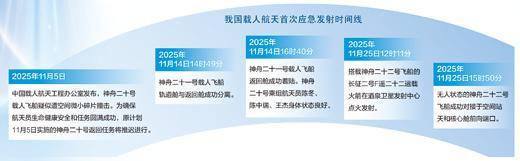
“玻璃发生撞击,已经裂透了”,人命关天!央视首度披露:从发现裂纹到任务成功,我国载人航天首次应急发射都经历了什么?
Zhong Guo Ji Jin Bao· 2026-01-03 01:47
Core Viewpoint - The successful launch and docking of the Shenzhou-22 spacecraft with the Chinese space station demonstrates China's capability in emergency response and commitment to astronaut safety, following the damage to the Shenzhou-20 spacecraft's window due to a suspected micro-debris impact [1][4][42]. Group 1: Emergency Response and Launch - The Shenzhou-22 spacecraft was launched on November 25, 2025, as an emergency response to ensure the safe return of the Shenzhou-20 astronaut crew after a window crack was discovered [1][4]. - The decision to launch Shenzhou-22 was made after thorough assessments indicated that the risk of returning the Shenzhou-20 crew with the damaged spacecraft was too high [5][7]. - The emergency launch process was expedited, with a 16-day timeline established for the mission, significantly shorter than the usual 30-day preparation period [15][17]. Group 2: Coordination and Collaboration - Various teams, including experts and engineers, worked around the clock to ensure the safety and success of the mission, demonstrating a high level of collaboration and commitment [5][8]. - The launch involved multiple systems working in parallel to optimize the workflow and ensure all safety checks were completed despite the compressed timeline [19][34]. - The Shenzhou-22 mission was characterized by a strong spirit of teamwork, with all personnel contributing to the success of the emergency response [28][41]. Group 3: Technical Challenges and Solutions - The Shenzhou-22 spacecraft underwent rigorous testing and modifications to enhance its capabilities, ensuring it could serve as both a rescue vehicle and a supply ship [28][38]. - During the preparation, a significant anomaly was detected in the rocket's fuel system, which was resolved without impacting the launch schedule [24][25]. - The mission's success relied on meticulous planning and execution, with all systems undergoing thorough checks to prevent any potential issues during the launch [26][41]. Group 4: Successful Docking and Future Implications - The Shenzhou-22 successfully docked with the Tianhe core module of the Chinese space station approximately 3.5 hours after launch, marking a significant achievement in China's space exploration efforts [1][42]. - This mission not only ensured the safety of the astronauts but also reinforced China's commitment to maintaining a robust presence in space and advancing its space station program [44].
神舟二十二号飞船首次实现“无人上行物资+载人下行”模式
Sou Hu Cai Jing· 2025-11-25 15:16
Core Viewpoint - The Shenzhou-22 spacecraft is executing an "emergency launch" mission, marking the first implementation of a flexible mode for "unmanned upward cargo + manned downward return" [1] Group 1: Mission Details - The Shenzhou-22 mission was initiated due to the Shenzhou-20 spacecraft sustaining minor damage from space debris, resulting in fine cracks on its window [1][3] - The launch preparation process was significantly expedited, reduced from several days to just 16 days, presenting extreme challenges for assembly, testing, fueling, and system integration [1] Group 2: Technological Improvements - The Shenzhou-22 spacecraft is the first of a new batch and features two major upgrades: a significant enhancement of the instrument system for a more user-friendly interface and a miniaturization of the instrument panel to create more space in the return capsule [5][7] - The improvements in the instrument system not only enhance aesthetics but also provide greater installation space for downward payloads in the return capsule [7]
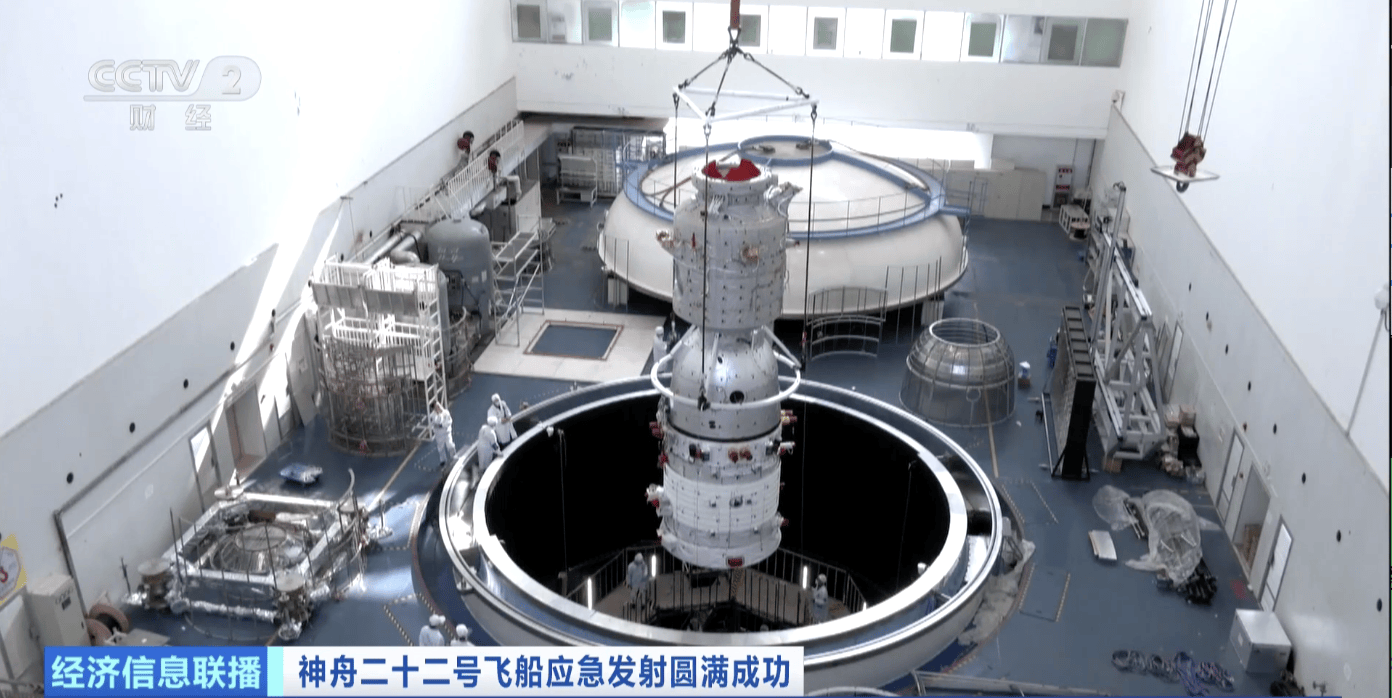
焦点访谈|发射、返回再发射……16天紧急升空展现中国航天硬核实力
Yang Shi Wang· 2025-11-25 15:01
Core Points - The successful launch of the Shenzhou-22 spacecraft on November 25 marks China's first emergency launch in its manned space program, following an anomaly with the Shenzhou-20 spacecraft [1][23] - The rapid decision-making and execution of the emergency launch demonstrate China's advanced capabilities in manned spaceflight and emergency response [15][25] Group 1: Emergency Launch Details - The Shenzhou-22 spacecraft was launched to ensure the safety of astronauts after the Shenzhou-20 crew faced an emergency due to a suspected impact from space debris [3][5] - The decision to use the Shenzhou-21 spacecraft for the return of the Shenzhou-20 crew was made after thorough safety assessments indicated high risks associated with the damaged spacecraft [7][9] - The emergency launch was executed within a 16-day window, significantly shorter than the usual preparation time, showcasing the efficiency of the emergency response protocols [15][21] Group 2: Technical and Operational Challenges - The Shenzhou-21 spacecraft underwent significant optimization to facilitate a quicker return trajectory compared to the original plan [7][19] - Ground teams conducted extensive training and planning for search and rescue operations, adapting to the new landing zones due to the delayed return [11][19] - The launch involved meticulous coordination among various teams to ensure all systems were ready, including the preparation of supplies and scientific payloads for the mission [21][23] Group 3: Future Implications - The successful emergency response serves as a practical test of the "one main, one backup" model, enhancing the overall emergency response capabilities of China's manned space program [25] - Following the mission, further inspections and analyses of the Shenzhou-20 spacecraft will be conducted to improve safety measures and risk management in future missions [25]