废旧家电回收

Search documents
家电以旧换新1.92亿台,近四成家电回收相关企业分布在华东地区
Qi Cha Cha· 2026-01-08 02:53
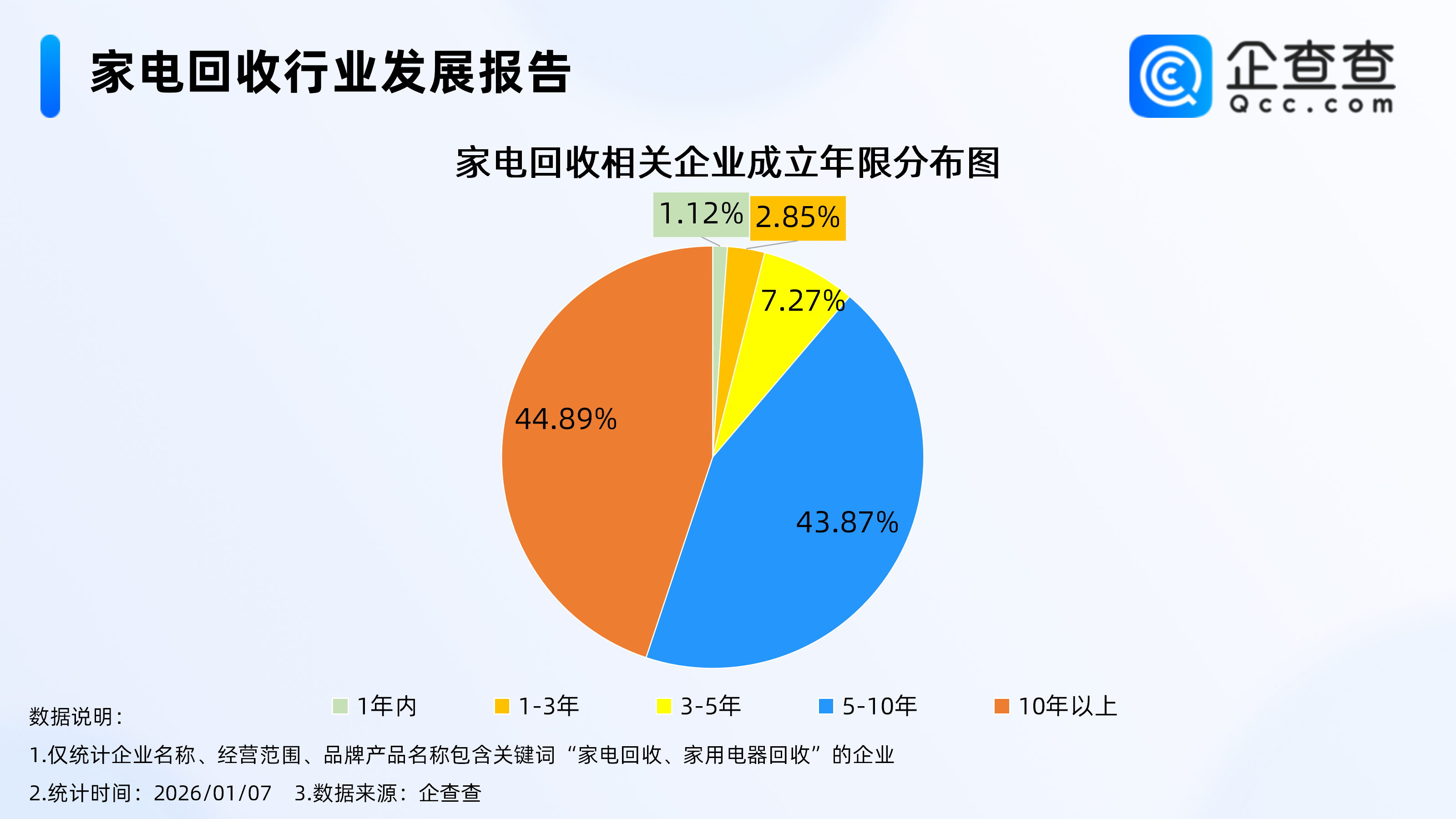
Group 1 - The total amount of home appliances to be replaced under the national "old for new" program from 2024 to 2025 is expected to reach 192 million units, with over 90% being first-level energy efficiency (water efficiency) appliances [1] - The categories of replaced appliances include 12 major types such as refrigerators, washing machines, and air conditioners, which are essential household items with high daily usage frequency [1] - The Ministry of Commerce and four other departments announced a notification to improve the recycling system for old appliances and provide subsidies for new digital and smart products until December 31, 2025 [1] Group 2 - As of January 7, there are 6,977 existing companies related to home appliance recycling in China, with over 40% of these companies being established for more than 10 years, accounting for 44.89% [3] - Companies established between 5 to 10 years account for 43.87% of the total [3] - The distribution of home appliance recycling companies is heavily concentrated in the East China region, which accounts for nearly 40% at 39.29% [6] Group 3 - The Central China and North China regions have 16.60% and 12.61% of home appliance recycling companies, respectively [6] - In 2025, a total of 81 new home appliance recycling companies are expected to be registered [6]

定了,明年以旧换新有这些补贴
Zhong Guo Zheng Quan Bao· 2025-12-31 08:31
Core Viewpoint - The Chinese government has announced a subsidy program for the replacement of old home appliances and the purchase of new digital and smart products starting January 1, 2026, aimed at boosting consumer spending and supporting the economy [1][5]. Group 1: Subsidy Details - The subsidy program includes six categories of home appliances: refrigerators, washing machines, televisions, air conditioners, water heaters, and computers, as well as four categories of digital and smart products: smartphones, tablets, smartwatches (bands), and smart glasses, with a maximum subsidy of 1,500 yuan for home appliances and 500 yuan for digital products [2]. - Consumers can receive a subsidy of 15% off the final sales price after discounts, with each person eligible for one subsidy per category [2]. Group 2: Implementation and Support - Local governments are required to effectively implement the subsidy program, utilizing both online and offline sales channels, and enhancing support for participating businesses [2]. - The program encourages the development of diverse consumption scenarios in physical stores and aims to boost the potential of brand specialty stores and professional retail [2]. Group 3: Rural Consumer Access - The notification emphasizes the importance of ensuring that rural residents, especially those in remote areas, can access the subsidy program through increased offline business presence and online channel guidance [3]. - It supports the participation of various commercial entities in county-level markets and encourages large supermarkets and specialty stores to reach rural markets through mobile sales and local exhibitions [3]. Group 4: Waste Recycling System - The notification calls for strengthening logistics management and improving the waste recycling system for old appliances, ensuring that businesses involved in the subsidy program can handle both the sale of new products and the collection of old ones [4]. - It encourages promotional activities that offer discounts for consumers who purchase new products while trading in their old appliances, and suggests developing innovative recycling models [4]. Group 5: Policy Coordination and Efficiency - A national meeting emphasized the need for coordination among various departments and local governments to effectively implement the subsidy policy, focusing on enhancing the efficiency of subsidy approval and disbursement [5]. - The meeting also highlighted the importance of combating fraudulent claims and ensuring that subsidy funds are utilized effectively [5].
畅通“想换”“敢换”渠道 让以旧换新释放更大效能
Jin Rong Shi Bao· 2025-07-30 02:44
Group 1 - The core viewpoint emphasizes the importance of boosting consumption and expanding domestic demand as a primary economic task, with a focus on the "old-for-new" policy for consumer goods [1][2] - The implementation of the "old-for-new" policy has led to significant sales growth, with over 1.6 trillion yuan in sales from five major categories of consumer goods by mid-2024, surpassing the previous year's figures [1] - The government has allocated 300 billion yuan in special long-term bonds to support the "old-for-new" initiative, indicating strong policy backing for consumption [1] Group 2 - The recycling process for old appliances is currently inefficient, with only 20% of waste electronics being recycled through formal channels, leading to environmental concerns [3][4] - The establishment of a comprehensive recycling system is crucial for enhancing consumer participation in the "old-for-new" program, ensuring that old products are handled by qualified entities [4][6] - Recent government initiatives aim to improve the logistics and recycling network for old products, promoting a more efficient "exchange + recycling" model [4][5] Group 3 - Some businesses have engaged in unethical practices, such as price inflation before applying government subsidies, undermining the effectiveness of the "old-for-new" policy [7][8] - Regulatory bodies have intensified oversight to combat these practices, with various regions implementing strict measures against violators [8][9] - The use of big data and technology is recommended to enhance consumer protection and prevent fraudulent activities in the market [9] Group 4 - Consumer finance products, such as installment plans, are becoming essential in facilitating the "old-for-new" policy, with significant sales increases reported in stores that offer these options [10][11] - Financial support for service industry operators is also emphasized, with calls for increased green credit to support sustainable consumption practices [11] - The integration of consumer finance with the "old-for-new" measures is seen as a way to enhance consumer experience and stimulate market activity [11]
废旧家电没处扔、不好卖?海尔再循环上门回收直通拆解厂
Sou Hu Wang· 2025-07-14 08:32
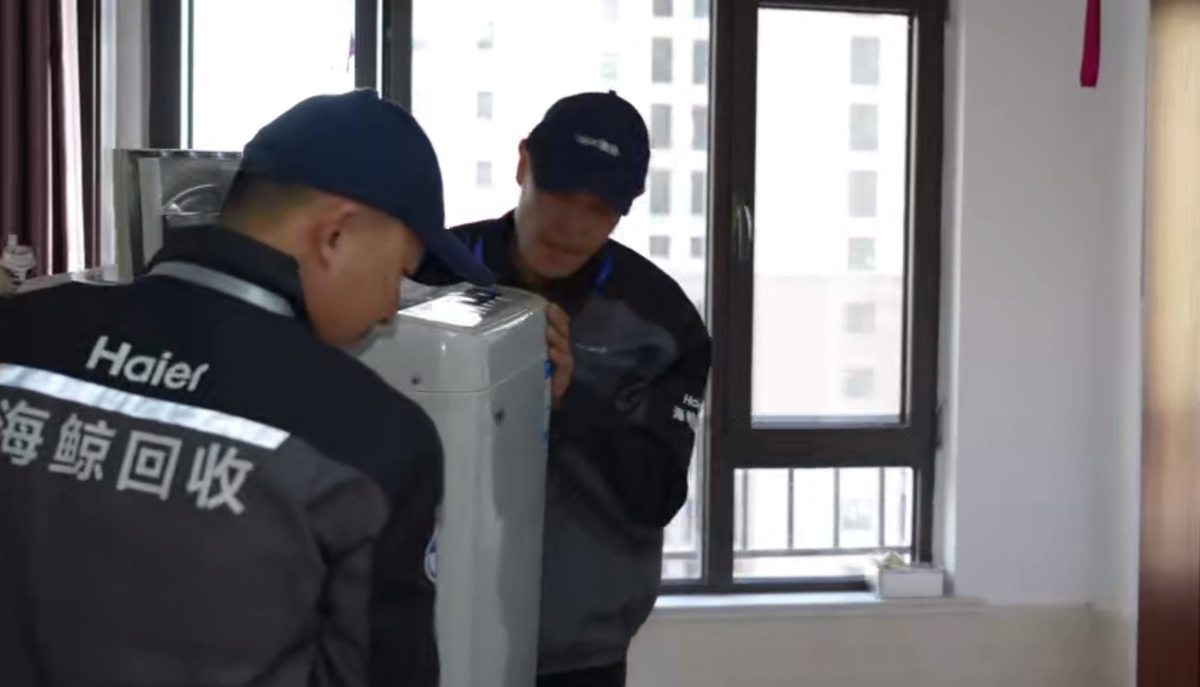
Core Viewpoint - The article highlights the growing issue of disposing of old home appliances, emphasizing the environmental risks associated with improper disposal and the advantages of using professional recycling platforms like Haier's. Group 1: Industry Challenges - The rapid replacement of home appliances has led to a common problem of disposing of old appliances, with concerns about environmental pollution from harmful substances like refrigerants and heavy metals [1] - Traditional disposal methods often involve selling to informal collectors, which can result in illegal dismantling and resource wastage [1] Group 2: Company Solutions - Haier has launched the first comprehensive recycling platform in the industry, providing convenient and reliable door-to-door collection services for old appliances [1][3] - The newly established Haier Circular Industry Appliance Recycling Sorting Center ensures standardized and data-driven management, allowing for full visibility of the recycling process and preventing environmental pollution [3][5] - The new recycling method significantly improves efficiency by reducing intermediate steps, with each appliance's journey from collection to dismantling being systematically recorded [5] Group 3: Market Trends - The national policy promoting the replacement of old home appliances is driving an increase in discarded appliances, making professional recycling platforms a convenient and environmentally friendly option for consumers [6]