开发性金融

Search documents
国开行中层调整 涉及多家省分行行长
Xin Lang Cai Jing· 2026-02-05 10:20
Group 1 - The core point of the article is the personnel adjustments within the China Development Bank (CDB), including the appointment of new leaders and the promotion of young cadres [1][20][21] - The new Chief Business Officer of CDB is Hong Dengjin, who was previously the General Manager of the Development and Planning Department [1][20] - A new round of personnel adjustments has begun, affecting several provincial branch leaders and deputy leaders, with multiple young cadres being promoted [1][20] Group 2 - Yang Jun, the Minister of the Party and Mass Work Department, has reached retirement age and has held various positions within CDB [3][21] - Song Zheng, the current head of the Hunan Provincial Branch, is proposed to become the Minister of the Party and Mass Work Department [5][21] - Li Zhijun, the head of the Gansu Provincial Branch, will take over as the head of the Hunan Provincial Branch, having previously held various leadership roles within CDB [7][23] Group 3 - Cheng Yongxu, the head of the Sichuan Provincial Branch, has reached retirement age and has held multiple leadership positions within CDB [9][25] - Mu Lan, the Deputy General Manager of the Transportation Business Department, is proposed to become the head of the Ningxia Provincial Branch [11][27] - Wang Qiang, the current head of the Ningxia Provincial Branch, is proposed to take over as the head of the Sichuan Provincial Branch [12][28] Group 4 - Liu Jun, the Deputy Head of the Hebei Provincial Branch, is proposed to become the Deputy Head of the Hunan Provincial Branch [14][30] - Niu Xiaoyu, the Director of the Technology Finance Department in the Beijing Branch, is proposed to become the Deputy Head of the Sichuan Provincial Branch, recognized for his contributions to major project financing [16][32] - Ren Xin, the Director of the Customer Department in the Shaanxi Provincial Branch, is proposed to become the Deputy Head of the Xinjiang Provincial Branch, with a strong background in various business areas [18][34] Group 5 - CDB has 37 first-level branches and 4 second-level branches in mainland China, with a presence in major cities and regions [18][34] - In 2024, CDB's average number of employees is projected to be 12,234, an increase of 308 from the previous year, with a total salary of 6.142 billion yuan and an average salary of 502,000 yuan, reflecting a growth of 0.46% [18][34][35] - CDB aims to support national development strategies by leveraging its financial capabilities, with plans to invest 250 billion yuan in new policy financial tools by 2025, supporting over 1,054 projects and driving total investment of 3.85 trillion yuan [19][35]

2026年: 回顾这25年的融资模式演变, 从纷繁复杂到华山自古一条路
Sou Hu Cai Jing· 2026-01-04 12:41
Core Viewpoint - The article discusses the evolution of infrastructure financing policies in China, highlighting significant shifts in government strategies over the years to balance infrastructure development with debt control and risk management [2]. Development Stage (Early 2000s - 2008) - The development of infrastructure financing began with the China Development Bank's advocacy for developmental finance, reaching its first peak around 2008. Prior to this, local financing platforms were emerging but lacked proper guidance, leading to disorganized growth [3]. - The introduction of the self-balancing concept linked local infrastructure projects with fiscal revenues, resulting in a surge of loans for land reserve, urban village renovation, urbanization, and new rural construction [3]. Control Platform Stage (2010 Onwards) - In response to the growing unmanageable debt from local financing platforms, the State Council issued a notice in 2010 to control new financing from these platforms. This included a classification of debts into three categories based on their repayment sources [4]. Enlightened Channel Stage (2014 Onwards) - By 2014, it became evident that merely controlling financing platforms was ineffective. The State Council introduced policies to promote special bonds and Public-Private Partnerships (PPP), marking the beginning of a new era of project investments amounting to trillions [5]. Blocking Dark Channels Stage (2018-2019) - A series of regulations were implemented in 2018 and 2019 to prohibit new hidden debts and halt the use of land revenue for special bonds and PPP projects. This marked a significant tightening of financing regulations [6]. Precipice of Change (2019-2024) - The period following 2019 has seen a dramatic shift in infrastructure financing, particularly with the decline of the fixed-income model, which relied on government guarantees rather than project revenues for debt repayment [7][8]. Fixed-Income Model Decline - The fixed-income borrowing model, which included local government bonds and PPPs, has faced increasing scrutiny and regulation, leading to a significant reduction in its viability. The model's reliance on government credit rather than project profitability has been identified as a fundamental flaw [9]. Urban Renewal and Integration of Village Renovation (2025) - The concept of urban renewal has evolved significantly, now encompassing a wide range of urban construction activities, including the renovation of urban villages and redevelopment of inefficient land. This shift represents a major expansion of the urban renewal concept [10][11]. - The integration of urban village renovation into the urban renewal framework positions it as a key pathway for infrastructure financing, marking a significant change in the financing landscape [11].

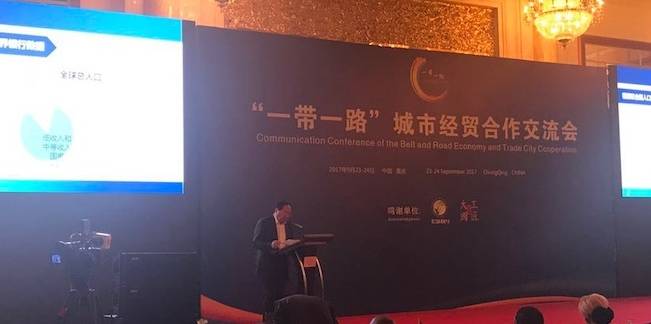
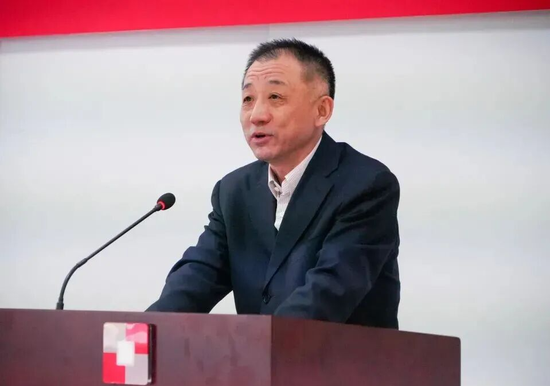
金融领域专家李若谷出席“一带一路”城市经贸合作高峰论坛|金融专家出席
Sou Hu Cai Jing· 2025-10-24 08:37
Core Insights - The "Belt and Road" Urban Economic and Trade Cooperation Summit Forum was held in Shanghai, focusing on project financing, multilateral development cooperation, and risk prevention mechanisms [1] Group 1: Policy Interpretation and Financing Practices - Li Ruogu, former deputy governor of the People's Bank of China, emphasized the seamless integration of policy interpretation and financing practices due to his dual experience in central banking and development finance [3] - He proposed three principles for urban-level projects: cash flow measurability, risk sharing, and a dual-track approach of sovereign and commercial credit [3] Group 2: Financing Models - Li Ruogu introduced a "layered financing + local currency linkage" model to address funding bottlenecks for urban projects, suggesting the use of local currency swap agreements to reduce exchange rate risks [4] - The model has been validated in some African projects, achieving an average reduction in financing costs by 120-150 basis points [4] Group 3: ESG and Debt Sustainability - Emphasis was placed on incorporating ESG indicators into loan assessment and pricing mechanisms to prevent a focus on construction over operation and financing over repayment [5] - A second phase of the "Belt and Road Urban ESG Database" project was initiated, aiming to cover 60 key cities and enhance the international recognition of Chinese solutions [5] Group 4: Collaborative Synergies - The forum aimed to connect cities, finance, and industries, with Li Ruogu facilitating discussions that led to a 2 billion RMB framework cooperation agreement [6] - The event highlighted the role of high-level financial diplomacy in synchronizing policy, funding, and intellectual resources for urban connectivity projects [6]