弹性用工

Search documents
当客服专员“AI分身”上岗后 金融服务边界被重新定义
Shang Hai Zheng Quan Bao· 2026-01-08 16:49
Core Insights - The financial industry is undergoing a transformation in customer service, driven by AI technology, which allows for more efficient and personalized interactions between customers and service representatives [1][3]. Group 1: AI Integration in Customer Service - AI assistants are being integrated into customer service operations, enabling representatives to resolve issues that previously required multiple transfers in a single call, significantly improving customer experience [2][3]. - A regional bank reported a nearly 70% decrease in complaint rates and a 20% increase in post-loan recovery efficiency due to AI integration in customer service [3]. - In the insurance sector, 70% to 80% of complex issues can now be resolved by frontline staff using AI, transforming employees from mere information relayers to problem solvers and decision supporters [3]. Group 2: Value of Human Employees - AI technology is not replacing human workers but rather enhancing their capabilities, allowing them to focus on more complex and valuable tasks [3][7]. - The role of customer service personnel is evolving from "process executors" to "complex scenario coordinators" and "personalized service designers," emphasizing the importance of empathy and communication skills [6][7]. - The introduction of AI is leading to a shift in employment structures, moving from traditional fixed roles to a more flexible, task-driven model that enhances collaboration between humans and machines [6]. Group 3: Future Outlook - Banks like Industrial Bank are planning to create an environment where AI is accessible and utilized by all employees, shifting from passive response to proactive service [5]. - The use of AI in customer service is expected to expand, with significant advancements in areas such as wealth management and customer needs identification [5]. - The trend towards "elastic employment" based on cloud platforms and AI scheduling is emerging, indicating a significant change in how financial institutions approach staffing and service delivery [6].
聚焦今元集团:破解消费电子行业用工困局,为企业出海保驾护航
Sou Hu Cai Jing· 2025-07-11 02:17
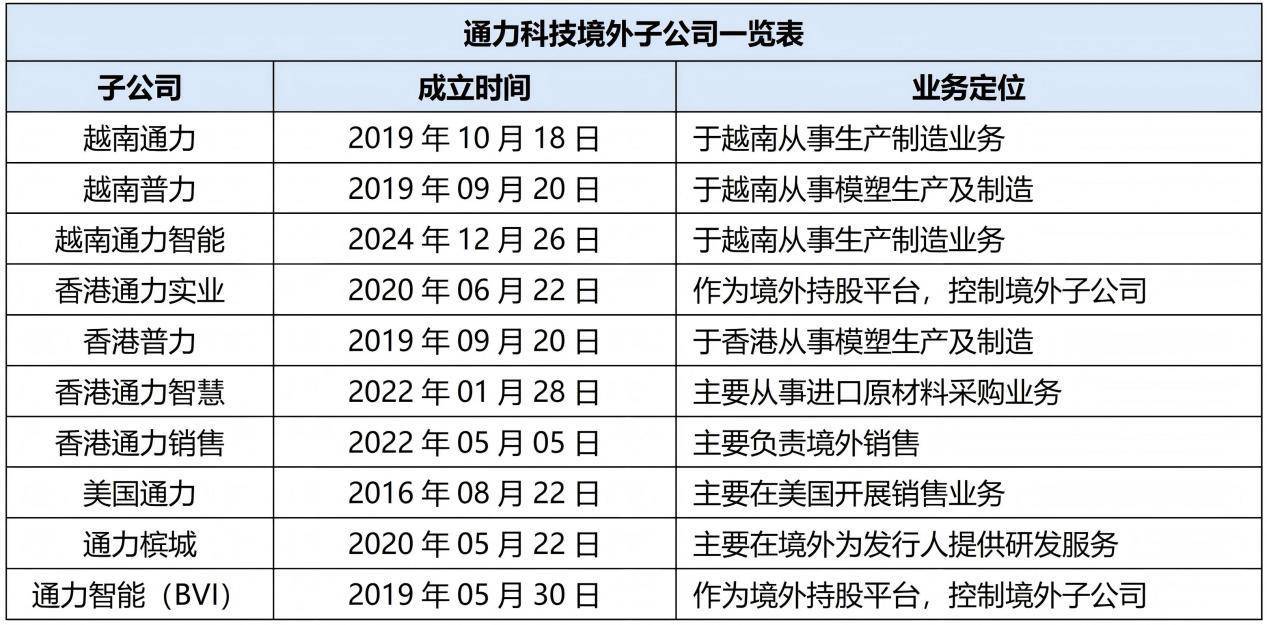
Core Viewpoint - The consumer electronics market is set for a structural recovery in 2024, driven by the generative AI technology revolution and supportive policies, with Chinese companies actively expanding overseas to enhance global presence and innovation capabilities [1]. Group 1: Company Performance - Tongli Technology, a smart acoustic device manufacturer, achieved a revenue of 11.46 billion yuan in 2024, with over 80% of its revenue coming from overseas markets, significantly higher than the industry average [1]. - The company has established 10 overseas subsidiaries and has 4 R&D centers and 5 manufacturing bases globally, focusing on North America, Europe, and Asia for its sales [1][4]. Group 2: Overseas Operations - Tongli Technology has leveraged the advantages of Southeast Asia, such as stable political conditions and a young labor force, by setting up three manufacturing bases in Vietnam and one R&D center in Malaysia [4]. - As of December 31, 2024, the company employed 3,611 overseas staff, accounting for 29.55% of its total workforce [4]. Group 3: Labor Outsourcing Strategy - Since 2023, the application of AI in consumer electronics has accelerated, leading to fluctuations in production orders. Tongli Technology has adopted labor outsourcing for 18 auxiliary production processes to optimize workforce allocation and reduce costs [5][7]. - The labor outsourcing amount for Tongli Technology reached 287.12 million yuan in 2024, representing 2.99% of its total operating costs [7]. Group 4: Industry Trends - The consumer electronics industry is experiencing a shift towards flexible labor models to address seasonal demand fluctuations, with companies like Huqin Technology and Guoguang Electric also increasing their labor outsourcing amounts [8]. - Digital outsourcing services are emerging as a solution to the labor volatility challenges faced by the consumer electronics sector, enhancing operational efficiency and cost management [9]. Group 5: Future Outlook - The consumer electronics industry is expected to continue evolving towards smart, ecological, and globalized development, with emerging overseas markets becoming crucial growth points [12]. - Companies must strengthen local talent development and cross-cultural management to navigate the complexities of global operations effectively [12][15].