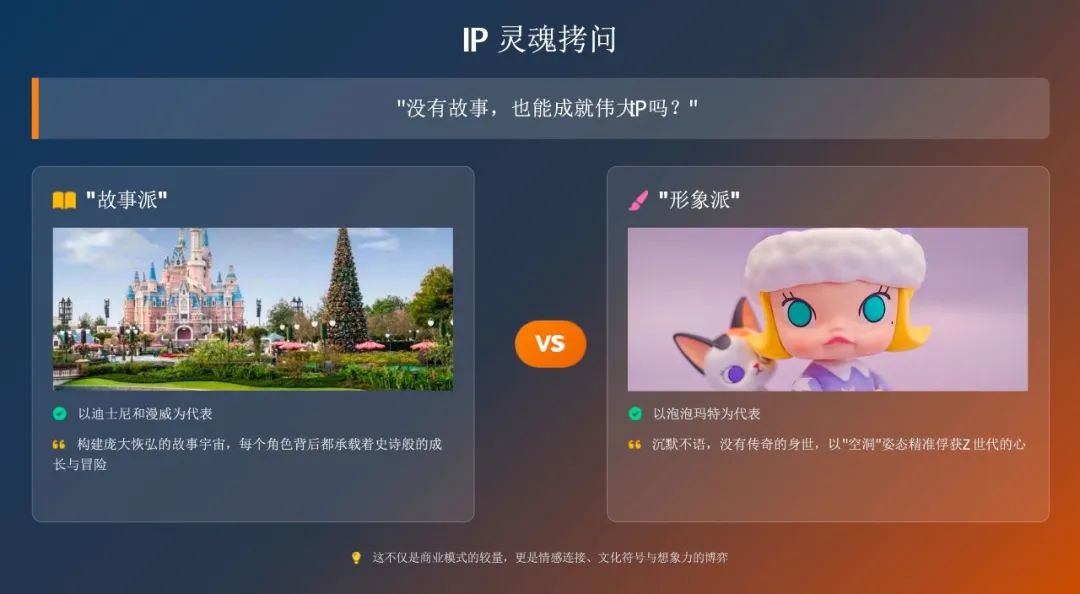
形象IP

Search documents
从泡泡玛特看新消费的核心诉求
Sou Hu Cai Jing· 2025-12-09 06:31
Core Viewpoint - The traditional narrative-driven IP construction model is facing challenges, while Pop Mart has adopted a unique approach by focusing on "non-narrative" character IP, allowing users to project their emotions and imagination onto the IP, thus creating a new emotional connection and commercial ecosystem in the current era of personalized expression and instant emotional resonance [1][4]. Group 1: Pop Mart's IP Strategy - Pop Mart's IP primarily consists of character IP, or "light IP," which does not require a heavy narrative foundation, contrasting with traditional IP models like Disney that rely on grand storytelling [2][4]. - The core advantage of Pop Mart's strategy lies in its ability to create significant emotional space by not setting explicit character stories or single values, allowing products to reflect users' personal emotions [4][5]. - The "light IP" model is more flexible and adaptable, enabling rapid integration into different markets through a "global framework + local plugins" approach, driven by data rather than narrative [5][6]. Group 2: Emotional Connection and Consumer Behavior - Pop Mart's strategy resonates with the new consumption era's logic, where emotions have become a form of currency, and products serve as open emotional canvases for users to express themselves [7][8]. - The consumption behavior has shifted from "ownership" to "experience," where consumers seek immediate emotional gratification through their purchases, facilitated by social media and instant feedback loops [7][8]. - This reflects a broader strategy for modern individuals to cope with anxiety and loneliness, as instant emotional satisfaction serves as a form of psychological compensation in a fast-paced and uncertain environment [8][9]. Group 3: Challenges and Future Outlook - While Pop Mart's model offers flexibility, it may lack the depth of emotional connection and longevity found in traditional story-driven IPs, which can continuously evolve and engage fans [6][9]. - The success of Pop Mart's approach hinges on its ability to maintain relevance in design and social trends, as the appeal of character IP is closely tied to contemporary aesthetic preferences [6][9]. - The long-term viability and risk resilience of this model will require further validation over time [9].


两种IP模型揭秘:形象IP泡泡玛特VS故事IP迪士尼漫威
3 6 Ke· 2025-06-11 00:43
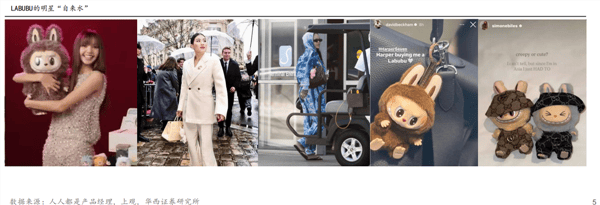
Core Perspective - The article explores the dichotomy between "story-driven" IPs, exemplified by Disney, and "image-driven" IPs, represented by Pop Mart, highlighting their different approaches to emotional connection and consumer engagement [1][5][30] Group 1: Story-driven IPs - Story-driven IPs, like those from Disney and Marvel, create expansive narrative universes over decades, fostering deep emotional connections with characters and plots, which enhances consumer loyalty and engagement [3][6][8] - Disney's "Frozen" serves as a prime example, where the emotional arcs of characters like Elsa and Anna resonate deeply with audiences, transforming consumer purchases into support for the characters' journeys [8][20] - The business model for story-driven IPs involves a long-term cycle of content creation, merchandise, and immersive experiences, requiring significant investment and time to build a robust narrative ecosystem [6][20][23] Group 2: Image-driven IPs - Image-driven IPs, such as Pop Mart, focus on visual appeal and emotional projection rather than complex narratives, allowing consumers to project their feelings onto characters like Molly and LABUBU [10][12][13] - The success of image-driven IPs relies on operational agility, frequent design updates, and social media engagement, positioning them as trendy cultural symbols rather than traditional storytelling vehicles [12][13][25] - Pop Mart's evolution from reliance on a single IP to a diverse IP matrix demonstrates its operational capabilities, with projections indicating significant growth in the collectible toy market [15][16] Group 3: Comparative Analysis - A comparative analysis reveals that story-driven IPs offer long-term emotional engagement and high-value derivatives, while image-driven IPs provide quick market responses and social currency [18][19][28] - Story-driven IPs tend to have a longer lifecycle and deeper emotional barriers, while image-driven IPs face challenges of shallow emotional connections and shorter lifespans [20][28] - Both types of IPs are converging towards a common goal of emotional connection, with story-driven IPs adopting visual elements and image-driven IPs incorporating narrative aspects to enhance consumer engagement [30][32]