快递业反内卷

Search documents
中泰证券:快递业市场份额有望逐步集中 建议关注顺丰控股等
Zhi Tong Cai Jing· 2026-01-14 09:09
中泰证券(600918)发布研报称,"价格战"转向"价值战"背景下,快递业市场份额有望逐步向服务品质 更优、管理能力更强、网络健康度更好的快递企业集中,同时该等企业有望凭借自身资源优势实现更为 显著的降本增效;重点跟踪监管力度、量价表现及头部企业竞争策略变化情况。个股方面重点关注中通 快递-W(02057)、圆通速递(600233)(600233.SH)。建议关注申通快递(002468)(002468.SZ)、韵达股 份(002120)(002120.SZ)及顺丰控股(002352)(002352.SZ)。 中泰证券主要观点如下: 3)行业端:行业件量增速放缓下,价值竞争成关键。"反内卷"背景下,快递价格理性回归,快递轻小件 化趋势减弱,同时电商平台合规经营监管强化有望推动快递件量"去泡沫",行业件量增速中枢下移预期 下(据2026年全国邮政工作会议,2025年快递业务量同比增长13.7%,预计2026年快递业务量同比增长 8%左右),"降本、提质、增效"的价值竞争成为快递企业打造竞争优势、获取市场份额的关键。 深挖全链路成本下降潜力,末端决胜逐步成为共识 1)中转环节:随着件量规模不断扩大,规模效应带来的边 ...



快递业“反内卷”成效渐显
Ren Min Ri Bao· 2025-11-17 22:40
Core Insights - The postal and express delivery industry in China has made significant progress in addressing "involution" competition, with 22 provinces raising express delivery prices this year [1] - The average express delivery price stabilized and increased by 0.5% in the third quarter compared to the second quarter, indicating a monthly growth trend [1] - Service quality has improved, with a 72-hour delivery success rate of 86.47% in key areas, up 2.08 percentage points year-on-year, and customer satisfaction reaching 85 points, an increase of 1.3 points from the previous year [1] Price Adjustments - 22 provinces have implemented price increases for express delivery services, including regions in East, Central, North, Northeast, and Southwest China [1] - Specific provinces such as Beijing, Tianjin, Hebei, Liaoning, Sichuan, and Tibet have adjusted their prices [1] Service Quality Improvements - Major companies have focused on enhancing end-service quality in response to "anti-involution" requirements [1] - The 72-hour delivery success rate has improved to 86.47%, reflecting a commitment to better service [1] - Customer satisfaction scores have risen to 85 points, indicating a positive trend in consumer perception of service quality [1]
22省份上调快递价格 快递业“反内卷”成效渐显
Ren Min Ri Bao· 2025-11-17 21:58
Core Insights - The postal and express delivery industry in China has made significant progress in addressing "involution" competition, with 22 provinces raising express delivery prices this year [1] - The average express delivery price stabilized and increased by 0.5% in the third quarter compared to the second quarter, indicating a monthly growth trend [1] - Service quality has improved, with a 72-hour delivery success rate of 86.47% in key areas, up 2.08 percentage points year-on-year, and customer satisfaction reaching 85 points, an increase of 1.3 points from the previous year [1] Industry Developments - The "anti-involution" measures have been implemented across various regions, including East China, Central China, and several cities in North, Northeast, and Southwest China [1] - The focus on improving end-service quality has been emphasized by major companies in the industry [1] Performance Metrics - The average price of express delivery has shown a consistent upward trend in the third quarter [1] - Customer satisfaction scores reflect a positive shift, indicating enhanced service quality in the industry [1]
华创证券:继续强调快递业“反内卷”下投资机会 持续看好顺丰控股(002352.SZ)
智通财经网· 2025-11-03 06:14
Core Viewpoint - The report from Huachuang Securities expresses optimism about the express delivery industry, highlighting a rebound in pricing elasticity and improved financial metrics for major players in Q3 2025 [1] Group 1: Business Volume - The express delivery industry shows resilient growth, with a projected volume growth rate of 17.2% for the first three quarters of 2025 [2] - In terms of business volume and market share for the first three quarters of 2025: YTO Express (22.6 billion pieces, 15.6%) > Yunda Express (19.1 billion pieces, 13.2%) > Shentong Express (18.9 billion pieces, 13.0%) > Jitu Express (16.2 billion pieces, 11.1%) > SF Express (12.1 billion pieces, 8.3%) [2] - SF Express leads in growth rate at 33.4%, followed by YTO Express at 15.0%, while the industry average is 13.3% [2] Group 2: Pricing - The express delivery industry generated revenue of 1,085.74 billion yuan in the first three quarters of 2025, marking an 8.9% year-on-year increase, while the average ticket price decreased by 7.1% to 7.5 yuan [3] - For Q3 2025, the average ticket prices were: YTO Express (2.14 yuan, -2.4% year-on-year, +0.026 yuan quarter-on-quarter) > Shentong Express (2.05 yuan, +2.1% year-on-year, +0.082 yuan quarter-on-quarter) > Yunda Express (1.95 yuan, -2.1% year-on-year, +0.035 yuan quarter-on-quarter) > SF Express (13.57 yuan, -14.4% year-on-year, +0.079 yuan quarter-on-quarter) [3] Group 3: Performance Overview - In the first three quarters of 2025, SF Express led the industry in net profit with 8.31 billion yuan, a 9.1% increase, followed by YTO Express (2.88 billion yuan, -1.8%) and Shentong Express (760 million yuan, +15.8%) [4] - For Q3 2025, net profits were: SF Express (2.57 billion yuan, -8.5%) > YTO Express (1.05 billion yuan, +11.0%) > Shentong Express (300 million yuan, +40.3%) > Yunda Express (200 million yuan, -45.2%) [4] - The non-GAAP net profit for Q3 2025 showed similar trends, with SF Express at 2.23 billion yuan, down 14.2%, while Shentong Express saw a significant increase of 59.6% [4][5] Group 4: Single Ticket Analysis - The non-GAAP net profit per ticket increased for all major players in Q3 2025, with Shentong Express showing the highest year-on-year growth [5] - The non-GAAP net profit per ticket for Q3 2025 was: Shentong Express (0.049 yuan) > YTO Express (0.131 yuan) > Yunda Express (0.031 yuan) [5] Group 5: Asset Analysis - Capital expenditures for the first three quarters of 2025 were as follows: SF Express (6.7 billion yuan, -2.6%) > YTO Express (6.3 billion yuan, +34.1%) > Yunda Express (1.9 billion yuan, +51.9%) > Shentong Express (2.1 billion yuan, -10.5%) [5]
华创证券:继续强调快递业“反内卷”下投资机会 持续看好顺丰控股
Zhi Tong Cai Jing· 2025-11-03 03:54
Core Viewpoint - The report from Huachuang Securities expresses optimism about the express delivery industry, highlighting a rebound in pricing elasticity and a resilient growth in demand, particularly in Q3 2025. Group 1: Business Volume - The industry demand shows resilient growth with a volume increase of 17.2% in the first three quarters of 2025, with SF Express leading the growth [1] - In terms of business volume and market share for the first three quarters of 2025: YTO Express (22.6 billion pieces, 15.6%) > Yunda (19.1 billion pieces, 13.2%) > Shentong (18.9 billion pieces, 13.0%) > Jitu (16.2 billion pieces, 11.1%) > SF Express (12.1 billion pieces, 8.3%) [1] - For Q3 2025, the growth rates are as follows: SF Express (33.4%) > YTO (15.0%) > industry average (13.3%) > Shentong (10.7%) > Jitu (10.4%) > Yunda (6.6%) [2] Group 2: Pricing - In the first three quarters of 2025, the express delivery industry generated revenue of 1,085.74 billion yuan, a year-on-year increase of 8.9%, while the average ticket price decreased by 7.1% to 7.5 yuan [3] - Company performance in Q3 2025 shows: YTO (2.14 yuan, -2.4% YoY, +0.026 yuan QoQ) > Shentong (2.05 yuan, +2.1% YoY, +0.082 yuan QoQ) > Yunda (1.95 yuan, -2.1% YoY, +0.035 yuan QoQ); SF Express reported a ticket price of 13.57 yuan, down 14.4% YoY, but up 0.079 yuan QoQ [3] Group 3: Profit Performance - In the first three quarters of 2025, the net profit attributable to shareholders is led by SF Express (8.31 billion yuan, +9.1%) > YTO (2.88 billion yuan, -1.8%) > Shentong (760 million yuan, +15.8%) > Yunda (730 million yuan, -48.2%) [4] - For Q3 2025, the net profit figures are: SF Express (2.57 billion yuan, -8.5%) > YTO (1.05 billion yuan, +11.0%) > Shentong (300 million yuan, +40.3%) > Yunda (200 million yuan, -45.2%) [4] - The non-GAAP net profit for Q3 2025 shows SF Express (2.23 billion yuan, -14.2%) > YTO (1.01 billion yuan, +9.1%) > Shentong (320 million yuan, +59.6%) > Yunda (200 million yuan, -40.6%) [4] Group 4: Single Ticket Analysis - The non-GAAP net profit per ticket increased by at least 0.01 yuan in Q3 2025 compared to Q2 2025, with YTO leading at 0.131 yuan > Shentong at 0.049 yuan > Yunda at 0.031 yuan [5] - Year-on-year growth in Q3 2025 shows Shentong with the highest increase, while YTO and Yunda experienced declines [5] Group 5: Capital Expenditure - In the first three quarters of 2025, capital expenditures for major companies are as follows: SF Express (6.7 billion yuan, -2.6%) > YTO (6.3 billion yuan, +34.1%) > Yunda (1.9 billion yuan, +51.9%) > Shentong (2.1 billion yuan, -10.5%) [5]
电商快递激战,极兔速递获100亿定期贷款融资
Guo Ji Jin Rong Bao· 2025-10-20 11:58
Core Insights - Jitu Express announced a significant financing move by securing a loan of 10 billion RMB to strengthen its capital position ahead of the peak e-commerce season [1] - The financing agreement involves a 36-month term and aims to refinance existing debts and support general corporate and operational funding [1][2] - Jitu's strong performance in the first half of the year, with a revenue of 5.5 billion USD and a net profit increase of 186.6%, reflects its growth trajectory and operational efficiency [4] Financing Details - The loan agreement was established between Huaxing (the borrower) and several banks, with Jitu acting as a guarantor [1] - The loan will be canceled if the controlling shareholder, Li Jie, loses significant voting rights or control over the company's operations [1] - Li Jie currently holds approximately 55.09% of the voting rights in Jitu Express [1] Market Performance - Jitu Express reported a total package volume of 13.99 billion items in the first half of the year, marking a 27% year-on-year increase [5] - The company achieved a package volume of approximately 7.68 billion items in the third quarter, a 23.1% increase year-on-year [5] - As of October 20, Jitu's stock price rose by 2.93%, with a year-to-date increase of 66.23%, outperforming competitors [5]

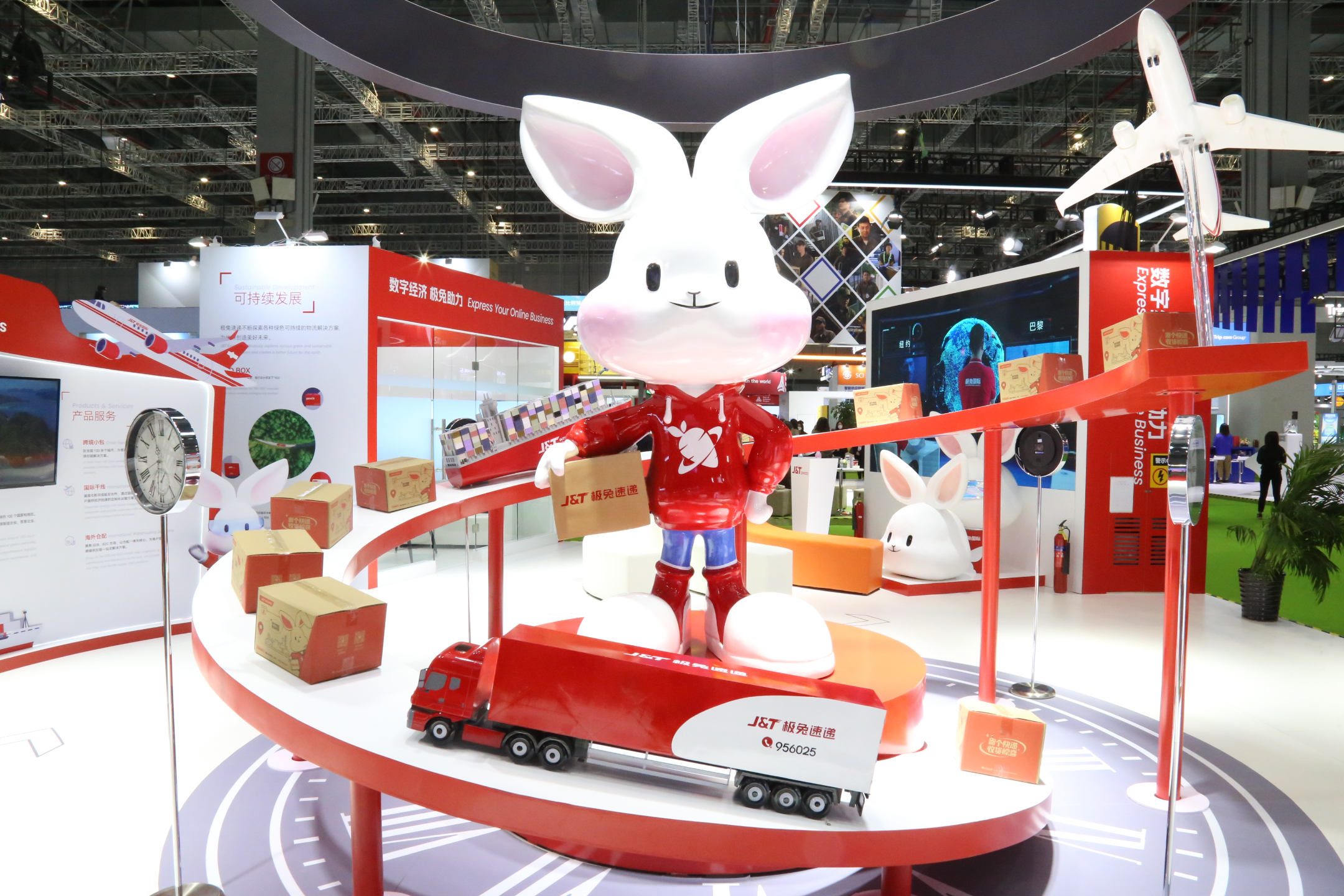
行业“反内卷”成效初显,多家快递公司实现量价齐升
Bei Jing Ri Bao Ke Hu Duan· 2025-10-19 09:47
Group 1 - The core viewpoint of the articles highlights that most listed express delivery companies in China reported an increase in both volume and price in September, indicating early signs of the industry's "anti-involution" efforts [1][2] Group 2 - YTO Express reported a revenue of 5.799 billion yuan in September, a year-on-year increase of 14.89%, with a business volume of 2.627 billion parcels, up 13.64% [1] - Shentong Express achieved a revenue of 4.633 billion yuan, also up 14.89% year-on-year, with a business volume of 2.187 billion parcels, increasing by 9.46% [1] - Yunda Express recorded a revenue of 4.252 billion yuan, a 4.14% year-on-year increase, with a business volume of 2.11 billion parcels, up 3.63% [1] - The revenue growth rates of these express companies in September were significantly higher than their business volume growth rates, attributed to the rise in single parcel revenue due to the industry's "anti-involution" actions [1] - The State Post Bureau's report indicated that the China Express Development Index for September 2025 is projected to be 459.6, a year-on-year increase of 3.9% [2] - The development scale index and development capability index are expected to be 589.3 and 228.8, reflecting year-on-year increases of 9.3% and 1.9% respectively [2] - The express market is steadily growing, with improvements in automation and intelligence levels, as well as enhancements in the comprehensive transportation network and supply chain service capabilities [2]
快递业“反内卷”在行动 竞争焦点从拼价格转向比服务
Zhong Guo Zheng Quan Bao· 2025-09-22 20:23
Core Viewpoint - The domestic express delivery industry is shifting from price competition to service value enhancement, with multiple companies announcing price increases across various regions since mid-September [1][2][3]. Price Adjustments - Major express companies such as Zhongtong, Yuantong, Yunda, and Jitu have announced price increases starting September 22 in Shanghai, following similar adjustments in Liaoning and other regions [2]. - The overall price increase ranges from 0.1 to 0.4 yuan per order, with some areas setting minimum prices for deliveries [2]. - This price adjustment follows earlier increases in Guangdong and Zhejiang, where the minimum price was raised by 0.4 yuan, and further increases are expected before the "Double Eleven" shopping festival [2][5]. Industry Trends - Over 10 regions have initiated "anti-involution" actions, indicating a trend of price increases spreading from core e-commerce areas to other regions [3]. - The industry is moving towards a unified pricing strategy to reduce low-price competition, supported by regulatory bodies [3][7]. Business Performance - Data from the National Postal Administration shows that in the first half of 2025, the express delivery business volume reached 956.4 billion pieces, a year-on-year increase of 19.3%, while revenue reached 718.78 billion yuan, up 10.1% [4]. - Despite the price increases, the average price per delivery has decreased by 7.7% compared to the previous year, indicating ongoing price pressure in the market [4]. Future Outlook - Analysts predict that the price recovery trend will continue, especially with the upcoming peak season for express delivery [5][6]. - Companies are focusing on enhancing service value and employee welfare to transition from a price-driven model to a value-driven approach, aiming for sustainable high-quality development in the industry [7][8].
你的快递费 开始贵了,包邮时代终结!运费暗涨30%,你的商品正在悄悄变贵
Sou Hu Cai Jing· 2025-08-12 23:20
Core Viewpoint - The recent surge in express delivery fees in Guangdong has significantly impacted e-commerce businesses, leading to increased operational costs and potential losses for sellers [1][3][10]. Group 1: Price Increase and Its Impact - Express delivery fees in Guangdong have increased by 0.4 to 0.7 yuan per package overnight, causing significant financial strain on e-commerce sellers who rely on high volumes of shipments [1][3]. - The average delivery price in Guangdong has risen from 1.0 yuan to 1.4 yuan, with some areas experiencing increases of up to 40% [3][5]. - The price hike is a response to regulatory measures aimed at curbing "internal competition" and ensuring that delivery prices do not fall below cost [3][5]. Group 2: Historical Context and Industry Dynamics - The express delivery industry has been in a price war for over a decade, with average delivery prices dropping from 28.55 yuan in 2007 to 7.49 yuan by mid-2025 [5][7]. - Major express companies have seen significant declines in revenue per package since their initial public offerings, with declines of 38% to 43% reported by various firms [5][7]. - The current situation reflects a long-standing trend of aggressive price competition that has led to unsustainable business practices within the industry [5][12]. Group 3: Future Outlook and Industry Restructuring - The price increase may provide an opportunity for the industry to recover, with projections indicating that a 0.1 yuan increase per package could significantly boost net profits for major companies [8][12]. - The industry is expected to undergo a restructuring phase, where larger companies may consolidate market share while smaller firms either get absorbed or focus on niche markets [12]. - Regulatory changes and incentives for improved service quality are anticipated to drive a shift from price-based competition to service-based competition in the express delivery sector [12][13]. Group 4: Consumer Behavior and Market Response - E-commerce sellers are adjusting their pricing strategies in response to increased delivery costs, often passing these costs onto consumers [10][11]. - There is a noticeable change in consumer expectations regarding service quality, with customers beginning to accept higher prices for better service [13]. - The overall market sentiment indicates a growing acceptance of price increases as a necessary adjustment for improved service standards in the express delivery industry [13].