恶债不偿

Search documents
美媒昭告全球: 中国不偿还100年前的债务,美国将不承认欠中国的钱
Sou Hu Cai Jing· 2026-01-27 18:08
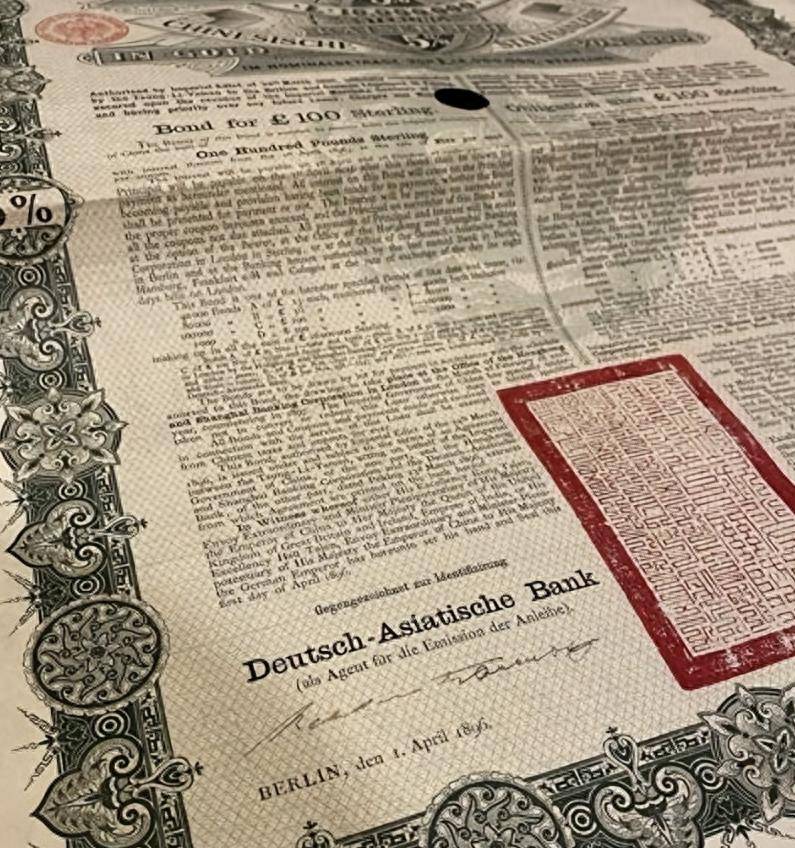
Core Viewpoint - The article discusses the historical context and implications of the U.S. media's recent focus on China's alleged debt from over a century ago, particularly the "Huguang Railway Bonds" from 1911, and how this relates to current U.S.-China financial dynamics [3][5][7]. Historical Context - The "Huguang Railway Bonds" were issued under duress by foreign powers to finance railway construction in China, representing a form of unequal treaty and economic coercion [5][7]. - After the fall of the Qing Dynasty and through the tumultuous years of the Republic, most of the principal and interest on these bonds were repaid, leaving only a small portion of the original debt [5][9]. Current U.S. Financial Situation - The U.S. is facing a significant debt crisis, with federal debt nearing $40 trillion and annual interest payments exceeding $1 trillion, which has led to rising domestic dissatisfaction [7][9]. - The U.S. media's focus on historical debts is seen as a tactic to deflect attention from internal financial issues and to shift blame onto China [9][11]. China's Position - China holds a substantial amount of U.S. Treasury bonds, which are protected under international financial regulations, and the conflation of illegal debts with legitimate holdings is viewed as a form of coercion by the U.S. [9][13]. - The article argues that international law supports China's stance against repaying these historical debts, as they were incurred under duress [17][19]. Implications for Global Finance - If the U.S. were to default on its obligations to China, it could lead to a collapse of trust in U.S. debt, severely impacting global financial markets and the U.S. economy [15][21]. - The potential fallout from such a default could accelerate the de-dollarization trend, with countries seeking alternatives to the U.S. dollar for international transactions [15][21]. China's Economic Resilience - Despite a decrease in U.S. Treasury holdings, China maintains a strong foreign exchange reserve position and is actively diversifying its financial strategies, including increasing gold reserves and promoting the international use of the yuan [19][21]. - The article emphasizes that China's economic stability and growth trajectory remain unaffected by U.S. pressures, as the country focuses on its own development goals [23].


老美耍无赖:若中国不还百年债务,那欠中国的8600亿美元也不还了
Sou Hu Cai Jing· 2025-11-04 13:25
Core Viewpoint - Recent claims by some U.S. media suggest that if China refuses to repay historical debts from the Qing Dynasty, the U.S. may refuse to redeem the $860 billion in U.S. Treasury bonds held by China, linking historical debts to modern international financial relations, which has sparked widespread controversy [1] Group 1: Historical Debt Context - The historical debt in question refers to bonds issued during the late Qing Dynasty for reparations under the Boxer Protocol and for the construction of the Huguang Railway, amounting to £6 million at a 5% interest rate, which were tied to colonial invasions and deemed forced loans [3] - Following the establishment of the People's Republic of China in 1949, the new government declared these debts void under international law, citing the principle of "odious debt," a stance that has been recognized by the international community [5] - The U.S. has recently revisited these historical debts, with Senator Marsha Blackburn stating that the principal and interest on the Qing bonds have accumulated to $1.6 trillion, while international law clearly states that forced debts do not need to be inherited [5] Group 2: Current Financial Implications - As of 2025, U.S. national debt is projected to exceed $34 trillion, with a fiscal deficit of $2.1 trillion, and interest payments consuming one-fifth of federal revenue, raising concerns about the U.S. financial situation [7] - China, as the second-largest holder of U.S. debt, has reduced its holdings to $860 billion, leading to U.S. anxiety and threats to leverage Treasury bonds, which may reflect an attempt to deflect domestic financial pressures [7] - A unilateral default by the U.S. could destabilize global finance, potentially causing a 30% drop in the dollar and increasing U.S. corporate financing costs, while also accelerating the process of de-dollarization as China diversifies its foreign reserves [7] Group 3: Shifts in International Financial Order - The ongoing discourse highlights a transformation in the international financial order, with the U.S. attempting to apply colonial-era logic to contemporary issues, while China promotes a multi-currency system through initiatives like the Belt and Road and BRICS [9] - The critical issue is not the size of the debt but the stability of the credit system, as political pressure replaces contractual integrity, potentially destabilizing global development [9] - The historical debt issue has been legally and temporally resolved, and future financial relations should adhere to established rules, emphasizing equal dialogue; using historical debts as leverage may not alleviate U.S. debt pressures but could accelerate the restructuring of the international economy towards fairness [9]