情景记忆

Search documents
你真的是记性不好吗?关于记忆和遗忘的常见误区
3 6 Ke· 2026-02-25 05:58
Group 1 - The article discusses common experiences of forgetfulness and memory lapses, emphasizing that these do not necessarily indicate a decline in brain health or aging [2][12][46] - It introduces the concept of "doorway effect," where individuals forget their intentions upon entering a new environment, highlighting the role of attention in memory retention [4][10][11] - The article explains the difference between working memory and long-term memory, noting that working memory has a limited capacity and duration, while long-term memory can store vast amounts of information over time [8][31][48] Group 2 - The article outlines strategies to mitigate forgetfulness, such as reducing distractions, repeating tasks aloud, and recording information to enhance memory retention [15][23][27] - It discusses the phenomenon of "daily memory lapses," where routine activities become less memorable due to their repetitive nature, leading to a compression of experiences into generalized templates [18][22] - The article emphasizes the importance of engaging multiple senses and creating distinctive cues to strengthen memory for significant events [24][25][29] Group 3 - The article highlights the concept of "necessary difficulty" in learning, suggesting that challenges in recalling information can enhance memory retention [38][41] - It explains the dual nature of memory, where forgetting serves as a mechanism to filter out irrelevant information and maintain cognitive efficiency [42][45] - The article concludes that memory and forgetting are complex processes, and occasional forgetfulness is a normal part of brain function rather than a sign of decline [46][48]


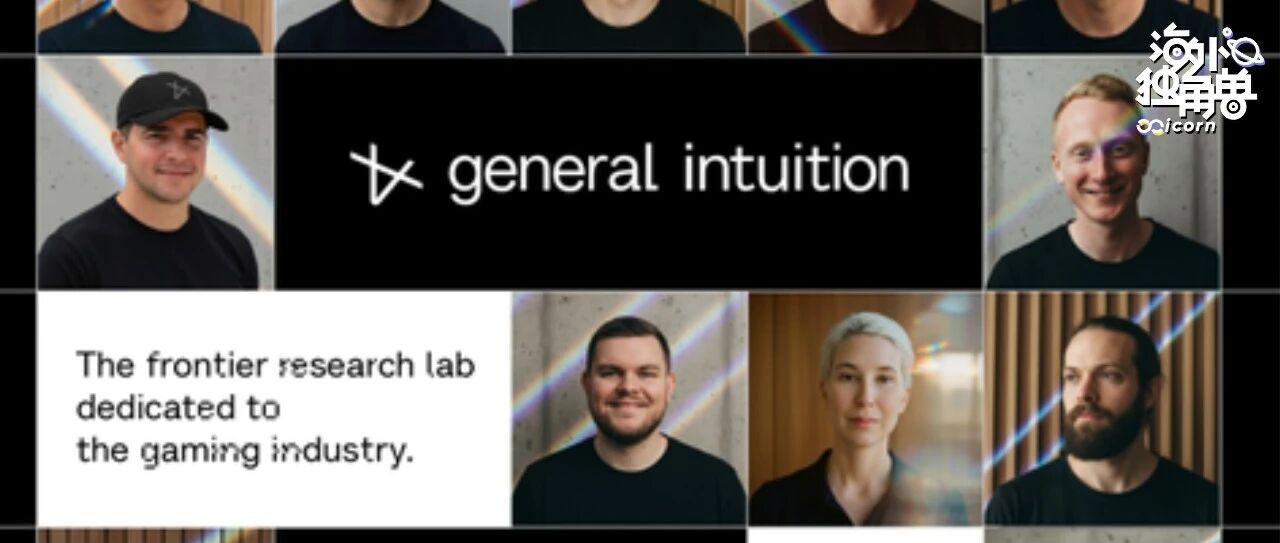
Khosla 继 OpenAI 后的最大赌注,General Intuition 凭 38 亿个游戏高光片段做世界模型
海外独角兽· 2025-12-09 12:05
Core Insights - General Intuition has raised $134 million in seed funding, led by Vinod Khosla, marking his largest seed investment since OpenAI in 2019, indicating a significant bet on the next generation of intelligent paradigms [2][5][6] - The company aims to create a unique world model that combines human-like intuition and physical common sense, differentiating itself from traditional LLMs [3][6][28] Funding and Investment - The $134 million seed round is the largest single seed investment by Khosla Ventures since its initial investment in OpenAI, which was approximately $50 million [5][6] - Khosla's investment logic is based on first principles, identifying a transformative technological path that General Intuition is pursuing [6][28] Unique Data Assets - General Intuition has access to over 3.8 billion game highlight video clips, a unique dataset that is difficult to replicate [7][11] - The data is filtered to retain only meaningful human actions, providing a rich source of episodic memory for training AI models [12][11] Technological Framework - The company envisions a three-phase AI competition landscape: Bits to Bits (text generation), Atoms to Bits (robotic perception), and Atoms to Atoms (physical task execution) [4][5] - General Intuition aims to drive 80% of atomic-level physical interactions globally by 2030 [5] AI Model and Training - The model is designed to understand all possible outcomes based on current states and actions, moving beyond traditional video generation models [20][21] - The training process utilizes imitation learning from millions of human players, allowing the AI to replicate nuanced human behaviors [23][24] Market Strategy - The initial focus is on the gaming industry, providing a universal AI layer to replace traditional scripting systems for game developers [34][36] - Future phases include applications in simulation environments, such as autonomous driving, leveraging low-cost data from virtual worlds [38][39] Team and Leadership - The CEO, Pim de Witte, has a strong technical background and a history in the gaming community, which informs the company's strategic direction [42][44] - The team comprises experts with significant contributions to world models and AI research, enhancing the company's innovative capabilities [46][47]
第六次突破
腾讯研究院· 2025-09-25 08:33
Core Insights - The article outlines five major breakthroughs in the evolution of intelligence, from the development of basic navigation in early organisms to the potential emergence of superintelligence in artificial entities [2][3][5][11]. Breakthroughs in Intelligence - **First Breakthrough: Turning** - Approximately 600 million years ago, early bilateral animals evolved a simple nervous system that allowed for basic navigation by distinguishing between positive and negative stimuli [2]. - **Second Breakthrough: Reinforcement** - Around 500 million years ago, the first vertebrates developed a brain structure that enabled learning from past experiences, establishing a foundation for emotional and cognitive traits [3]. - **Third Breakthrough: Simulation** - About 100 million years ago, early mammals developed the ability to mentally simulate actions and events, leading to advanced planning and fine motor skills [4]. - **Fourth Breakthrough: Mentalization** - Between 10 to 30 million years ago, early primates evolved the capacity to understand their own and others' mental states, enhancing social interactions and learning [5]. - **Fifth Breakthrough: Language** - Language emerged as a means to connect internal simulations, allowing for the accumulation of knowledge across generations [5]. Evolutionary Context - Human history can be divided into two main chapters: the evolutionary chapter, detailing the biological development of modern humans, and the cultural chapter, which encompasses the rapid advancements in civilization over the last 100,000 years [6][7]. - The article emphasizes the significance of the last 100,000 years in shaping human civilization, contrasting it with the extensive evolutionary timeline [6]. Future of Intelligence - The article posits that the next breakthrough may involve the emergence of superintelligence, where artificial entities surpass biological limitations, leading to unprecedented cognitive capabilities [9][10]. - It discusses the implications of this potential shift, including the redefinition of individuality and the evolution of intelligence beyond biological constraints [10][11]. Philosophical Considerations - The article raises critical questions about the goals of humanity as it approaches the sixth breakthrough, emphasizing the importance of values and choices in shaping the future of intelligence [11][12].