战略失焦

Search documents
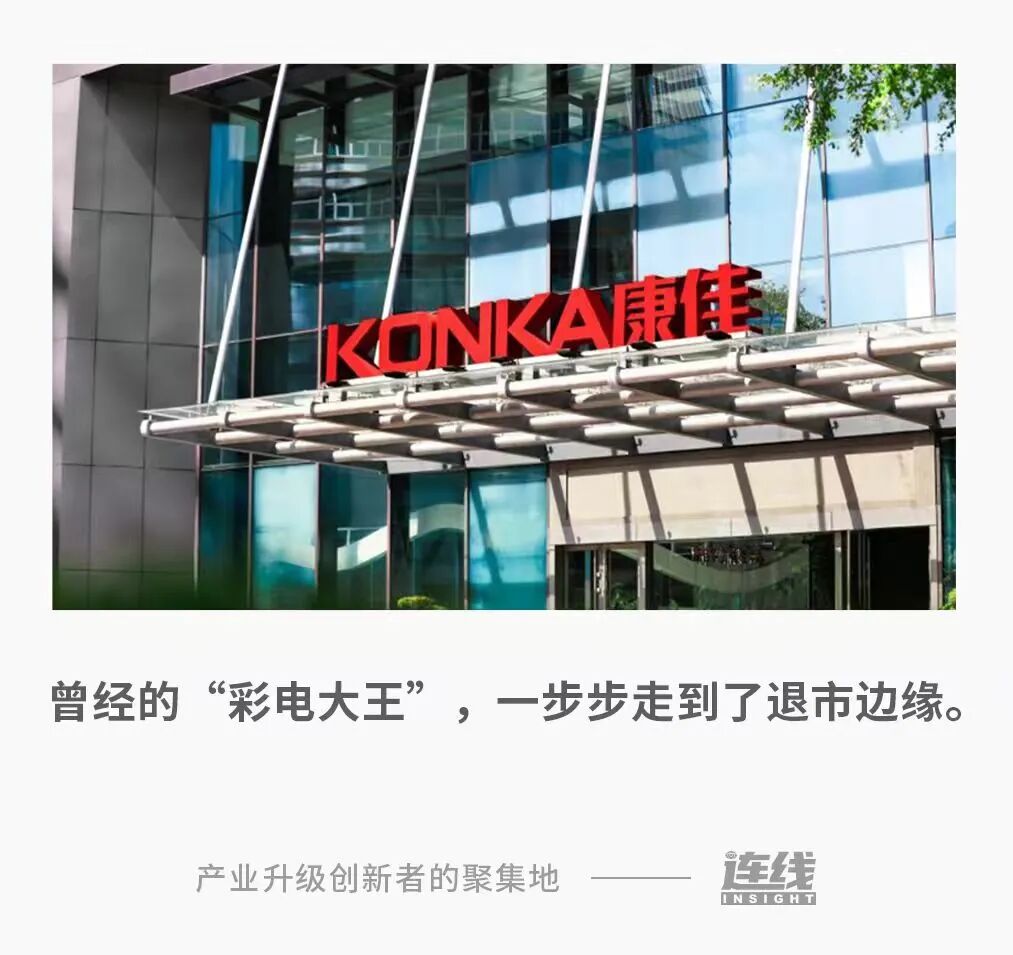
巨亏百亿、节节败退,康佳究竟犯了什么错?
Xin Lang Cai Jing· 2026-02-13 11:07
Core Viewpoint - The article discusses the decline of Konka, a once-prominent player in the Chinese television market, highlighting its significant financial losses and strategic missteps that have led to its current precarious position in the industry [5][11]. Financial Performance - Konka is expected to report a net profit loss of between 12.581 billion to 15.573 billion yuan for 2025, a staggering increase from a loss of 3.296 billion yuan the previous year, marking a year-on-year increase of 3.8 to 4.7 times [5][6]. - The company's revenue for 2025 is projected to be between 9 billion to 10.5 billion yuan, reflecting a decline of 5.53% to 19% compared to the previous year [5][6]. - As of the end of 2025, Konka's net assets are expected to turn negative, ranging from -5.334 billion to -8.001 billion yuan, which could trigger delisting risks under stock exchange regulations [10][11]. Business Strategy and Challenges - Konka's diversification strategy has led to a lack of focus on its core consumer electronics business, resulting in diminished market presence and competitiveness [5][17]. - The company has ventured into various sectors such as real estate, semiconductors, and environmental protection, but these efforts have not yielded profitable results and have instead strained its resources [17][18]. - The consumer electronics segment, which accounts for approximately 90% of Konka's revenue, has been underperforming, with a gross margin of only 3.23% and significant losses in its core television business [7][8]. Market Position - Once a leading brand in the television market, Konka has fallen to a position outside the top tier, with its brand recognition declining among younger consumers [8][11]. - The company's market share has diminished significantly, with its television shipments ranking it outside the top four in the industry [8][11]. Management Changes and Future Outlook - Following a change in control to China Resources Group, Konka's management has undergone significant restructuring, with hopes that the new leadership will stabilize the company and guide it through its financial difficulties [19][20]. - China Resources has provided financial support, including a low-interest loan of 3.97 billion yuan, aimed at alleviating Konka's cash flow issues and supporting its operational needs [22][24]. - The path to recovery for Konka involves focusing on its core consumer electronics business while also developing its semiconductor and PCB sectors, requiring time and strategic effort to regain market position [24].


为什么那个能力强的员工,越来越不服管?
3 6 Ke· 2025-11-13 03:25
Core Insights - The article discusses the phenomenon of "strategic misalignment" within organizations, where capable employees begin to resist management due to unclear strategic direction [1][2][3] - Strategic misalignment is characterized by three main issues: disappearing boundaries, internal organizational friction, and innovation stagnation, all stemming from a lack of clear strategic direction [4][13] Disappearing Boundaries - Strategic boundaries define where a company should compete and what it should avoid, but when these boundaries blur, decision-making shifts from "should we do this" to "can we do this" [5][6] - This shift leads to a proliferation of initiatives that dilute focus, resulting in a situation where the organization becomes busy but lacks clear priorities [7][8] Internal Organizational Friction - As organizations grow, the collaboration between departments often deteriorates, leading to silos where each department operates independently, resulting in inefficiencies [9][10] - This internal friction manifests as increased meetings, slower decision-making, and a lack of clarity on what drives growth, ultimately eroding the organization's judgment and collaborative spirit [11][12] Innovation Stagnation - Continuous strategic misalignment and organizational dysfunction lead to a decline in innovation, where new ideas become scarce and the organization becomes risk-averse [11][12] - The focus shifts from bold experimentation to merely maintaining stability, which can result in long-term decline despite outward appearances of activity [12][13] Rebuilding Strategic Focus - To address strategic misalignment, organizations must re-establish clear strategic direction, which involves making tough choices about priorities and resource allocation [14][15] - The process of strategic focus includes four key cycles: convergence, transmission, boundaries, and feedback, which help to clarify direction and ensure alignment across the organization [17][30] Case Studies - Procter & Gamble's transformation involved shedding around 100 brands to focus on 70-80 core brands, demonstrating the importance of strategic convergence [19][20] - Schneider Electric's "China Hub" strategy illustrates how clear communication and local empowerment can enhance strategic transmission and execution [24][25] - Airbnb's response to the COVID-19 pandemic showcases the importance of strategic feedback, as the company refocused on its core offerings to navigate through crisis [32][33] Conclusion - The article emphasizes that true strategic focus is not about doing less but about doing the right things more effectively, which requires a clear understanding of direction and boundaries [44][45] - Organizations that can align their strategic focus with employee motivation will foster a culture where capable individuals are not seen as disruptive but as catalysts for evolution [47][48]

好好的大公司,怎么就病了?
3 6 Ke· 2025-07-23 02:45
Core Insights - The concept of "big company disease" refers to large, once-successful enterprises that gradually lose vitality and competitiveness, leading to stagnation or decline [2][14] - The article discusses the symptoms of "big company disease," including strategic misalignment, organizational dysfunction, and innovation stagnation [2][11] Strategic Misalignment - The first symptom of "big company disease" is strategic misalignment, where companies lose focus on their core mission and begin to expand into unrelated markets without a unified strategy [2][5] - Frequent changes in strategic direction can lead to confusion and resource misallocation, as seen in companies like HTC and Meituan [3][5] - Companies that maintain a clear strategic focus, like Nintendo, are more likely to succeed [2][5] Organizational Dysfunction - The second symptom is organizational dysfunction, characterized by slow decision-making processes and a lack of effective communication within the organization [7][8] - As companies grow, their decision-making structures can become cumbersome, leading to missed opportunities, as illustrated by Giordano's slow response to e-commerce challenges [7][8] - Internal competition for resources can create inefficiencies, as seen in companies like Vanke and Wang An Computer, where departments operate in silos [8][9] Innovation Stagnation - The third symptom is a decline in innovation capabilities, where companies become risk-averse and fail to pursue groundbreaking ideas [11][12] - Companies may continue to release new products, but these often lack true innovation and merely extend existing lines, as demonstrated by Blackberry and Sony [11][12] - The article emphasizes that true innovation requires a willingness to explore new possibilities rather than relying solely on past successes [16][21] Underlying Mechanisms - The article identifies three interrelated mechanisms that contribute to "big company disease": success traps, internal drive imbalance, and short-termism [14][18][21] - Success traps occur when companies become overly reliant on past successful strategies, leading to a decline in adaptability [15][16] - Internal drive imbalance arises from bureaucratic structures that prioritize risk avoidance over value creation, resulting in a lack of responsiveness to market changes [18][19] - Short-termism manifests as a focus on immediate financial performance at the expense of long-term strategic goals, stifling innovation and growth [21][23] Conclusion - The article concludes that while "big company disease" is a real phenomenon, it is not insurmountable. Companies can still become great by embracing self-renewal, maintaining customer sensitivity, and fostering a culture of innovation [23][24]