战略重心转移

Search documents
7国减少进口中国稀土,大家“同床异梦”,小心另有目的!
Sou Hu Cai Jing· 2026-01-14 23:22
Group 1 - The G7 group, along with Australia, South Korea, and India, has reached a consensus to reduce imports of Chinese rare earths, but the underlying motives are more complex than just the issue of rare earths [1][3] - The United States is the most proactive in this initiative, with Japan supporting it, while other member countries express hesitance, indicating a lack of unified commitment to action against China [3][5] - The U.S. and EU heavily rely on Chinese rare earths, with over 80% of U.S. military-related rare earths imported, 85% of which come from China, making it difficult for them to quickly reduce this dependency [3][4] Group 2 - China has established a comprehensive advantage in the rare earth industry, making it challenging for G7 countries to eliminate their reliance on Chinese supplies in the short term [4] - The U.S. has proposed three plans to address this issue: strengthening cooperation with Australia through an $8.5 billion critical minerals agreement, recycling rare earths to meet 20% of domestic demand by 2030, and reviving the domestic rare earth supply chain [4] - However, these plans face significant challenges, including long timelines, small scale, and high costs, making it unlikely for the U.S. to quickly reduce its reliance on Chinese rare earths [4][5] Group 3 - The differing attitudes among G7 countries highlight a lack of consensus, with the U.S. aiming for a decoupling from China while other nations are more cautious and calculating in their approach [5][7] - The U.S. appears to be using the rare earth issue as a political tool to rally support from allies, while China continues to strengthen its economic ties globally, particularly in Latin America [7][9] - The U.S. strategy of forming alliances and pressuring other countries to align with its interests may backfire, as nations may seek to reduce their dependence on the U.S. instead [9][10]


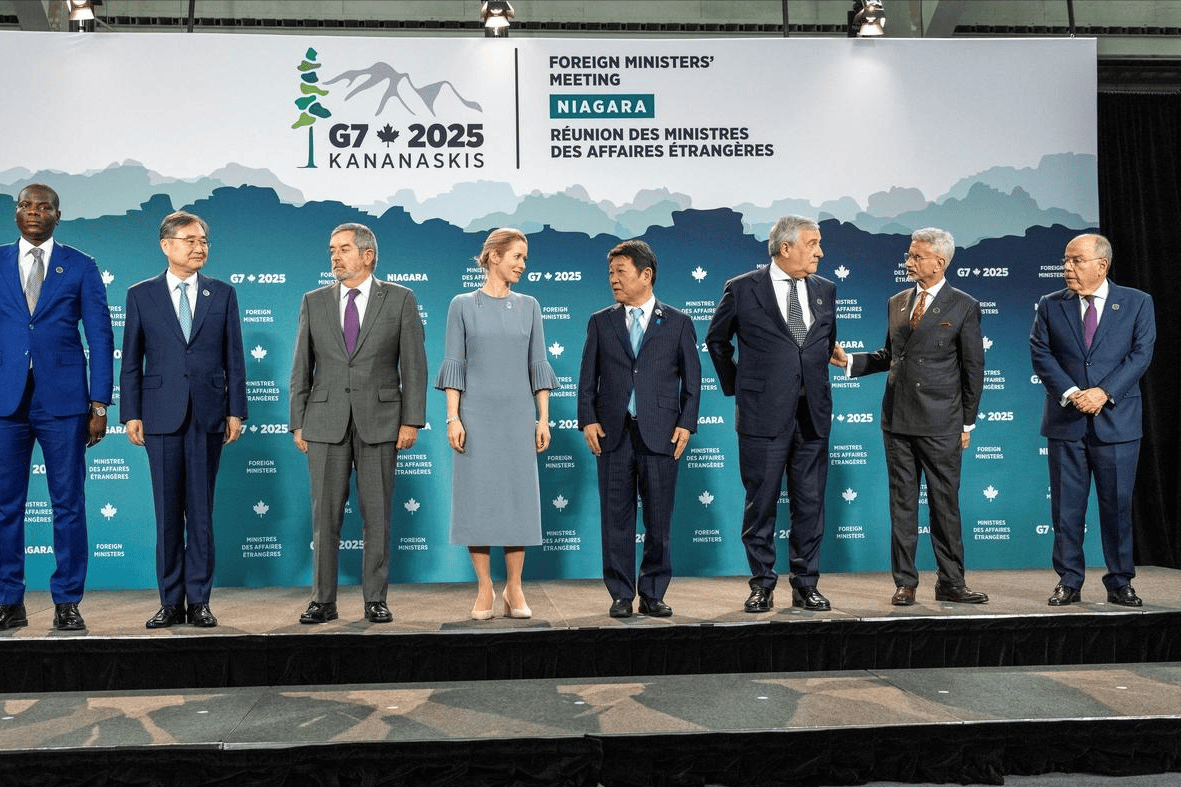
当着全球的面,白宫释放三大信号准备打场大仗,唯独绕过中国
Sou Hu Cai Jing· 2025-12-27 05:14
Group 1 - The U.S. has shifted its strategic focus towards the Western Hemisphere, as indicated by the appointment of a special envoy for Greenland and military deployments in the Caribbean [1][3] - The new National Security Strategy identifies Latin America as a core interest, reviving the Monroe Doctrine to prevent foreign adversaries from controlling key assets in the region [3] - The U.S. military presence in the Caribbean has reached a peak, with significant deployments including the Ford aircraft carrier and over 16,000 troops [3] Group 2 - The postponement of tariffs on China's semiconductor industry until June 2027 is seen as a strategic move to create space for trade negotiations and avoid escalating tensions [6][5] - The U.S. semiconductor containment strategy has shifted from a broad offensive to a more targeted approach, indicating a nuanced strategy towards China [6][5] - The military and geopolitical maneuvers in the Caribbean directly threaten China's economic cooperation projects in Latin America, particularly in energy and infrastructure [8][9] Group 3 - The U.S. aims to control Greenland to secure national interests and assert dominance in the Arctic, which intersects with China's legitimate economic interests in the region [11][9] - China's response includes deepening cooperation with Latin American countries facing U.S. pressure, emphasizing mutual political support alongside economic collaboration [13] - The delay in semiconductor tariffs provides China with valuable time to enhance its R&D investments and diversify its supply chains, particularly in mature processes and specialty technologies [15][15]

突发公告!日本巨头中国工厂停产,曾经员工上万人
新浪财经· 2025-12-01 12:07
Core Viewpoint - Canon's printer factory in Zhongshan has ceased operations due to severe market challenges, including a shrinking laser printer market and increased competition from domestic brands [4][6]. Group 1: Company Operations - Canon (Zhongshan) Office Equipment Co., Ltd. announced the suspension of production on November 21, 2023, citing ongoing operational difficulties due to drastic market changes [4]. - The factory has been a significant player in laser printer production since its establishment in June 2001, with a cumulative production of 110 million laser printers by April 2022 and an industrial output value of nearly 3.2 billion yuan in 2022 [4]. - Employee numbers at the Zhongshan factory have significantly decreased from 3,372 in 2022 to approximately 1,400 by September 2025 [5]. Group 2: Market Conditions - The A4 laser printer shipment volume in China is projected to decline by 5% year-on-year to 3.177 million units in the first half of 2025, while A3 laser printer shipments are expected to drop by 10% to 272,000 units [4]. - Domestic brands have increased their market share in the A4 laser printer segment from 16% in 2010 to 42% in 2024, while Canon's market share in China is only 6.4% despite holding a 22.9% share globally [4]. - Increased competition and rising labor costs in Zhongshan have contributed to Canon's decision to shift some production capacity to Southeast Asia [6].