
房地产政策刺激

Search documents
2026年房地产市场趋势展望
2026-02-02 02:22
Summary of Real Estate Market Trends and Company Insights Industry Overview - The real estate market in January 2026 saw a significant decline in sales, with the top 100 real estate companies experiencing a year-on-year decrease of 27.3%. However, the top 10 companies showed relative stability with an average decline of 18%, outperforming the overall average. Notably, China Resources and China Overseas achieved positive growth, while Poly experienced a slight decline [1][2]. - The industry is facing dual challenges of shrinking performance and insufficient land reserves. Some companies that have not acquired land in recent years are experiencing severe performance declines, and even existing land may not be economically viable for development [1][4]. Key Market Trends - In January 2026, the national land auction volume across 300 cities dropped by 90% month-on-month and 48% year-on-year, with transaction amounts decreasing by 60% year-on-year. This indicates a cautious investment attitude among real estate companies, with the land market's heat significantly lower than the same period last year [1][5]. - The new housing market is underperforming, with transaction volumes decreasing by 32% month-on-month and 20% year-on-year. Major cities like Shanghai and Shenzhen saw declines of 46% and 39%, respectively [1][7][8]. - The second-hand housing market showed a month-on-month increase of 16% and over 30% year-on-year, but prices continue to decline, with first-tier and strong second-tier cities experiencing price drops of 10%-15% over the past year [1][11]. Challenges Facing Real Estate Companies - Real estate companies are grappling with continuous performance shrinkage and insufficient land reserves. Some companies are facing year-on-year declines of 70%-80% or more. The lack of confidence among developers is expected to lead to a double-digit decline in new construction investment indicators [3][12]. - The overall market trend is expected to continue downward, with sales and prices likely to decrease, although the rate of decline in transaction volumes may narrow [3][12]. Regional Market Insights - In cities like Hangzhou and Nanjing, the real estate market has seen significant declines in absorption rates, with Nanjing's rate dropping to an unprecedented low of 2% in January 2026 despite discounts on available projects [10]. - In Beijing and Shanghai, some hotspots have shown signs of price stabilization in the second-hand market, attributed to reduced willingness to lower prices by sellers and the entry of bottom-fishing buyers. However, this does not indicate overall market stability [18]. Future Outlook - The expectation for 2026 is that there will be no strong stimulus policies introduced, with any local government measures likely to have limited impact. The overall judgment for 2026 remains cautious, anticipating continued declines in sales and prices [12][16]. - The supply of new housing is expected to increase in March 2026, but the overall market performance may still be disappointing compared to the previous year due to lower supply and insufficient policy support [15]. Conclusion - The real estate industry is currently in a challenging phase characterized by declining sales, cautious investment behavior, and a lack of viable land for development. The market outlook for 2026 remains pessimistic, with expectations of continued price declines and cautious consumer sentiment.
今年昆明楼市有三大悬念
Sou Hu Cai Jing· 2026-01-16 06:03
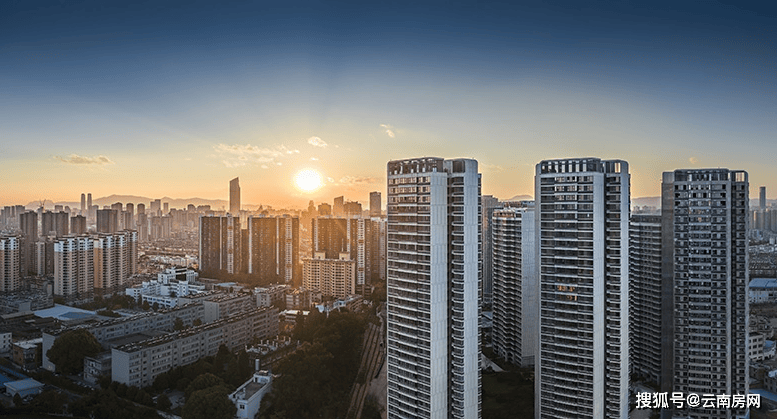
Policy Uncertainty - The central government's publication in "Qiushi" magazine emphasizes the need to improve and stabilize expectations in the real estate market, signaling a shift away from "tentative regulation" to more decisive policies this year [2] - The Kunming Economic Work Conference highlighted the importance of simultaneous efforts on both the supply and demand sides of the real estate market, with strong policy signals aimed at changing market expectations [2] Supply Volume Uncertainty - The new housing supply in Kunming is expected to exceed last year's levels due to increased land sales, but the extent of this increase and its alignment with market demand remains uncertain [4] - Yunnan Construction Investment (建投) has acquired a significant amount of land (580 acres) in key urban areas, with plans to launch multiple projects this year, indicating a potential surge in supply [4][6] - The strategy regarding the timing and volume of project launches by Yunnan Construction Investment remains unclear, adding to the uncertainty in supply dynamics [6] Price Uncertainty - Stabilizing market expectations requires stabilizing housing prices; however, a potential oversupply from new projects could lead to unpredictable price movements [7] - The introduction of many new competitive projects may pressure prices, especially if older projects struggle to sell, leading to possible price reductions [7]

冬岁过半-暗香渐来-房地产行业2026年度投资策略
2025-12-29 01:04
Summary of Real Estate Industry Conference Call Industry Overview - The real estate industry in China is experiencing significant challenges, with 2025 sales expected to drop approximately 53%, returning to levels seen in 2007 [1][2] - The market is entering an adjustment phase, with potential for recovery depending on policy responses [1][2] Key Insights - **New Home Market Potential**: Long-term potential for new home sales exists, with a development rate estimated at around 2%, equating to a 50-year demolition cycle [3] - **Second-Hand Market Growth**: The second-hand home market has increased its share to 45%, driven by risks associated with new homes and price advantages [1][5] - **Policy Impact**: The recovery of the real estate market is heavily reliant on policy changes. Historical data indicates that markets typically rebound following policy interventions [6][18] Market Dynamics - **Sales Trends**: In 2024, residential sales fell by 48%, with a further decline of 11% in the first 11 months of 2025. The overall sales volume is projected to be around 7 million units in 2025 [2][4] - **Turnover Rates**: The national turnover rate for second-hand homes is approximately 2.1%, with first-tier cities nearing 3%. However, demographic shifts may exert downward pressure on these rates in the long term [5][7] Price and Cost Analysis - **Price Pressure**: Overall price pressures in the real estate market have been largely absorbed, but first-tier cities still face significant living cost pressures [10] - **High-End Market Trends**: The high-end residential market has cooled, affecting developers' strategies in core cities. Sales velocity for premium projects has slowed [11] Future Predictions - **2026 Market Outlook**: The real estate market is expected to continue facing pressure in 2026, with potential structural opportunities in quality properties and stable cash flow projects [7][19] - **Investment Strategy**: Focus on policy changes and potential investment in segments with growth potential is advised to achieve stable returns [19] Structural Opportunities - **Investment Focus**: Short-term trading opportunities may arise from policy shifts, while structural highlights include quality properties and stable cash flow assets [17] - **Market Recovery**: A significant market rebound is contingent upon strong policy measures, similar to historical precedents in the U.S. and Japan [16] Conclusion - The real estate market in China is at a critical juncture, with potential for recovery hinging on policy interventions and demographic trends. Investors should remain vigilant regarding market dynamics and seek opportunities in resilient segments [19]
牛市背景下,如何看地产板块后续走势?
2025-08-25 14:36
Summary of Conference Call on Real Estate Sector Industry Overview - The conference call focuses on the real estate sector in China, particularly the recent policy changes in Shanghai and their implications for the market [1][2]. Key Points and Arguments - **Policy Changes in Shanghai**: - The new policies include reducing housing purchase restrictions, optimizing public housing fund policies, and adjusting commercial mortgage interest rates to encourage multiple property purchases [2][3]. - The maximum public housing loan amount has been increased from 1.6 million to 1.84 million, and withdrawals for down payments are now allowed, reducing repayment pressure for potential buyers [2][3]. - All mortgage loans will now be charged at the first-home interest rate, which is expected to stimulate demand for multiple property purchases [2][4]. - **Market Response to Policy Changes**: - The effectiveness of these policies may be limited as they primarily benefit those already qualified to purchase homes, potentially restricting broader market stimulation [4]. - The overall sentiment is cautiously optimistic, with expectations that these measures will enhance market activity and demand, although the actual impact remains to be seen [4]. - **Recent Market Data**: - In July, national sales area decreased by 8.5% year-on-year, and sales value dropped by 14.1%, prompting increased expectations for stronger policy interventions [1][5]. - The average national housing price fell by nearly 6%, with sales figures returning to levels seen in 2008-2009 [5]. - **Future Policy Expectations**: - The deterioration in real estate data has led to heightened expectations for new policies, with more cities likely to follow Shanghai and Beijing in relaxing restrictions [7]. - The issuance of special bonds for urban village renovations has increased significantly, indicating a potential shift in policy focus to stimulate demand [7]. - **Current Valuation and Investment Outlook**: - The real estate sector is currently undervalued, with many leading companies trading below book value, and public fund holdings at historical lows [8]. - If housing prices stabilize, the net assets of many real estate companies could improve, further enhancing their investment appeal [8]. - **Historical Context and Future Predictions**: - Historical trends suggest that significant increases in housing prices often follow stock market bull runs, with the current stock market reaching a ten-year high [9][10]. - There is a belief that the current policies will have a more lasting effect compared to previous measures, and investors are encouraged to hold real estate stocks for the long term rather than engage in short-term speculation [10]. Additional Insights - **Investment Opportunities**: - Two main investment themes are identified: - **Turnaround Opportunities**: Companies that may benefit from the policy changes and market recovery, such as Sunac, CIFI, and Vanke [11]. - **Quality Housing**: Companies recognized for their ability to produce high-quality housing, such as China Resources, Greentown, and Jianfa, are also highlighted as attractive investments [11].