
房地产融资“白名单”制度

Search documents
房企化债提速 月内4家获关键进展
Bei Jing Shang Bao· 2026-01-27 03:07
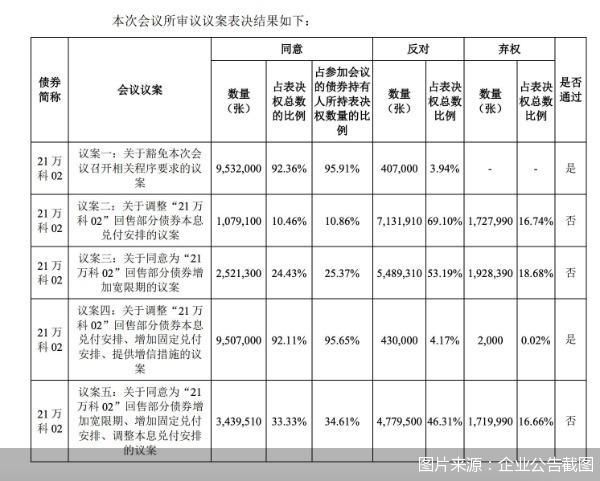
Group 1 - The core viewpoint of the articles highlights the significant progress in debt restructuring for real estate companies in early 2026, continuing the trend from 2025 where major firms like Sunac China and Country Garden successfully restructured debts totaling approximately 1.2 trillion yuan [1][5]. - In January 2026, several companies, including Vanke and Kaisa, announced important developments in their debt restructuring processes, indicating a positive start to the year [2][3]. - The "white list" financing system for real estate projects has been optimized, extending the loan extension period from a maximum of 2.5 years to 5 years, providing companies with more financial flexibility [1][7]. Group 2 - Vanke's debt restructuring plan includes a combination of fixed payments, cash buybacks, and interest prepayments, which has garnered high approval from bondholders [2][3]. - Kaisa's restructuring has entered a critical judicial phase, as indicated by a ruling from the Hong Kong High Court, marking a significant step in its overseas debt restructuring [3]. - The debt restructuring efforts have been characterized as a "blood transfusion" for companies, addressing immediate liquidity crises while emphasizing the need for companies to restore their operational capabilities [5]. Group 3 - The debt restructuring process has seen major milestones, such as Jinke's judicial restructuring involving 147 billion yuan in debt, which is the largest case in the real estate sector [4]. - Sunac China is expected to reduce its overall debt pressure by nearly 60 billion yuan, while Country Garden's overseas debt restructuring aims to reduce approximately 11.7 billion USD, equivalent to about 84 billion yuan in interest-bearing debt [4]. - The "white list" financing mechanism has been crucial in supporting real estate companies, with over 7 trillion yuan in loan approvals by September 2025, facilitating the construction and delivery of nearly 20 million housing units [6][7].



房企开年化债提速
Xin Lang Cai Jing· 2026-01-26 16:55
Core Viewpoint - The debt restructuring process for real estate companies has gained momentum in early 2026, with significant progress reported by several firms, indicating a continuation of the trend from 2025 where major debt restructuring efforts were initiated [1][3]. Group 1: Debt Restructuring Progress - In January 2026, companies such as Vanke, Road King, and Fantasia have disclosed important advancements in their debt restructuring efforts [3][4]. - Vanke's debt restructuring plan includes a combination of fixed payments, cash buybacks, and interest prepayments, allowing for a 40% repayment of certain bonds by January 30, 2026, while extending the remaining 60% for one year [3]. - Fantasia has entered a critical phase of its overseas debt restructuring, as indicated by a ruling from the Hong Kong High Court [4]. Group 2: Scale of Debt Restructuring - In 2025, 21 distressed real estate companies completed or received approval for debt restructuring, with a total debt relief amounting to approximately 1.2 trillion yuan [6]. - Jin Ke Co., a notable case, completed a judicial restructuring involving 147 billion yuan in debt, marking it as the largest judicial restructuring case in the real estate sector [5]. Group 3: Policy Support and Financing Mechanisms - The "white list" financing mechanism has been crucial in supporting the debt restructuring efforts, with the loan approval amount for "white list" projects reaching 2.23 trillion yuan by October 2024 and exceeding 7 trillion yuan by September 2025 [7][8]. - In January 2026, the loan extension period for eligible "white list" projects was increased from 2.5 years to 5 years, providing real estate companies with more financial flexibility [8][9]. - The policy changes are expected to benefit financially healthier private real estate companies, allowing them to stabilize operations and diversify their business [9].


月内4家获关键进展 房企化债提速
Bei Jing Shang Bao· 2026-01-26 16:37
Core Viewpoint - The real estate industry is experiencing a significant debt restructuring process in early 2026, with multiple companies making important progress in their debt resolution efforts, indicating a continuation of the trend from 2025 [1][2]. Group 1: Debt Restructuring Progress - In January 2026, companies such as Vanke, Road King, and Fantasia have disclosed important developments in their debt restructuring [2][3]. - Vanke's debt restructuring plan includes a combination of fixed payments, cash buybacks, and interest prepayments, which has garnered high approval from bondholders [2]. - Fantasia's restructuring has entered a critical judicial phase, as indicated by a ruling from the Hong Kong High Court [3]. Group 2: Scale of Debt Restructuring - In 2025, significant progress was made in debt restructuring, with 21 distressed real estate companies completing their restructuring, amounting to a total debt relief of approximately 1.2 trillion yuan [5]. - Jin Ke Co., for instance, completed a judicial restructuring involving a debt scale of 147 billion yuan, marking it as the largest case in the industry [4]. - Sunac China and Country Garden have also successfully implemented their debt restructuring plans, with Sunac reducing its overall debt pressure by nearly 60 billion yuan [4]. Group 3: Policy Support - The "white list" financing mechanism has been crucial in supporting the debt restructuring efforts, allowing for a shift from relying on company credit to focusing on project assets [6][7]. - As of January 2026, the loan extension period for qualifying "white list" projects has been increased from 2.5 years to 5 years, providing companies with more financial flexibility [7]. - This policy change is expected to enhance the operational stability of quality private real estate companies, allowing them to diversify their business and mitigate risks [7].
房企开年化债提速 一个月内四家获关键进展
Bei Jing Shang Bao· 2026-01-26 11:04
Group 1: Debt Restructuring Progress - In January 2026, several real estate companies, including Vanke, Road King, and Fantasia, reported significant progress in debt restructuring, continuing the trend from 2025 [1][3] - A total of 21 distressed real estate companies completed debt restructuring or received approval for reorganization in 2025, with a total debt relief scale of approximately 1.2 trillion yuan [1][6] - The restructuring efforts are seen as a necessary step to alleviate liquidity crises, with a focus on restoring companies' operational capabilities [6] Group 2: Policy Support and Financing Mechanisms - The "white list" system for real estate financing was optimized in January 2026, extending the loan extension period for eligible projects from a maximum of 2.5 years to 5 years, providing companies with more financial flexibility [1][8] - The "white list" mechanism has been crucial in supporting distressed companies, with over 7 trillion yuan in loan approvals by September 2025, facilitating the construction and delivery of nearly 20 million housing units [7][8] - Analysts suggest that the extended loan terms will benefit financially healthier private real estate companies, allowing them to stabilize operations and diversify their business [9] Group 3: Case Studies of Successful Restructuring - Jin Ke Co., Ltd. completed a judicial reorganization in December 2025, involving a debt scale of 147 billion yuan and covering over 8,400 creditors, marking it as the largest judicial reorganization case in the real estate sector [5] - Sunac China is expected to reduce its overall debt pressure by nearly 60 billion yuan through its restructuring efforts, while Country Garden aims to reduce its offshore debt by approximately 11.7 billion USD, equivalent to about 84 billion yuan [5] Group 4: Market Confidence and Recovery - The debt restructuring process is viewed as a "blood transfusion" to address temporary liquidity issues, while the long-term solution lies in restoring companies' operational capabilities and ensuring project deliveries [6] - The synergy between debt restructuring and project delivery is expected to rebuild market confidence, creating a positive cycle of trust restoration, sales recovery, and capital replenishment [6]
支持房企合理融资需求 房地产融资“白名单”制度持续发力
Zheng Quan Ri Bao Wang· 2026-01-22 13:48
Core Viewpoint - The Ministry of Housing and Urban-Rural Development emphasizes the continuation of city-specific policies to stabilize the real estate market, support reasonable financing needs of real estate companies, and ensure the delivery of housing projects [1][2]. Group 1: Real Estate Financing Mechanism - The "white list" system for real estate financing has been effective in improving the funding environment for real estate projects, ensuring timely delivery of housing [2]. - As of October 2025, the total loan approval amount for "white list" projects has exceeded 7 trillion yuan, significantly supporting the construction and delivery of commercial housing projects [2]. - The city real estate financing coordination mechanism has been continuously optimized to stabilize the real estate market and support the development of a new model for real estate [3]. Group 2: Challenges and Future Directions - Nearly 60% of respondents in a survey indicated that loan amounts are affected by project cash flow, and about 50% reported slow fund availability and complex processes [2]. - Recommendations for 2026 include expanding the coverage of the financing coordination mechanism, providing targeted support for small and distressed real estate companies, and establishing a unified screening standard for projects [3]. - The need for enhanced communication between government, banks, and enterprises, as well as the exploration of risk-sharing mechanisms and financial innovations, is highlighted for future improvements [3].
住建部:发挥好房地产融资“白名单”制度作用,支持房企合理融资需求
3 6 Ke· 2026-01-21 10:53
Core Viewpoint - The Minister of Housing and Urban-Rural Development, Ni Hong, emphasized that China's new urbanization is ongoing, with significant potential for optimizing urban stock and high-quality development in the real estate sector [1] Group 1: Urbanization and Real Estate Development - China's new urbanization continues to advance, indicating a sustained focus on urban development [1] - There is ample room for optimizing and adjusting urban stock, reflecting the government's commitment to improving urban living conditions [1] - The public has high expectations for quality housing, suggesting a demand for better residential options [1] Group 2: Policy and Market Strategy - The government will adhere to city-specific policies, implementing precise measures tailored to individual cities [1] - Strategies will include controlling new supply, reducing inventory, and optimizing supply to stabilize the real estate market [1] - The "white list" system for real estate financing will be leveraged to support reasonable financing needs of real estate companies and meet the housing demands of residents [1]