技术焦虑

Search documents
当AI成为圭臬:我们正在制造新的“低端”与新的羞耻
Xin Lang Cai Jing· 2026-01-27 06:29
Core Insights - The rapid rise of AI has created a societal consensus that everyone should learn to use it, leading to a perception that those who do not will be left behind [1][2] - This narrative simplifies complex social labor into mere computational output, framing a "utopia of efficiency" that redefines values and hierarchies in society [1][2] - The emphasis on efficiency and technological advancement often results in moral judgments against traditional industries, labeling them as "low-end" or "polluting" [2][4] Group 1: AI's Impact on Work Culture - Companies are increasingly incorporating AI usage into performance metrics, transforming it from a tool into a mandatory standard [4][5] - This shift leads to a mechanized work environment where the focus is on meeting quantifiable outputs rather than creating meaningful results [5][6] - The institutionalization of AI as a default norm risks devaluing slower, more nuanced forms of labor that cannot be easily quantified [6][14] Group 2: The New Hierarchies - The adoption of AI creates new hierarchies based on efficiency, where faster and more standardized outputs are seen as superior [6][17] - This results in a societal pressure to constantly prove one's worth through productivity, leading to a shame mechanism for those who cannot keep up [17][22] - The narrative surrounding AI often overlooks the value of human emotional labor and the complexities of interpersonal relationships, which are difficult to quantify [16][17] Group 3: The Dangers of Standardization - The standardization of work through AI can lead to a loss of the richness of human experience, reducing individuals to mere components of a system [8][21] - The focus on efficiency may result in the neglect of important aspects of creativity and emotional engagement in work [12][21] - As AI becomes a moral standard, there is a risk that legitimate forms of labor and slower processes will be dismissed as outdated or inferior [22][24] Group 4: The Future of Work - The future of work may not solely depend on faster outputs but rather on reclaiming the value of time and the human experience in labor [24][25] - The challenge lies in ensuring that technological advancements do not lead to a more rigid and dehumanized work environment [24][29] - A balanced approach to technology should prioritize human dignity and the meaningfulness of work over mere efficiency [29]


打脸来得太快!G7 十几国稀土会议刚落幕,各国抢着排队访华
Sou Hu Cai Jing· 2026-01-20 10:47
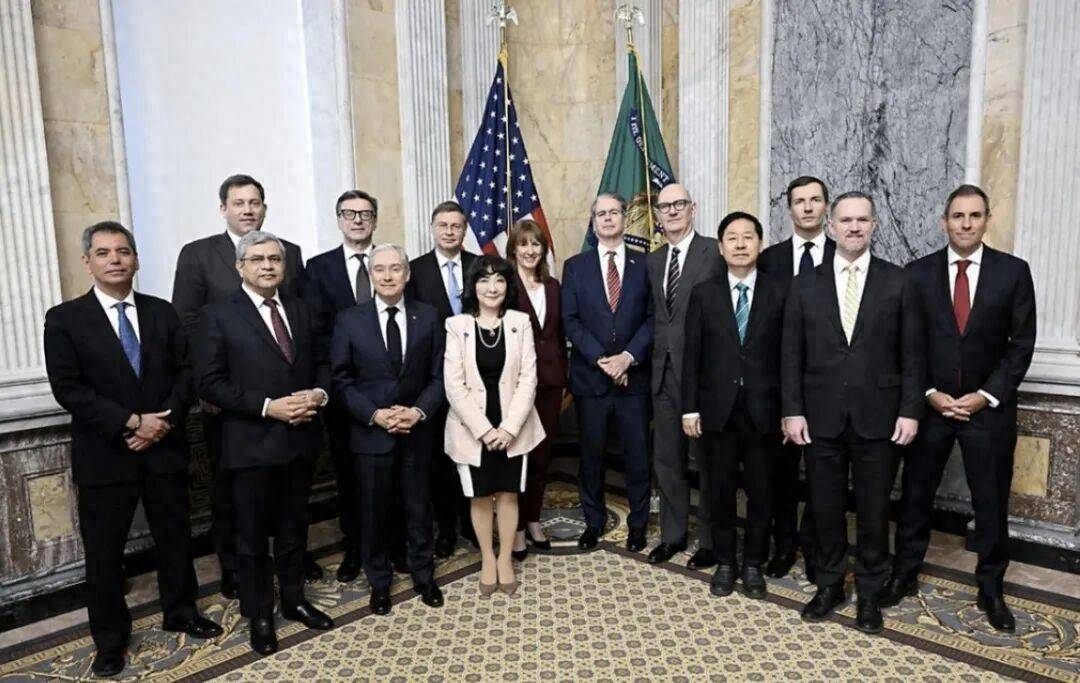
Core Viewpoint - The G7 meeting aimed at constructing a "de-China" rare earth supply chain, highlighting the geopolitical tensions surrounding China's dominance in the rare earth industry [1][5]. Group 1: G7 Meeting Dynamics - The G7 meeting, led by U.S. Treasury Secretary Yellen, included members from the EU, Australia, India, South Korea, and Mexico, focusing on a coordinated approach against China's rare earth supply chain [1]. - The alliance among these countries is characterized by differing national interests, with some members, like Germany and France, heavily reliant on Chinese rare earth products, indicating a reluctance to fully decouple from China [4][10]. - The meeting's rhetoric, particularly from Yellen, emphasized the need to break China's monopoly on the global rare earth supply chain, proposing measures such as setting price floors and imposing tariffs on Chinese products [5]. Group 2: National Positions and Challenges - Australia, while a significant rare earth exporter, relies on China for processing, making it difficult to achieve independence from Chinese supply chains [6]. - India and South Korea face significant challenges; India lacks the technology and capacity to meet its own rare earth needs, while South Korea is heavily dependent on imports for its electric vehicle and electronics industries [8]. - Emerging countries like Mexico participate in the G7 discussions without substantial rare earth resources or industry capabilities, primarily to maintain diplomatic relations [10]. Group 3: China's Competitive Advantage - China holds approximately 40% to 50% of global rare earth reserves, with a dominant position in heavy rare earths, crucial for high-end industries like renewable energy and defense [10]. - Technological advancements in mining and processing have allowed China to maintain a significant lead, with a 72% share in global rare earth refining capacity [12]. - China's strategy focuses on maintaining its industry leadership through technological innovation rather than coercive measures, contrasting with the G7's approach [14][22]. Group 4: Future Implications and Cooperation - The recent visits by leaders from France, Germany, and Canada to China indicate a pragmatic shift towards cooperation, driven by national interests in securing rare earth supplies [16][18]. - The G7's attempts to reshape the rare earth supply chain are seen as politically motivated and unlikely to disrupt China's established advantages [20][24]. - China's willingness to collaborate with other nations on rare earth development, including technology transfer, stands in contrast to the G7's exclusionary tactics [22].
刚拿到稀土“通行证”,欧盟就来了招突击检查,还好中方留了一手
Sou Hu Cai Jing· 2025-12-23 06:53
Group 1 - The core issue revolves around the EU's rapid shift from a cooperative stance towards China regarding rare earth exports to a more aggressive approach, including investigations into Chinese companies [1][5] - The Chinese Ministry of Commerce has issued longer-term export licenses for rare earths to certain European companies, temporarily alleviating pressure on the EU's manufacturing sector [3] - The EU's actions are driven by a combination of technological anxiety, a desire for control, and a need to align with U.S. policies, particularly in light of changing political dynamics in the U.S. [7][9] Group 2 - The EU's investigations into Chinese firms are seen as a form of political pressure rather than mere trade disputes, indicating a deeper strategic concern about China's technological advancements [5][7] - There is a perception among some European politicians that they must demonstrate loyalty to the U.S. by taking a hard stance against China, even as the U.S. signals a potential easing of tensions [7][9] - The Chinese government maintains that its export policies are based on global supply chain stability and international responsibilities, suggesting that any aggressive actions from the EU could lead to significant repercussions for European industries reliant on Chinese rare earths [9]