
技术迭代升级

Search documents
欣锐科技:公司正在通过产品结构优化等一系列针对性多维度举措改善经营情况
Zheng Quan Ri Bao Wang· 2026-02-05 07:48
Group 1 - The core viewpoint of the article is that Xinrui Technology (300745) is actively implementing various measures to improve its operational performance [1] Group 2 - The company is optimizing its product structure as part of its strategy to enhance business operations [1] - Technological iteration and upgrades are being pursued to stay competitive in the market [1] - Cost control measures are being refined to ensure efficient management of expenses [1] - The company is focusing on efficient asset turnover to improve overall operational efficiency [1]

工业机器人质量强链成果交流推进会:持续推动技术迭代升级 助力工业机器人产业链提质增效
智通财经网· 2025-12-26 07:54
Core Viewpoint - The "Quality Strong Chain" initiative for industrial robots is a significant measure by the State Administration for Market Regulation to enhance the quality of the industrial robot industry in China, promoting high-quality development and international competitiveness [3]. Group 1: Project Overview - The "Quality Strong Chain" project has completed 33 key tasks since 2024, established multiple national standards for industrial robots and artificial intelligence, and provided testing services for over 150 robot companies, resulting in significant quality improvements across the industry [3]. - The project has innovatively implemented an "One Test, Two Certificates" international cooperation mechanism, reducing the cost of companies going abroad by 50% and shortening the time required by 40%, thereby facilitating the international expansion of domestic brands [3]. Group 2: Strategic Goals - The initiative aims to continuously promote technological upgrades, encourage the formation of quality technology innovation coalitions, enhance international influence, establish collaborative mechanisms, and strengthen systemic support to improve the industrial robot supply chain [3]. - The ultimate goal is to help companies and brands access broader markets, contributing to the construction of a strong manufacturing and quality nation in China [3].

磷酸铁锂市场“产销两旺” 头部企业订单已排至明年
Zhong Guo Jing Ying Bao· 2025-11-13 07:05
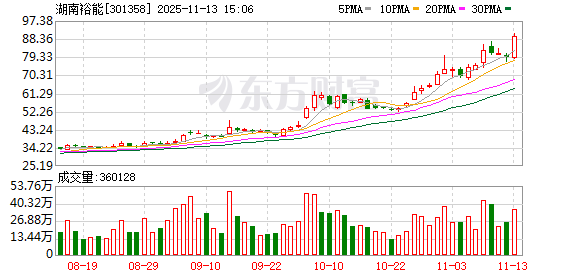
Core Viewpoint - The lithium iron phosphate (LFP) industry is experiencing a significant recovery starting from Q3 2025, driven by strong downstream demand and improved capacity utilization across the sector [2][5]. Group 1: Industry Performance - In the first nine months of the year, Hunan Youneng reported LFP sales of 784,900 tons, a year-on-year increase of 64.86% [2]. - The overall capacity utilization in the LFP industry has improved, with major companies operating at high loads due to strong market demand [3][5]. - The cumulative installed capacity of power batteries in China reached 578 GWh from January to October, with LFP batteries accounting for 470.2 GWh, representing 81.3% of the total and a year-on-year growth of 59.7% [4]. Group 2: Market Dynamics - The LFP market is witnessing a "volume and price increase" trend, with companies like Andar Technology reporting a robust operational status and saturated orders [3]. - The demand for LFP batteries is being driven by the growth in the electric vehicle market and the acceleration of energy storage projects, particularly in renewable energy [4][5]. - The industry is expected to maintain high levels of prosperity until 2026, supported by policy incentives and strong market confidence [5]. Group 3: Financial Performance - Hunan Youneng achieved a net profit of 340 million yuan in Q3, a year-on-year increase of 235.31% [7]. - Companies like Wanrun New Energy and Longpan Technology have significantly reduced their losses, indicating an improvement in financial health [7]. - The overall profitability of LFP companies is expected to improve in 2026, as the industry moves towards a more balanced supply-demand structure [9]. Group 4: Future Outlook - Analysts predict that the LFP industry will see a reduction in losses and a return to profitability by mid-2026, as high-end capacity is gradually released to meet growing demand [9]. - The ongoing upgrade to high-pressure LFP technology is expected to enhance performance and broaden application scenarios, further supporting demand growth [5][6].



研判2025!中国完全可降解血管支架行业产业链、市场规模及重点企业分析:行业需求升级,技术突破与临床价值凸显推动“介入无植入”时代加速到来[图]
Chan Ye Xin Xi Wang· 2025-11-01 01:20
Core Insights - The demand for fully biodegradable vascular stents is increasing due to the aging population and rising incidence of cardiovascular diseases, with the market size in China expected to reach approximately 980 million yuan in 2024, representing a year-on-year growth of 12.64% [1][5]. Industry Overview - Fully biodegradable vascular stents are designed to gradually degrade and be absorbed by the body after fulfilling their vascular support function, addressing issues associated with traditional metal stents such as chronic inflammation and late thrombosis [2][4]. - The industry can be categorized into metal biodegradable stents and polymer biodegradable stents based on material type [2]. Industry Development History - The first domestic fully biodegradable stent (XINSORB) was tested in humans in September 2013, marking the beginning of clinical applications in China [3]. - The first domestically approved biodegradable stent, NeoVas by Lepu Medical, was launched in February 2019, utilizing polylactic acid materials that degrade within 2-3 years [4][6]. - By 2024, the XINSORB stent technology received recognition at the China International Industry Fair, with domestic stents capturing over 50% of the market share [4]. Industry Value Chain - The upstream of the industry includes raw materials such as magnesium alloys, nickel-titanium alloys, and biodegradable polymers, along with production equipment like 3D printers and sterilization devices [3]. - The midstream involves the manufacturing of fully biodegradable vascular stents, while the downstream applications target conditions like coronary artery disease and myocardial infarction [4]. Market Size - The market for fully biodegradable vascular stents is projected to grow significantly, driven by the increasing demand for advanced treatment technologies [5]. Key Companies' Performance - Lepu Medical leads the market with its NeoVas stent, which has a high clinical acceptance rate due to its precise degradation cycle [6]. - MicroPort Medical follows closely with its Firesorb stent, which features a thin-wall design and targeted drug-eluting technology, enhancing its competitive position in the high-end market [7]. Industry Development Trends 1. **Technological Innovation and Material Upgrades**: The industry is experiencing breakthroughs in material science and manufacturing processes, with a focus on matching degradation cycles with vascular remodeling [8]. 2. **Market Expansion and Internationalization**: Domestic demand is rising, supported by policies and price reductions, while exports are increasing through international certifications [8]. 3. **Policy Support and Regulatory Strengthening**: National procurement policies are driving down prices, and regulatory approvals are accelerating, enhancing market order and quality control [9].


国轩高科:技术的迭代升级助力公司电池性能提升、成本降低
Zheng Quan Ri Bao Wang· 2025-10-20 10:40
Core Viewpoint - The company, Guoxuan High-Tech, emphasizes that technological upgrades are enhancing battery performance and reducing costs, aligning with the high-performance battery market demand, thereby strengthening its competitiveness and optimizing customer structure [1] Group 1 - The company's technological iteration is contributing to improved battery performance [1] - Cost reduction is a key benefit of the company's technological advancements [1] - The company aims to increase its market share in the mid-to-high-end power battery segment [1] Group 2 - The company is focused on expanding its future market share through these advancements [1]
