投机杠杆

Search documents
RadexMarkets瑞德克斯:金价飙升 60% 警惕高位陷阱
Xin Lang Cai Jing· 2026-01-30 12:51
Core Viewpoint - The current precious metals market is experiencing a historic peak, with gold prices recording over 60% cumulative growth this year, marking the best annual performance in 46 years and reaching unprecedented real value levels after adjusting for inflation [1][3]. Group 1: Market Performance - Gold prices have surged significantly, leading to speculation about a potential paradigm shift driven by global macroeconomic factors, despite recent wide fluctuations in prices [1][3]. - Historical data indicates that gold peaked at the end of 1979 but subsequently experienced a nearly 66% decline over the following five years, suggesting caution for current investors [1][4]. Group 2: Market Dynamics - The current upward trend is supported by geopolitical tensions and expectations of a weaker dollar, but the accumulation of speculative leverage poses risks [4]. - The market is at a critical juncture, where it could either redefine the status of gold assets or repeat a scenario of a significant bubble waiting to burst [4]. Group 3: Volatility and Investor Behavior - The frequency of market volatility has increased, with daily price swings of several hundred dollars becoming more common; recent closing prices for gold reached $5,180 per ounce and quickly rose to $5,250 per ounce [4]. - High volatility is often a characteristic of irrational exuberance in the market, and investors must acknowledge the potential risks of being trapped at high price levels [4]. Group 4: Historical Lessons and Recommendations - Historical echoes from 1979 remind that significant price surges often conceal substantial technical traps, and blind following of trends could lead to asset depreciation similar to the early 1980s [2][4]. - Investors are advised to maintain a high level of rationality in extreme market conditions and utilize flexible risk hedging strategies to protect their positions rather than making reckless bets at historical peaks [2][4].


狂奔、绞杀、崩盘,白银历史性疯牛背后 当前最需提防什么
Feng Huang Wang· 2025-12-24 07:29
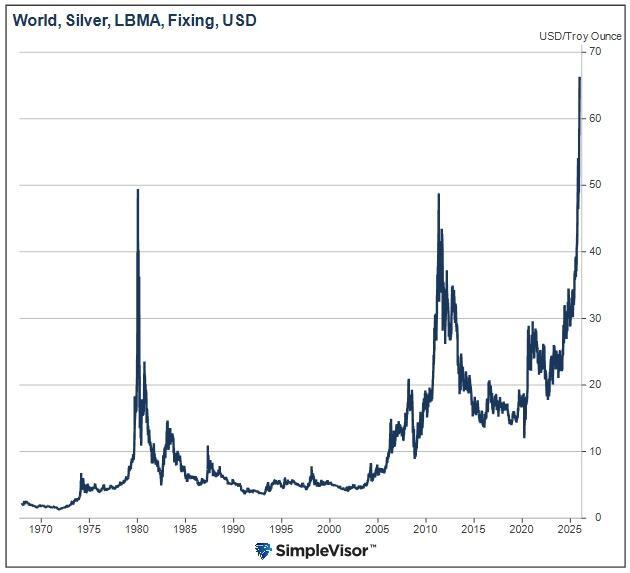
Core Viewpoint - The recent surge in silver prices, which has more than doubled this year and surpassed $72, is reminiscent of historical bull markets, raising concerns about potential regulatory interventions that could impact speculative trading [1][3][21]. Historical Context - The last significant bull market for silver occurred post-2008 financial crisis, where prices rose 500% from $8.50 to $50 due to excessive monetary policy responses and speculation [3][5]. - The rise in silver prices was closely linked to the decline in real interest rates, which fell into negative territory, creating a favorable environment for silver as a hedge against extreme monetary policies [5][9]. - Speculative investors significantly increased demand through futures and options, but this led to a sharp price drop when the CME raised margin requirements multiple times in 2011 [6][9]. 1970s Silver Market Incident - The Hunt brothers' attempt to corner the silver market in the 1970s resulted in a massive accumulation of silver, leading to regulatory interventions that ultimately caused a price collapse from nearly $50 to $10 within months [11][15]. - Regulatory actions, including the introduction of stringent margin requirements, effectively eliminated leverage in silver trading, contributing to the Hunt brothers' financial downfall [13][14][17]. Current Market Dynamics - Current silver price increases are supported by favorable monetary and fiscal policies, ongoing supply shortages, and rising industrial demand, particularly in sectors like solar energy and electric vehicles [17][18]. - Approximately 70% of silver production comes as a byproduct of mining other metals, limiting the ability to quickly increase supply in response to rising prices [17]. - The silver-to-oil ratio has reached historical highs, indicating potential volatility in silver prices, while the silver-to-gold ratio remains relatively low, suggesting that silver may need to outperform gold for further price increases [20][21]. Regulatory Risks - The primary threat to silver bulls is potential intervention by exchanges or government bodies, which could disrupt speculative trading as seen in previous bull markets [21][24]. - Recent increases in margin requirements by the CME could foreshadow further regulatory actions that may impact silver prices and trading dynamics [21][23].