拥核

Search documents
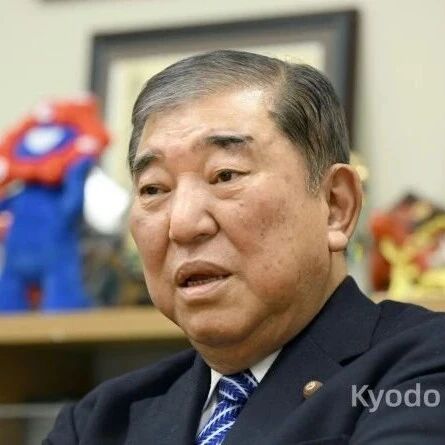
石破茂批评拥核言论
日经中文网· 2025-12-29 02:57
Core Viewpoint - The former Japanese Prime Minister Shigeru Ishiba emphasizes that Japan, as the only country to have experienced nuclear bombing, must uphold its stance on nuclear non-proliferation and cannot entertain discussions that contradict this position, as it may undermine the credibility of the Japan-U.S. alliance [2]. Group 1 - Ishiba criticizes comments made by officials in the current government advocating for Japan to possess nuclear weapons, asserting that such statements are contrary to Japan's historical context and obligations [2]. - He highlights that discussions surrounding nuclear armament involve multiple agreements, including the Treaty on the Non-Proliferation of Nuclear Weapons (NPT) and atomic energy agreements, and that bypassing these documents to directly address nuclear possession sends misleading messages [4].

视频丨从拥核言论到巨额军费 日本右翼“冒天下之大不韪”或酿重大灾难
Yang Shi Xin Wen Ke Hu Duan· 2025-12-26 02:28
Core Viewpoint - Recent statements from high-ranking officials in Japan advocating for nuclear armament have sparked strong domestic backlash and international concern, revealing a dangerous trend towards historical revisionism and military expansion within the Japanese government [1][3][18] Group 1: Nuclear Armament Discussions - Japanese Prime Minister Fumio Kishida's aide, Seiji Oe, responsible for nuclear disarmament, made pro-nuclear comments, raising questions about his competence [6] - The Chinese government has condemned Japan's nuclear rhetoric as a serious provocation against post-war international order and nuclear non-proliferation [3][18] - Domestic criticism of nuclear armament is growing, with various groups, including nuclear bomb survivors, protesting against the notion of Japan possessing nuclear weapons [4][8] Group 2: Military Expansion and Budget - Japan's upcoming budget for fiscal year 2026 is projected to reach a record 122 trillion yen, with defense spending exceeding 9 trillion yen for the 14th consecutive year [13] - The budget includes plans to enhance Japan's capability to supply weapons to other countries, with a specific allocation of 18.1 billion yen for this purpose [13] - Prime Minister Kishida has emphasized the need for Japan to improve its "sustained combat capabilities" in light of global conflicts, indicating a clear intent to accelerate military development [15] Group 3: Historical Revisionism - The influence of historical revisionism is evident in Japan's education system, with military training materials incorporating the "Yasukuni view" of history [17] - Experts warn that Japan's nuclear ambitions could embolden right-wing factions, potentially leading to aggressive foreign policies and regional instability [19]
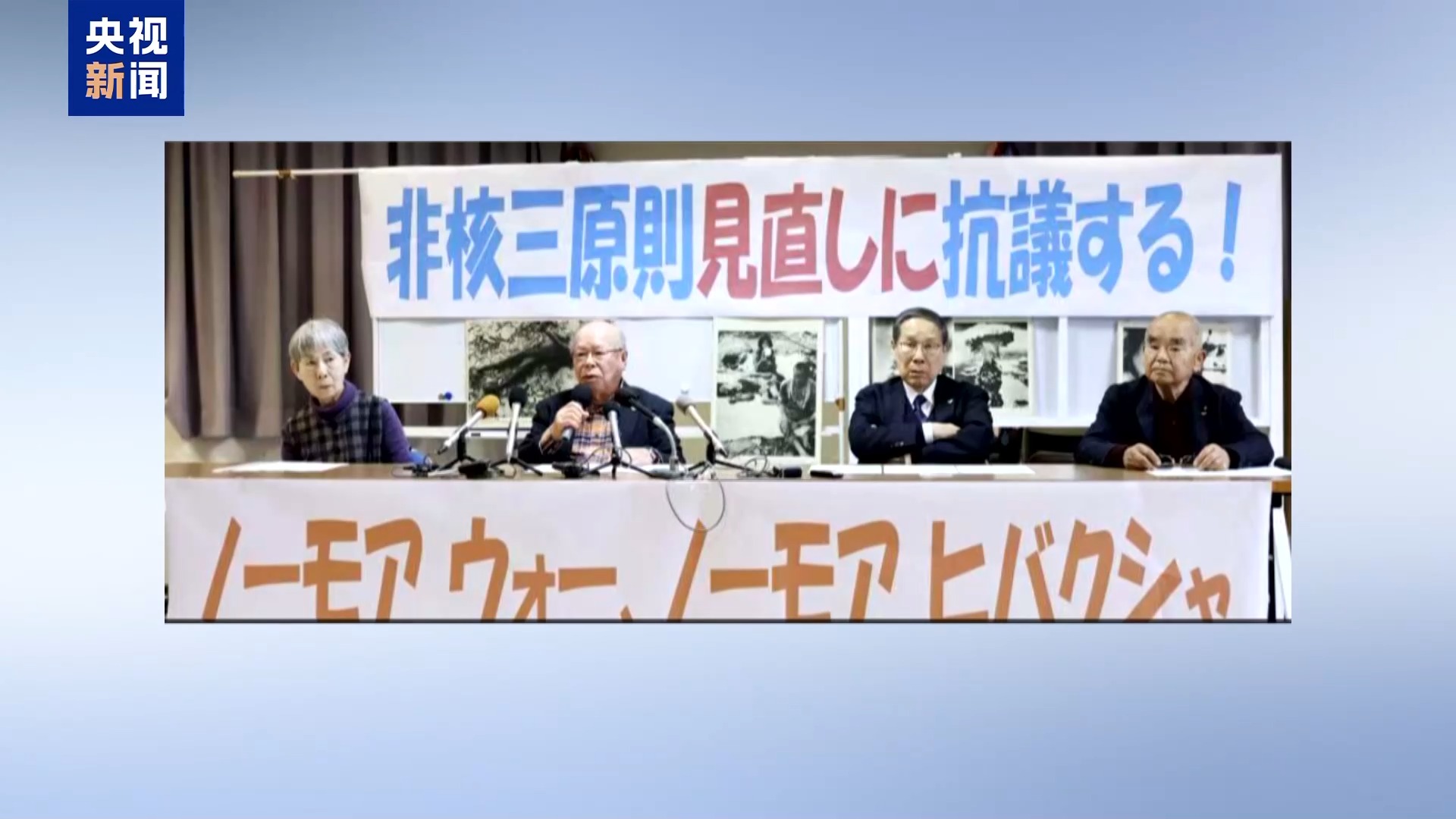
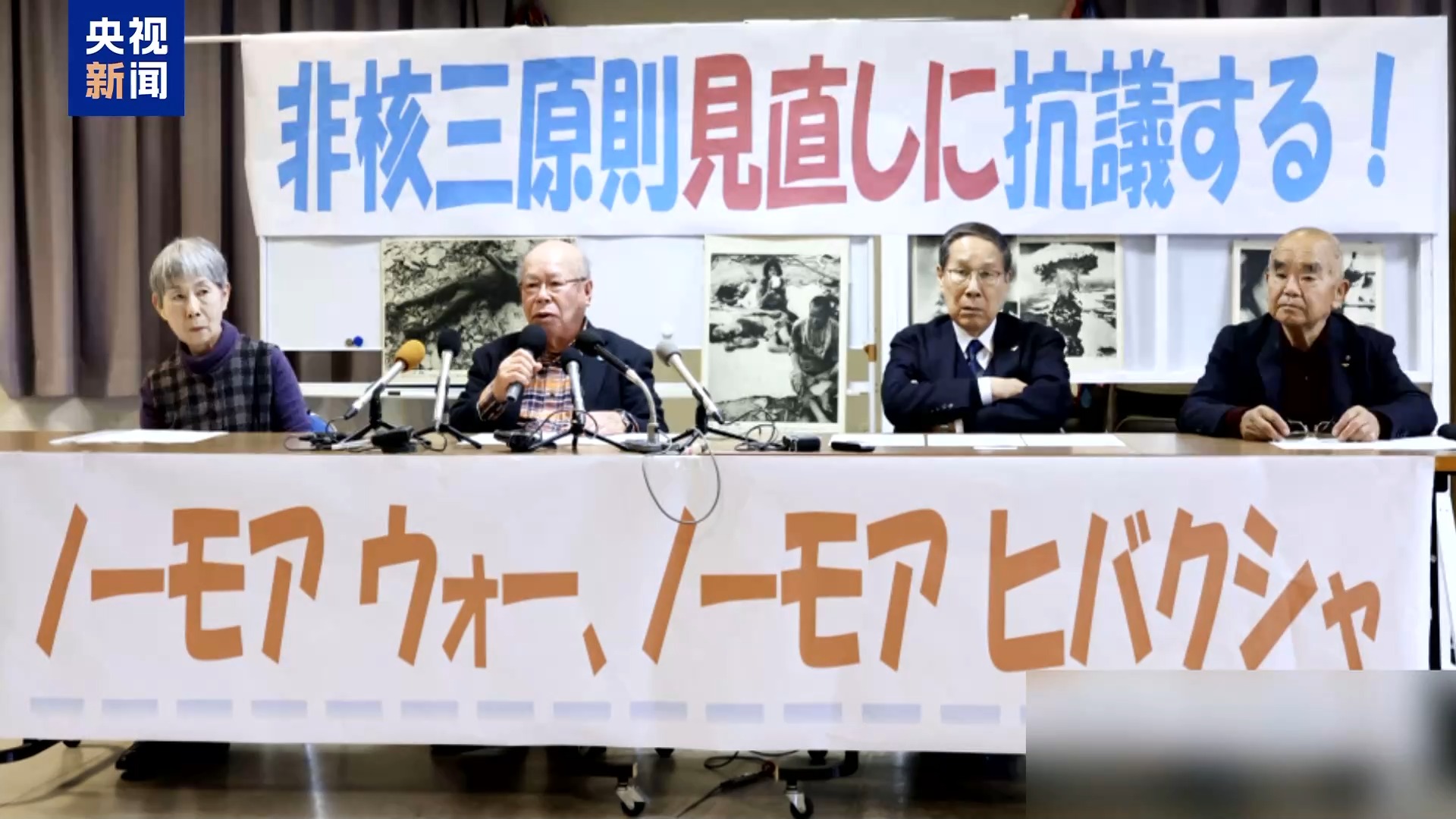
叫嚣“拥核”的日本高官被曝负责核裁军 核爆受害者发声抗议
Yang Shi Xin Wen Ke Hu Duan· 2025-12-26 02:08
Core Viewpoint - Recent statements by a senior official in the Japanese Prime Minister's office advocating for nuclear armament have sparked significant backlash both domestically and internationally, with criticism from former politicians, political parties, and civil organizations in Japan, as well as strong opposition from neighboring countries [1][3]. Group 1: Domestic Reactions - Four survivor groups from the Nagasaki nuclear bombings held a press conference to protest the remarks about Japan possessing nuclear weapons, stating that such views undermine the 80-year journey of suffering endured by nuclear victims and are unacceptable [3]. - The survivor groups called for the Japanese government to adhere to the "Three Non-Nuclear Principles" and to shift away from a security policy reliant on nuclear deterrence [3]. Group 2: International Implications - A senior Japanese journalist emphasized that Japan cannot pursue nuclear armament due to its commitment to the "Three Non-Nuclear Principles" and warned that such a move would lead to severe international criticism and potential sanctions [3][5]. - The journalist also noted that if Japan attempted to acquire nuclear weapons, it might have to withdraw from the International Atomic Energy Agency, which would jeopardize its access to nuclear fuel and lead to economic collapse [5].
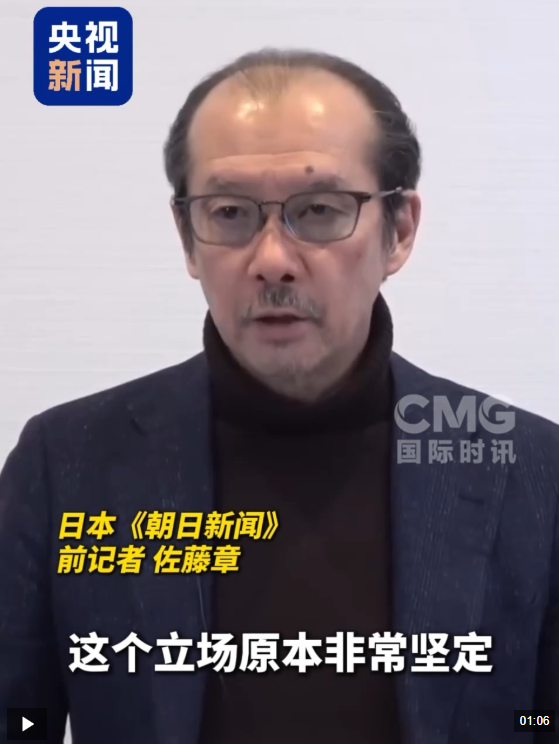
CCTV国际时讯:日媒体人称高市意图与美国核共享
Xin Lang Cai Jing· 2025-12-24 13:39
Core Viewpoint - Recent statements by senior officials in Japan regarding nuclear armament have sparked significant domestic and international concern and condemnation, indicating a potential shift in Japan's nuclear policy towards nuclear sharing with the United States [1] Group 1: Nuclear Policy Implications - The remarks made by Japanese officials reflect the true stance of the Kishida cabinet on nuclear issues, suggesting a serious consideration of nuclear armament [1] - The intention behind these statements appears to be the introduction and storage of U.S. nuclear weapons on Japanese soil, moving Japan closer to a state of nuclear sharing with the U.S. [1] - The ultimate goal indicated by these discussions is to achieve the capability of possessing nuclear weapons within Japan [1]
日本和平团体举办展览揭露日本侵略历史 反对“拥核”主张
Yang Guang Wang· 2025-12-22 02:15
Group 1 - The core viewpoint of the articles highlights the growing concerns among Japanese citizens and international observers regarding Prime Minister Fumio Kishida's administration's military spending and nuclear ambitions, which are seen as a regression towards militarism and a disregard for historical lessons [1][2] - Multiple peace groups in Japan are actively organizing exhibitions in Tokyo to reveal the country's invasion history and oppose the government's increase in defense spending, reflecting public discontent with the administration's fiscal policies [1] - Historical scholars express alarm over the current government's rhetoric surrounding nuclear weapons, indicating a societal amnesia regarding the horrors of war and a potential threat to regional stability [1] Group 2 - International figures criticize Kishida's comments as interference in China's internal affairs and warn against the resurgence of extreme right-wing politics in Japan, which could exacerbate tensions in the region [1][2] - The former political advisor to Zambia's president emphasizes the importance of learning from history to avoid repeating the mistakes of colonialism and militarism, underscoring the global perspective on Japan's current political trajectory [2]
朝鲜:坚决阻止战犯国家的危险妄动
Xin Lang Cai Jing· 2025-12-21 08:22
Group 1 - The North Korean Foreign Ministry strongly criticized Japan's nuclear ambitions, labeling Japan as a "war criminal state" and warning of a potential nuclear disaster in Asia if Japan acquires nuclear weapons [1] - A senior official from the Japanese Prime Minister's office stated that Japan should possess nuclear weapons due to the increasingly severe security environment surrounding the country [1] - Former Japanese Prime Minister Shigeru Ishiba expressed that nuclear armament would not bring positive effects to Japan and emphasized that such statements were personal views made in an informal setting [3] Group 2 - Ishiba noted that if Japan were to acquire nuclear weapons, it would have to withdraw from the Treaty on the Non-Proliferation of Nuclear Weapons and the International Atomic Energy Agency, complicating Japan's nuclear energy policies [3] - Chinese Foreign Ministry spokesperson Guo Jia Kun expressed serious concerns regarding Japan's nuclear ambitions, indicating that it reveals dangerous intentions to breach international law [3]
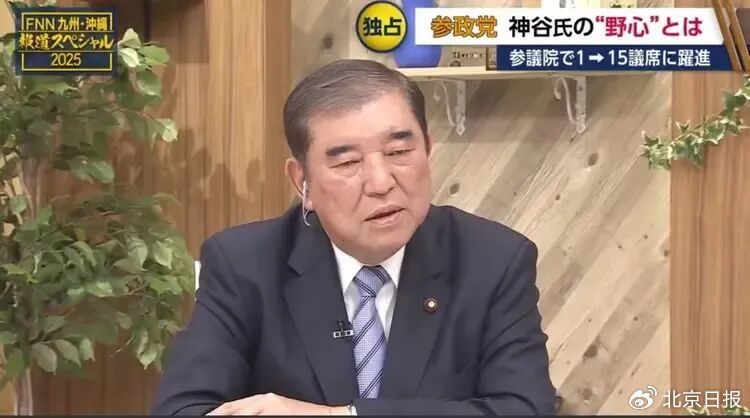
日本媒体人:“拥核”言论太可怕 高市政权“非常可笑”
Xin Lang Cai Jing· 2025-12-20 12:56
Core Viewpoint - A Japanese government official has stated that Japan should possess nuclear weapons, which has sparked strong criticism domestically [2]. Group 1 - Japan has historically maintained a firm stance of "not possessing nuclear weapons and pursuing peace without nuclear arms" [2]. - The current administration under Prime Minister Fumio Kishida has not only allowed pro-nuclear rhetoric but is also attempting to amend the "Three Non-Nuclear Principles," particularly the clause regarding "not introducing nuclear weapons" [2]. - The situation has escalated to a concerning level, with critics describing the Kishida administration as having lost its ability to make sound judgments [2].