指数定投

Search documents
【惊喜】定时攒慢慢存 最高领20元微信立减金
中国建设银行· 2026-03-19 06:45
Core Viewpoint - The article emphasizes the importance of disciplined investment through scheduled contributions to personal pension accounts, highlighting the benefits of index funds for long-term wealth accumulation and tax savings [3][6][10]. Group 1: Scheduled Contributions - Scheduled contributions allow for disciplined investment, ensuring that individuals do not miss out on tax-saving opportunities [3]. - Participants can receive a 20 yuan WeChat discount after successfully making a scheduled contribution [5]. Group 2: Index Fund Advantages - Index funds are suitable for long-term holding and align with economic growth trends, making them ideal for personal pensions [7]. - The historical performance of the CSI A500 index shows a significant increase, with the Chinese economy expanding sevenfold, indicating the potential for substantial returns over time [8][9]. Group 3: Cost Efficiency - Index funds generally have lower fees compared to actively managed products, which can lead to greater wealth accumulation through the effects of compounding over the long term [11]. - A comparison of fee rates shows that passive index funds have lower management and service fees than traditional actively managed funds [12][14]. Group 4: Long-Term Investment Strategy - The article references Warren Buffett's analogy of life as a snowball, emphasizing the importance of consistent investment in a favorable environment for compounding returns [15][17]. - Historical data on the STAR 50 index demonstrates a total return of 41.45% with a monthly investment strategy, showcasing the effectiveness of regular contributions [19][20].


[12月9日]指数估值数据(螺丝钉定投实盘第393期发车;养老指数估值表更新)
银行螺丝钉· 2025-12-09 14:06
Market Overview - The overall market experienced a decline, closing at 4.2 stars [1] - Large, medium, and small-cap stocks all fell, with small-cap stocks declining slightly more [2] - The value style saw an overall decline, while the growth style, particularly the ChiNext index, saw a slight increase [3][5] - The market is characterized by style rotation [4] Performance Trends - From October to November, the growth style dropped over 15%, while the value style fell approximately 5% [5] - In December, the growth style has shown strength in recent days, contrasting with the weakness in the value style [6] - The market is experiencing cyclical shifts in performance [7] Hong Kong Market Insights - The Hong Kong stock market also faced declines today, with greater volatility compared to A-shares [8][9] - Following today's drop, technology stocks in Hong Kong, including the Hang Seng Tech index, have returned to undervaluation [10][11] Investment Strategies - The investment strategy includes a regular investment plan with a focus on various combinations, such as the index-enhanced advisory portfolio and actively selected advisory portfolio [12] - The index-enhanced portfolio has returned to normal valuation, prompting a pause in regular investments, while the actively selected portfolio continues normal investments [12] - The "Monthly Salary Treasure" investment strategy, which consists of 40% stocks and 60% bonds, is recommended for stable market participation [12] Pension Fund Investment - The pension fund investment strategy includes regular investments in specific funds, such as the CSI A50 and 300 Dividend Low Volatility [19] - The CSI A50 has recently returned to a low valuation, while the CSI 500 and CSI Dividend are at normal valuations, leading to a pause in regular investments [19] - The pension index fund is a new investment category, with a focus on classic combinations like CSI A500/A50 and CSI Dividend [21] Valuation Insights - A valuation table for various indices and funds is provided, indicating their price-to-earnings ratios, price-to-book ratios, and dividend yields [32] - The table highlights which indices are currently undervalued, normal, or overvalued, aiding in investment decision-making [36]

为什么你定投越久,收益越平庸?
Hu Xiu· 2025-09-24 13:49
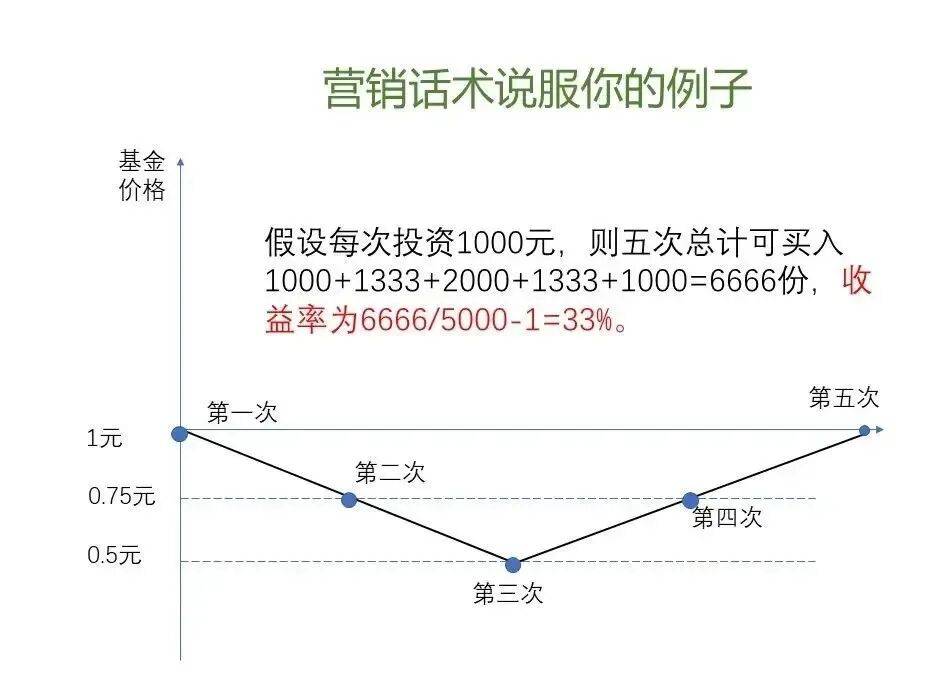
Group 1 - The core argument of the article is that while index ETF dollar-cost averaging (DCA) is a popular method for novice investors, it has limitations that can lead to significant losses if not managed properly [3][5][7] - DCA primarily serves to smooth out buying costs and reduce timing risks rather than to enhance expected returns [9][12] - The article emphasizes that many investors tend to enter the market at high points, which can lead to losses despite the overall market rising [10][11] Group 2 - DCA helps mitigate the risks associated with market volatility by allowing investors to buy in increments, thus avoiding the pitfalls of investing a large sum at a market peak [12][13] - Research indicates that DCA investors have a lower rate of loss or redemption compared to those who invest a lump sum, leading to returns that are closer to the index itself [14] - The article suggests that DCA can be improved by adjusting investment amounts based on market conditions, such as increasing contributions when prices are below the annual average [16][18] Group 3 - The article discusses the diminishing effectiveness of DCA over time, as the ratio of incremental investments to existing investments changes, making the cost-averaging effect less significant [25][26] - To maintain the benefits of DCA, investors are encouraged to either increase their investment amounts or integrate DCA funds into a broader asset management strategy [27][28] - The concept of asset allocation is introduced, highlighting the importance of diversification to manage risk effectively [30][35] Group 4 - The article concludes that DCA is suitable for incremental funds, while asset allocation strategies should be prioritized for existing wealth, especially for high-net-worth individuals [36]