
指数ETF

Search documents
A股收评:盘后,大家愤怒了!缩量4000亿!下周会迎来救赎了
Sou Hu Cai Jing· 2026-01-30 17:00
Market Overview - The market experienced significant declines, with over 4,200 stocks falling, and 60 stocks hitting the daily limit down [3][4] - The Shanghai Composite Index closed down 0.96% at 4,123 points, while the Shenzhen Component Index fell 0.66% [4] - The market's overall sentiment was characterized by a stark contrast between the index performance and individual stock losses, leading to widespread frustration among retail investors [5][19] Trading Volume and Market Activity - The total trading volume in the Shanghai and Shenzhen markets dropped sharply from over 32 trillion to 28.3 trillion, a decrease of nearly 4 trillion [7][8] - This significant reduction in volume indicates a lack of confidence, as active funds chose to pause trading, leading to a market environment of silence and uncertainty [8][21] Sector Performance - Precious metals and related stocks, which had previously been popular, saw drastic declines, with major companies like Shandong Gold and Zijin Mining facing heavy selling pressure [9][14] - Traditional sectors such as real estate and liquor also experienced notable drops, with Kweichow Moutai and Wuliangye falling by 3% and 4% respectively [9] - Conversely, funds flowed into technology sectors, particularly semiconductors and CPO (Co-Packaged Optics), with stocks like Zhongji Xuchuang and Tianfu Communication rising against the trend [10][20] Market Dynamics - The market is described as experiencing a "fan-like" rotation of hot sectors, where rapid shifts in investor interest lead to unpredictable price movements [10][11] - The underlying cause of the market's volatility is attributed to the limited amount of capital available, which cannot support simultaneous growth across all sectors [14][15] - A significant net outflow of 87 billion from major funds indicates a strategic retreat or reallocation of assets by institutional investors [19][20] Investor Sentiment - The emotional state of investors has deteriorated, with widespread complaints about the disconnect between index performance and individual stock losses [18][19] - The market's behavior has led to a sense of anger and helplessness among retail investors, as many experienced substantial losses despite the index appearing stable [19][36] - The final trading day of January reflected a broader trend of volatility, with the market moving in a "N" shape, indicating a challenging environment for retail investors [33]


全网都在聊“存款到期潮”,“搬家”的存款该往哪放?
Zhong Guo Zheng Quan Bao· 2026-01-27 12:11
Core Viewpoint - The article discusses the impending maturity of over 50 trillion yuan in long-term deposits by 2026, prompting investors to seek alternatives for stable returns beyond traditional bank deposits [1] Group 1: Investment Alternatives - Low-volatility public funds are expected to attract funds moving away from deposits [2] - Options include money market funds and short-term bond funds, which offer better liquidity and expected returns than current savings accounts [3] - "Fixed income +" funds, which include secondary bond funds and mixed bond funds, aim for excess returns by participating in equities or convertible bonds [3] - Low-volatility multi-asset products, such as low-volatility target risk funds in public fund of funds (FOF), are suitable for conservative investors seeking stable returns [3] Group 2: Performance Benchmarks - Fund performance benchmarks are multi-asset, weighted calculations, while bank wealth management benchmarks are typically a fixed value or range [4] - The fund benchmark serves to clarify risk-return sources and helps investors understand strategy logic, while also providing clear investment boundaries for fund managers [4] Group 3: Fund Types and Investor Profiles - "Fixed income +" is seen as an upgraded version of wealth management, with 70%-90% of assets in fixed income and 10%-30% in equities or alternative assets [5] - FOFs are designed to reduce risk through diversification by investing in a basket of funds, suitable for investors seeking a one-stop management solution [5] - Conservative investors are recommended to start with low-volatility FOFs and gradually increase equity exposure based on risk tolerance [6] Group 4: Expected Returns - In 2025, secondary bond funds in the "fixed income +" category are projected to yield an average return of 5.6% with a maximum drawdown of 1.6% [7] - Mixed bond funds are expected to have an average return of 6.5% with a maximum drawdown of 2.3% [7] - Convertible bond funds are anticipated to perform well, with a projected index increase of 21% in 2025 [7] Group 5: Market Dynamics - The occurrence of purchase limits on some "fixed income +" and FOF products indicates high demand but does not guarantee future performance [8] - Investors are advised to align their choices with their risk tolerance rather than following market trends blindly [8] Group 6: Advice for New Investors - New investors should only use idle funds for investment, set stop-loss limits, and avoid blindly following popular investment strategies [9] - Emphasizing a contrarian investment approach, investors are encouraged to buy during market panic and remain calm during optimistic market conditions [9]
2026年,要想清楚该如何面对牛市
雪球· 2026-01-17 03:46
Group 1 - The article discusses the potential bullish trend in the A-share market by 2026, supported by factors such as low interest rates and the attractiveness of stock dividends compared to government bonds [5][6][10] - It highlights the concept of "asset scarcity," where capital is expected to flow into higher-yielding investments as traditional options like real estate and bank deposits lose their appeal [7][8] - The article emphasizes the importance of strategic focus on stimulating consumption and internal demand through asset appreciation rather than direct cash distribution [9][10] Group 2 - The article outlines four key investment strategies for navigating a bull market, applicable to both institutional and retail investors [11] - The first strategy is to embrace index ETFs, particularly the CSI 500, which represents a diversified selection of leading companies [12][13] - The second strategy stresses the importance of balanced asset allocation to mitigate risks associated with heavy concentration in specific stocks or sectors [14] - The third strategy advises investors to adopt a long-term perspective and avoid short-term trading, as retail investors typically lack advantages in quick market movements [15][16] - The fourth strategy suggests waiting for price corrections to find good entry points for investments, emphasizing the need for a positive mindset [17][19] Group 3 - The article identifies three key criteria for selecting high-quality companies in the high-end manufacturing sector: price increases, overseas expansion, and innovation [22][23] - It discusses the importance of evaluating both relative and absolute price metrics, including PE/PB ratios and historical performance, to determine good pricing [25][26] - The article categorizes leading manufacturing companies into five groups based on their fundamentals and valuation metrics, providing a framework for investment decisions [28]

放量阳包阴,这个底部确认了?
Jin Rong Jie· 2025-12-23 03:38
Group 1 - The core viewpoint is that the upcoming resumption of trading for CICC may lead to a potential price surge, similar to the previous case with Guotai Junan, but the overall market sentiment remains cautious due to the current phase of market correction [1] - The market's recent rise is attributed to the influence of brokerage firms and external factors, including comments from a former Japanese central bank deputy governor about avoiding premature interest rate hikes, and speculation about large-scale purchases of index ETFs by Huijin [1] - The market is currently experiencing a divergence, with a significant number of stocks declining, particularly due to regulatory extensions on high-profile stocks, which has negatively impacted market sentiment [1] Group 2 - In terms of sector performance, the strongest performers today are optical modules and liquid cooling, which align with the preferences of institutional investors and show some market momentum [2] - Commercial aerospace is expected to continue its trend, but it requires the release of negative sentiment before any significant recovery can be anticipated, while consumer stocks should be approached with a high sell-low buy strategy until they align with the index [2] - The lithium battery sector is currently viewed as a potential rebound opportunity following the cancellation of 27 mining rights in Yichun, indicating a reaction to oversold conditions [2]

华尔街多元策略强势崛起! 名为“轮动”的大势在全球股市悄然启幕
智通财经网· 2025-12-20 07:22
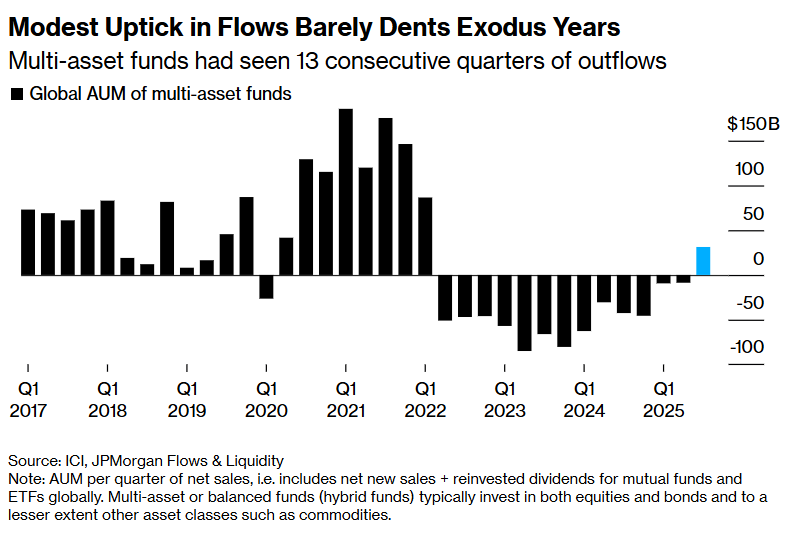
Core Insights - The article discusses a resurgence of traditional diversified investment strategies centered around index ETFs amidst an unprecedented AI investment boom in 2025, highlighting the strong performance of diversified asset allocation compared to concentrated bets on major tech stocks [1][3]. Group 1: Market Trends - In 2025, there is a noticeable rotation in global stock markets from tech stocks to value and cyclical sectors, indicating a shift towards diversified investment strategies that have generated significant excess alpha returns [1][3]. - Major Wall Street institutions, including Goldman Sachs and Morgan Stanley, predict a continued rotation in 2026 towards traditional value stocks, small caps, and cyclical sectors, suggesting that non-tech stocks may yield better returns than popular AI tech stocks [2][3]. Group 2: Performance of Investment Strategies - A simple stock-bond portfolio achieved double-digit gains in 2025, marking the best year since 2019, while multi-asset quantitative strategies significantly outperformed the S&P 500 index [4]. - Cambria Investments' ETF, which covers a broad range of global stocks, recorded its best annual performance, benefiting from strong gains in international markets outside the U.S. [4][11]. Group 3: Investor Behavior - Despite the strong performance of diversified strategies, there is a continued trend of investors moving away from these strategies, with diversified asset funds experiencing net outflows for 13 consecutive quarters [5][9]. - The article notes that while funds are flowing into pure equity and bond funds, the traditional diversified strategies remain out of favor among retail investors [9][21]. Group 4: Future Outlook - Analysts expect a broader bull market in 2026, with a focus on cyclical stocks benefiting from a "rolling recovery" phase in the U.S. economy, driven by improved corporate earnings and a favorable macroeconomic environment [15][18]. - The anticipated economic policies under the Trump administration are expected to favor commodity investments, suggesting a shift in investment paradigms towards fiscal expansion and de-globalization [20].





董少鹏:“牛市情绪”再次受冲击,发生了什么?
Xin Lang Cai Jing· 2025-12-16 14:27
Core Viewpoint - The recent decline in Chinese stock indices is attributed to external factors and market sentiment, despite positive economic indicators showing steady growth in the economy [3][4][9]. Economic Indicators - From January to November, the retail sales of consumer goods increased by 4% year-on-year, fixed asset investment (excluding rural households) grew by 0.8%, industrial added value above designated size rose by 6.0%, high-tech manufacturing added value increased by 9.2%, and smart consumer equipment manufacturing added value grew by 7.6% [3][4]. Market Sentiment and Policy Support - Regulatory bodies have introduced measures to encourage long-term investment, with financial institutions like insurance companies entering the stock market through index ETFs. Monetary policy tools such as increased repurchase agreements and securities swaps have also played a role in stabilizing market sentiment [4][9]. - Despite these supportive measures, the market has experienced significant daily declines, with instances of drops exceeding 1%, and even 6% to 7% in some cases. Experts attribute this to large shareholder sell-offs and quantitative trading, but the core issue is identified as insufficient long-term capital in the market [4][9]. Market Dynamics and Communication - The communication environment in the Chinese stock market is considered poor, with major investment institutions failing to provide positive guidance on market information. This has led to the spread of negative narratives that exacerbate market volatility [4][5]. - The dominance of foreign market influences over local decision-making is criticized, suggesting that the Chinese stock market should be driven by domestic capital and institutional decisions rather than external risk preferences [5][9]. Call to Action for Institutions - There is a call for large institutional investors to actively support the Chinese stock market and address issues such as large shareholder sell-offs and quantitative trading that create public anxiety [10][11].

国内规模最大的100个指数ETF集合!
格隆汇APP· 2025-12-07 07:40
Core Viewpoint - The article discusses the evolution of ETFs in China, highlighting the largest 100 index ETFs and their significance in the investment landscape [1] Group 1: ETF Market Overview - The total market capitalization of the top 100 index ETFs in China has reached approximately 1 trillion yuan, indicating a robust growth in the ETF sector [1] - The article emphasizes the increasing popularity of ETFs among retail investors, driven by their low cost and diversification benefits [1] Group 2: Performance Analysis - The article provides insights into the performance of various ETFs, noting that some have outperformed traditional mutual funds over the past year [1] - Specific ETFs are highlighted for their impressive returns, with some achieving over 30% growth in the last fiscal year [1] Group 3: Future Trends - The article predicts continued growth in the ETF market, driven by regulatory support and increasing investor awareness [1] - It also mentions the potential for innovation in ETF products, including thematic and sector-specific ETFs, to attract a broader range of investors [1]

A股突破3900点,投资者的狂欢与焦虑
Sou Hu Cai Jing· 2025-10-10 05:40
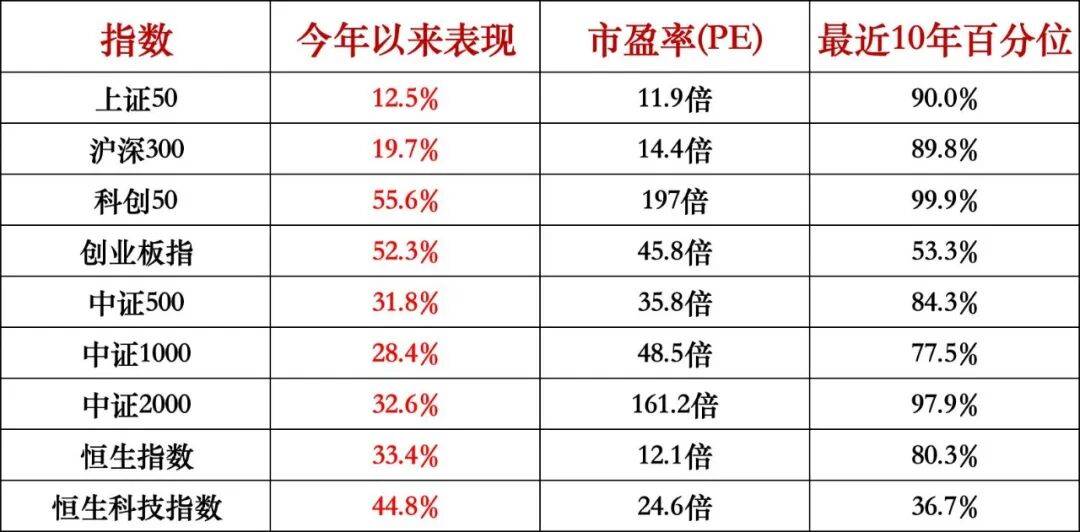
Core Insights - The A-share market has reached a significant milestone with the Shanghai Composite Index breaking through 3900 points for the first time in 10 years since 2015, indicating a major shift in market sentiment [1][2] Market Sentiment and Investor Behavior - The breakthrough has not only technical significance but also a profound psychological impact, reflecting a complete transformation in market sentiment [2] - Investors are experiencing a divided mindset, with those already invested worried about potential pullbacks, while those with lighter positions face anxiety over missing out [2] - Common mistakes made by investors during a bull market include premature selling after recovering losses, chasing hot stocks, over-leveraging, and having overly diversified portfolios [2] Market Phases and Trends - Historically, A-share bull markets follow a four-phase evolution: initiation, main rise, diffusion, and conclusion. The current market is transitioning from the main rise to the diffusion phase, characterized by heightened market enthusiasm and a rotation of funds towards cyclical and undervalued stocks [2][3] Sector Performance and Valuation - The A-share market has shifted from a "technology-led" narrative to a "cyclical and technology rotation" framework, with significant performance in the non-ferrous metals sector driven by rising prices and policy support [3] - Various indices have shown strong performance this year, with the ChiNext Index up 52.3% and the STAR 50 Index up 55.6%, indicating robust market activity [4] Valuation Comparisons - The Hang Seng Technology Index has risen 44% this year but remains undervalued compared to historical averages, with a current PE ratio of 24.6, significantly lower than the NASDAQ 100's 37 [5][8] - If the Hang Seng Technology Index returns to its 10-year median PE of 30, it could theoretically reach 7800 points, representing a potential upside of over 20% [8] Capital Flows and Market Dynamics - The expectation of a Federal Reserve rate cut is seen as a key driver for capital flows into the Hong Kong market, with significant net inflows recorded in the Hong Kong Stock Connect [8] - The domestic policy environment is shifting towards supporting technology industries, which is expected to enhance market dynamics and investor confidence [8] Investment Strategies - Effective risk management strategies include maintaining a diversified investment portfolio, using index ETFs, and setting stop-loss points during market speculation [11][12] - Investors are advised to keep sufficient liquidity for personal needs and to control their investment pace, ensuring they maintain a balance between risk and opportunity [12]
为什么你定投越久,收益越平庸?
Hu Xiu· 2025-09-24 13:49
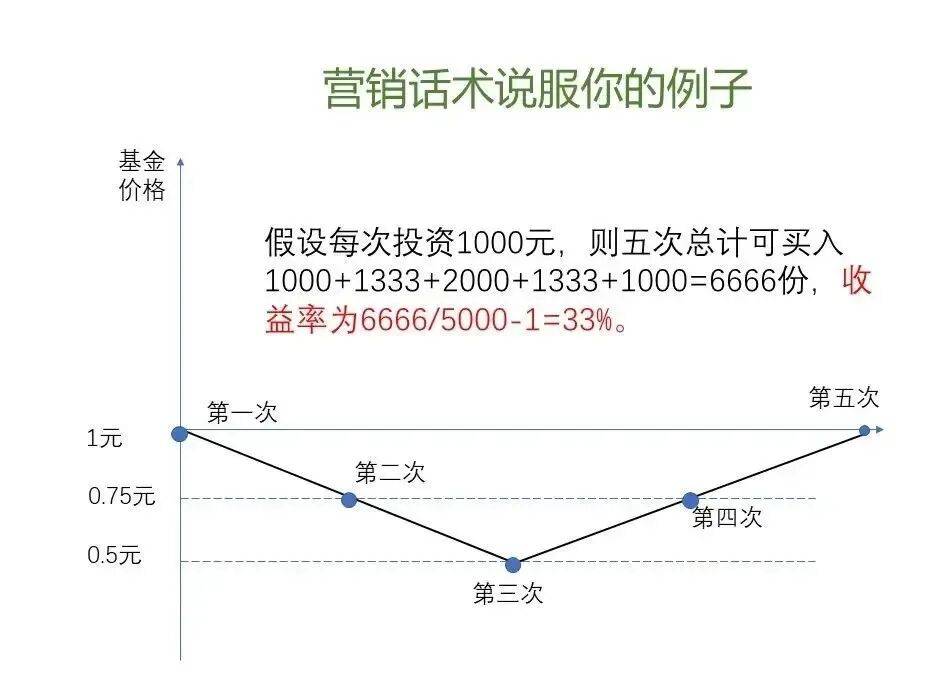
Group 1 - The core argument of the article is that while index ETF dollar-cost averaging (DCA) is a popular method for novice investors, it has limitations that can lead to significant losses if not managed properly [3][5][7] - DCA primarily serves to smooth out buying costs and reduce timing risks rather than to enhance expected returns [9][12] - The article emphasizes that many investors tend to enter the market at high points, which can lead to losses despite the overall market rising [10][11] Group 2 - DCA helps mitigate the risks associated with market volatility by allowing investors to buy in increments, thus avoiding the pitfalls of investing a large sum at a market peak [12][13] - Research indicates that DCA investors have a lower rate of loss or redemption compared to those who invest a lump sum, leading to returns that are closer to the index itself [14] - The article suggests that DCA can be improved by adjusting investment amounts based on market conditions, such as increasing contributions when prices are below the annual average [16][18] Group 3 - The article discusses the diminishing effectiveness of DCA over time, as the ratio of incremental investments to existing investments changes, making the cost-averaging effect less significant [25][26] - To maintain the benefits of DCA, investors are encouraged to either increase their investment amounts or integrate DCA funds into a broader asset management strategy [27][28] - The concept of asset allocation is introduced, highlighting the importance of diversification to manage risk effectively [30][35] Group 4 - The article concludes that DCA is suitable for incremental funds, while asset allocation strategies should be prioritized for existing wealth, especially for high-net-worth individuals [36]
调样生效后科创50指数代表性将进一步增强-基金-金融界
Jin Rong Jie· 2025-09-05 07:45
Core Viewpoint - The adjustment of index samples, such as the Sci-Tech Innovation 50 Index, is a crucial mechanism in index investment operations, ensuring systematic and periodic updates to include high-quality companies [1][2] Group 1: Index Adjustment Mechanism - The Sci-Tech Innovation 50 Index undergoes quarterly adjustments based on objective data, with a maximum adjustment limit of 10% for the number of constituent stocks [1] - Individual stock weight limits are set to prevent excessive reliance on a few stocks, with a cap of 10% for individual stocks in the Sci-Tech Innovation 50 Index [1] - The transparent rules for index sample adjustments allow for the continuous inclusion of quality enterprises that meet the standards [1] Group 2: Impact on Stocks and Funds - During index adjustments, funds are rebalanced among constituent stocks, leading to inflows for stocks that are added or have increased weight, while those that are removed or have decreased weight face outflows [2] - Historical data shows that the inclusion of Cambrian in major A-share indices did not significantly impact its stock price due to the passive nature of index funds [2] - Recent fluctuations in Cambrian's stock price have not been linked to active trading by related index ETFs, indicating that the price volatility is not driven by these funds [2]
