推理成本

Search documents
免费用户高达95%,谁来为AI的推理成本买单?
美股研究社· 2026-02-26 12:34
Core Viewpoint - The article highlights the challenges faced by AI large model companies, revealing a stark contrast between soaring user growth and declining profit margins, questioning whether these models are high-margin software or capital-intensive infrastructure [1][2]. Group 1: Financial Performance - OpenAI's gross margin dropped from 40% to 33%, significantly below the market expectation of over 60% [2]. - OpenAI's inference costs surged to $8.4 billion due to increased demand, indicating a structural conflict between growth and profitability [5][6]. - The high percentage of free users, at 95%, leads to substantial costs without direct revenue, complicating the financial landscape for large model companies [8][9]. Group 2: Cost Structure and User Dynamics - The economic logic of large models resembles utilities rather than traditional software, with each user interaction incurring significant backend costs [5]. - The demand for more complex and longer context reasoning from users has led to increased operational costs, challenging the traditional growth-profit relationship [6][10]. - The reliance on free users, who consume considerable computational resources, creates a financial burden that the small percentage of paying users cannot offset [8][9]. Group 3: Strategic Considerations - To achieve a gross margin of over 60%, companies must enhance inference efficiency and improve monetization strategies, shifting focus from consumer products to enterprise solutions [10][11]. - The competition from open-source models and local deployment options threatens pricing power and could lead to a price war, further compressing margins [10][11]. - Companies like OpenAI and Anthropic face a critical decision: prioritize market share through free strategies or shift towards profitability by reducing free user access and increasing subscription costs [11][14]. Group 4: Future Outlook - The AI industry is undergoing a significant pressure test, where the focus will shift from potential to certainty in terms of profitability [14]. - Effective cost management and pricing strategies will be essential for long-term sustainability, as reliance on funding alone is not viable [14]. - The ultimate determinant of success in the AI sector may hinge on cash flow quality rather than just technological advancements [14].

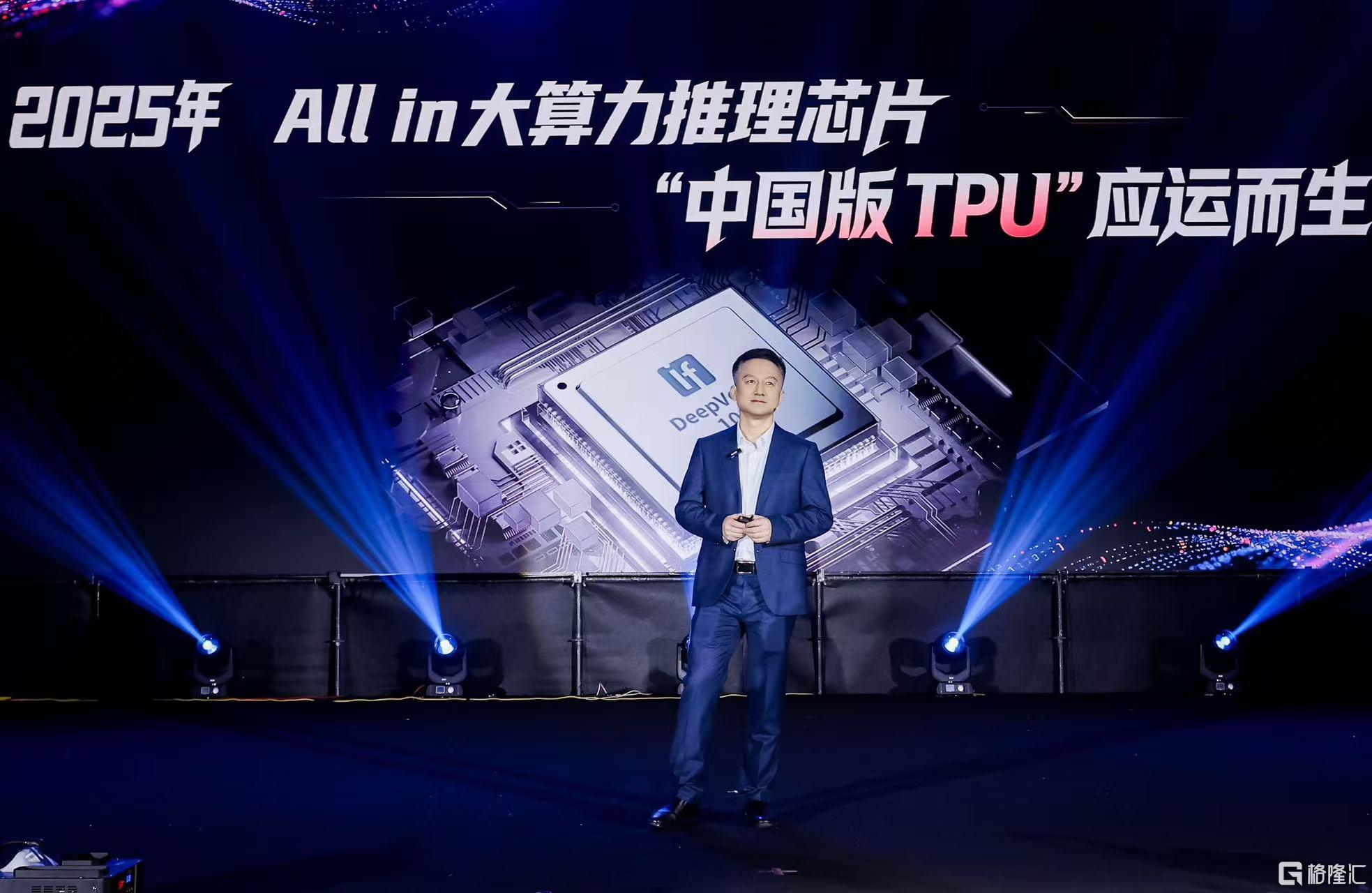
云天励飞发布未来三年大算力芯片战略:目标把百万 Tokens 推理成本降低 100 倍以上
Ge Long Hui· 2026-02-03 12:49
Core Viewpoint - The company, Yuntian Lifei, has announced its strategic focus on AI inference chips for the next three years, aiming to significantly reduce the cost of inference for large models by over 100 times, thereby promoting AI from experimental technology to widespread productivity [1][10]. Group 1: Industry Changes - The global computing power industry is shifting its focus from parameter competition to efficiency in inference, emphasizing lower latency and cost [3]. - Major players like Google and NVIDIA are making strategic moves to enhance their capabilities in inference, indicating a trend towards optimizing for efficiency rather than just increasing model strength [3]. Group 2: Architectural Breakthroughs - Yuntian Lifei has established the GPNPU technology route, which combines GPGPU, NPU, and 3D stacked storage to achieve both general computing versatility and high efficiency [4]. - The GPNPU architecture aims to address the migration cost associated with mainstream software ecosystems, allowing for easy integration with existing CUDA programs [4]. - The company is also developing 3D stacked storage and advanced interconnect technologies to overcome the "memory wall" bottleneck, enhancing bandwidth and efficiency [5]. Group 3: Competitive Advantages - The CEO of Yuntian Lifei highlighted five core elements that constitute the company's competitive moat: technology, production capacity, ecosystem, market, and capital [8]. - The company is one of the few in China with sufficient domestic production capacity, ensuring high certainty for large-scale chip production and delivery [8]. - Yuntian Lifei's "1+4" structure focuses on AI inference chips and includes four business units aimed at addressing challenges from research and production to market promotion [8]. Group 4: Future Plans - The company plans to invest heavily in the development of the DeepVerse chip, focusing on optimizing inference costs, latency, and throughput [10]. - The roadmap aims to align with international platforms, targeting key optimization phases in inference to deliver cheaper, more stable, and easier-to-deploy solutions [10]. - The ultimate goal is to make inference affordable and reliable, enabling AI to transition from visible capabilities to accessible productivity [10].

GPU vs ASIC的推理成本对比
傅里叶的猫· 2026-01-26 14:42
Core Insights - The article emphasizes that the competition in AI chips is increasingly focused on cost-effectiveness, particularly during the inference stage, which is crucial for the commercial viability of AI applications [5][6]. - Goldman Sachs' report provides a framework for analyzing the competitive landscape between GPU and ASIC chips, revealing that while all chip types are experiencing declining inference costs, the rate of decline varies significantly among manufacturers [6]. Group 1: Inference Cost as a Key Competitive Factor - The competition among AI chips is no longer solely about performance; cost-effectiveness during the inference phase is now a critical metric for assessing core competitiveness [6]. - Companies that can achieve a competitive edge in inference costs will likely secure greater market share [6]. Group 2: Competitive Landscape Among Major Players - Google and Broadcom's TPU have shown strong competitive momentum, with inference costs dropping by approximately 70% from TPU v6 to TPU v7, making it comparable to NVIDIA's flagship product [9]. - NVIDIA maintains its leadership position due to its product release schedule and the robust CUDA software ecosystem, which creates high switching costs for customers [10]. - AMD and Amazon's Trainium are currently lagging in the inference cost competition, with estimated cost reductions of only about 30% [12]. Group 3: Technological Trends - As chip architecture optimization reaches its limits, future performance improvements and cost reductions in AI chips will rely on innovations in networking, memory, and packaging technologies [15]. - NVIDIA and Broadcom have established a first-mover advantage in these technological areas, which will support their continued leadership in the market [17]. Group 4: Industry Evolution Paths - Goldman Sachs outlines four potential scenarios for the future of the AI industry, each affecting the competitive dynamics between GPUs and ASICs differently [18]. - In the most optimistic scenario, both consumer and enterprise AI will experience strong growth, benefiting NVIDIA due to its dominant position in the training market [19]. - The competition between GPU and ASIC represents a broader struggle between generalization and customization, with implications for performance, cost, and ecosystem dynamics [19].

成本暴降70%!谷歌TPU强势追赶,性价比已追平英伟达
Hua Er Jie Jian Wen· 2026-01-21 04:55
Core Insights - The focus in the AI chip market is shifting from performance to cost efficiency, as commercial pressures mount and the cost of inference becomes a critical factor in determining competitive advantage [1][2][3] Group 1: Shift in Evaluation Criteria - The evaluation criteria for AI chips are transitioning from "who computes faster" to "who computes cheaper and more sustainably" as inference becomes a significant source of long-term cash flow [2][3] - High costs associated with inference are becoming more pronounced as deployment and commercialization of large models progress, leading to a reevaluation of chip performance metrics [3] Group 2: TPU's Cost Reduction - Google/Broadcom's TPU has significantly reduced its inference cost, with the transition from TPU v6 to TPU v7 resulting in a 70% decrease in unit token inference cost, making it competitive with NVIDIA's GB200 NVL72 [1][4] - The cost reduction in TPU v7 is attributed to system-level optimizations rather than a single technological breakthrough, indicating that future cost reductions will depend on advancements in adjacent technologies [4] Group 3: Competitive Landscape - Despite TPU's advancements, NVIDIA maintains a time-to-market advantage with ongoing product iterations, which are crucial for customer retention [5][6] - The investment outlook remains positive for both NVIDIA and Broadcom, with Broadcom's earnings forecast for FY2026 raised to $10.87 per share, reflecting its strong position in AI networking and custom computing [7] Group 4: Industry Dynamics - The report suggests a clearer division of labor within the industry, where GPUs continue to dominate training and general computing markets, while custom ASICs penetrate predictable inference workloads [7][8] - The significant drop in TPU costs serves as a critical stress test for the viability of AI business models, highlighting the importance of economic considerations in the ongoing GPU vs. ASIC competition [8]
AI 霸主谷歌的反击:为什么说 4 万亿市值只是一个开始?
3 6 Ke· 2025-11-28 05:51
Core Insights - Google is overcoming the "innovator's dilemma" with Gemini 3 and Nano Banana Pro, leveraging its TPU computing cluster as a significant competitive advantage in the AI era [1][3] - The market underestimates the destructive impact of "inference costs" on AI business models, with Google holding pricing power due to its self-developed TPU, contrasting with competitors reliant on NVIDIA [2][4] - Gemini 3 is transforming search from a "link-finding" tool to a "decision engine," potentially increasing ad conversion rates and supporting higher ad prices [1][12] TPU and Inference Arbitrage - TPU is a critical asset for Google, designed specifically for neural network computations, providing a significant performance advantage over NVIDIA's GPUs [4][5] - Google's TPU v7 has improved performance per watt by 100% compared to its predecessor, and its inference performance is four times better than NVIDIA's H100 [5][6] - This positions Google to maintain over 50% gross margins while competitors face reduced margins due to high NVIDIA costs [6] Gemini 3 and Nano Banana Pro - Gemini 3 showcases Google's ability to convert talent into superior product capabilities, outperforming competitors like GPT-5.1 [7] - The model's native multimodal capabilities allow it to process complex data and perform tasks across various platforms, enhancing its utility [7][10] - Nano Banana Pro aims to optimize AI for mobile devices, further expanding Google's reach [7][8] Distribution and Market Position - Google benefits from a vast distribution network through Android and Chrome, allowing for zero marginal cost updates to billions of users [10][11] - The company's strategic moves, including stock buybacks, enhance shareholder value and position it favorably in the tech market [11] Business Model Evolution - Concerns about AI killing search are mitigated by the potential for AI to enhance ad targeting and conversion rates, shifting from traditional traffic distribution to high-value decision-making [12][16] - Gemini-driven search experiences are expected to yield higher ad values by providing structured comparisons rather than simple links [16][17] Conclusion - Google is uniquely positioned in the AI landscape with its "full-stack sovereignty," combining hardware, software, and user access [17][18] - The recent stock price surge reflects market recognition of Google's status as a leader in AI infrastructure, paving the way for potential future valuation increases [17][19]


华尔街这是“约好了一起唱空”?巴克莱:现有AI算力似乎足以满足需求
硬AI· 2025-03-27 02:52
Core Viewpoint - Barclays indicates that by 2025, the AI industry will have sufficient computing power to support between 1.5 billion and 22 billion AI agents, highlighting a significant market opportunity for AI agent deployment [2][3][9]. Group 1: AI Computing Power - Barclays believes that existing AI computing power is adequate for large-scale deployment of AI agents, based on three main points: the industry reasoning capacity foundation, the ability to support a large number of users, and the need for efficient models [4][8]. - By 2025, approximately 15.7 million AI accelerators (GPUs/TPUs/ASICs) will be online, with 40% (about 6.3 million) dedicated to inference, and half of that (3.1 million) specifically for agent/chatbot services [4][5]. - The current computing power can support between 1.5 billion and 22 billion AI agents, sufficient to meet the needs of over 100 million white-collar workers in the US and EU, as well as more than 1 billion enterprise software licenses [4][6]. Group 2: Cost Efficiency and Open Source Models - Low inference costs and the adoption of open-source models are critical for the profitability of AI agent products, driving demand for more efficient AI models and computing power [10][11]. - The application of more efficient models, such as DeepSeek R1, can increase industry capacity by 15 times compared to more expensive models like OpenAI's [6][10]. Group 3: Inference Cost Challenges - The inference cost of AI agents is becoming a central consideration for industry development, with agent products generating approximately 10,000 tokens per query, significantly higher than traditional chatbots [15][18]. - The annual subscription cost for agent products based on OpenAI's model can reach $2,400, while those based on DeepSeek R1 can be as low as $88, providing 15 times the user capacity [15][18]. - The emergence of "super agents" by OpenAI, which consume more tokens, may face limitations in large-scale application due to high inference costs [19].