
政府信息公开

Search documents
以案说法|土地出让合同能否依申请公开?
Zhong Guo Zi Ran Zi Yuan Bao· 2025-12-24 01:47
Core Viewpoint - The article discusses the nature of land transfer contracts in China, arguing that they should be considered public government information rather than merely real estate registration materials, emphasizing their role in public interest and administrative governance [4][5][7]. Group 1: Nature of Land Transfer Contracts - Land transfer contracts are not just civil agreements but also contain mandatory administrative elements such as land use, construction requirements, and public obligations, reflecting government planning and policy [4][5]. - These contracts serve as the legal basis for real estate registration and are essential for land management and regulatory oversight, indicating their independent status as government information [5][6]. Group 2: Public Interest and Transparency - The public interest in land transfer contracts is significant, as they relate to public finance and urban development, necessitating their disclosure to ensure transparency and accountability [7][8]. - Existing regulations require that the results of land transfers be publicly announced, including key details such as location, area, and price, reinforcing the need for public access to these contracts [8][9]. Group 3: Recommendations for Information Disclosure - It is recommended that land transfer contracts be treated as government information, with a clear framework for public access that prioritizes transparency while protecting sensitive personal information [10][11]. - Encouraging proactive disclosure by local natural resource departments through dedicated online platforms can help reduce disputes and improve public service [11].
水利部2016年政府信息公开工作年度报告
Shui Li Bu Wang Zhan· 2025-12-05 09:33
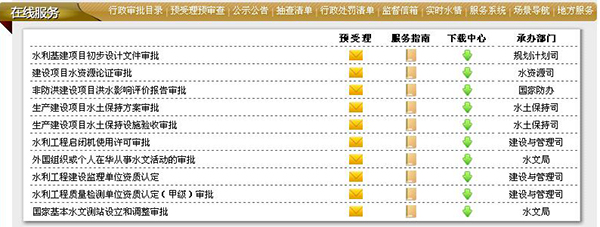
Overview - In 2016, the Ministry of Water Resources implemented the requirements of the regulations and the notice on promoting government information disclosure, achieving significant results in government information disclosure work [1] Group 1: Administrative Power Disclosure - The Ministry of Water Resources published 22 administrative licensing items, a list of administrative punishment powers, and a directory of administrative approval intermediary service items on its website [1] - An online service section was created to facilitate the public and enterprises in accessing administrative approval items [1] Group 2: Credit Information Disclosure - The Ministry promoted the disclosure of credit information in the water construction market, including quality assessments and licensing information, with a total of 813,056 pieces of information published [3] - A national unified credit evaluation system for water construction market entities was established, along with a red-black list system for integrity [3] Group 3: Major Project Information Disclosure - Monthly reports on the progress of major water-saving and supply projects were published, enhancing transparency in investment plan execution [5] - The Ministry categorized and published information on major water projects under construction [5] Group 4: Bidding Information Disclosure - By the end of 2016, 98.9% of water engineering projects were traded through public resource platforms, with 97.4% of the total transaction amount conducted through these platforms [7] - Electronic bidding trials were fully implemented in several provinces, promoting transparency in the bidding process [7] Group 5: Public Information Disclosure - A total of 5,873 government information items were proactively disclosed on the Ministry's website, including policy regulations and project bidding information [10] - The Ministry published 4 issues of the "Ministry of Water Resources Bulletin," containing 91 regulatory documents and data reports [14] Group 6: Public Engagement and Requests - In 2016, the Ministry received 632 information disclosure requests, a significant increase from previous years, with a majority being timely responded to [19] - The Ministry did not charge fees for information requests in 2016 [21] Group 7: Challenges and Future Work - The Ministry acknowledged challenges in managing the increased volume of information requests and plans to enhance proactive disclosure efforts in 2017 [23] - Future initiatives include improving the online regulatory platform and enhancing the service functions of the Ministry's website [23]

水利部2021年政府信息公开工作年度报告
Shui Li Bu Wang Zhan· 2025-12-02 16:29
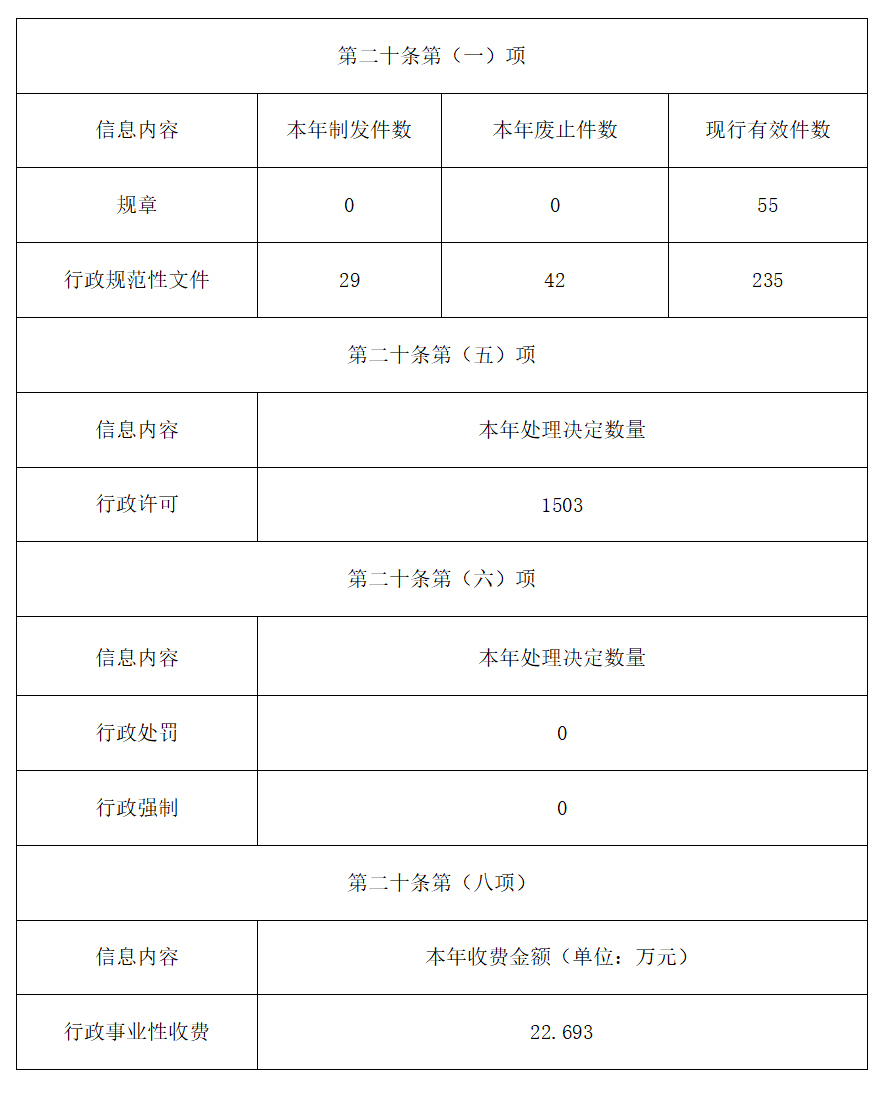
Overall Situation - In 2021, the Ministry of Water Resources adhered to Xi Jinping's thought and implemented the "Regulations on Government Information Disclosure" and the "2021 Government Information Disclosure Work Points" issued by the State Council [2] Proactive Disclosure - The Ministry published 10,169 pieces of information on its website and established 11 special topics for authoritative information [3] - A total of 2,341 news articles related to drought and flood disaster prevention were timely released, along with 1,251,836 real-time updates on rainfall, water conditions, and drought situations [3] - Seven press conferences and media discussions were held to respond to social concerns and enhance the interpretation of major water policies [3] Information Management - The Ministry improved the review and legality examination mechanisms for public documents and published 399 pieces of government information disclosure directory [5] - The "China Water Resources Yearbook 2021" and "2021 China Water Resources Statistical Yearbook" were compiled and published [5] Platform Construction - The Ministry continued to enhance its government information disclosure platform, maintaining 55 effective regulations and improving the quality of information on social media platforms [6] - A total of 2,753 public inquiries were processed through the Ministry's consultation service platform [6] Supervision and Assurance - The Ministry developed a 2021 implementation plan for government information disclosure, emphasizing the responsibility for information disclosure and conducting self-assessments [7] - Training on government information disclosure was included in the initial civil servant training courses, with 3,582 participants in the knowledge quiz [7] Issues and Improvements - The Ministry acknowledged shortcomings in proactive disclosure, quality of information, and the need for improved awareness and capacity at the grassroots level [12] - Plans for 2022 include enhancing standardized disclosure practices, strengthening guidance and supervision, and improving platform management [12]
水利部2019年政府信息公开工作年度报告
Shui Li Bu Wang Zhan· 2025-12-02 16:26
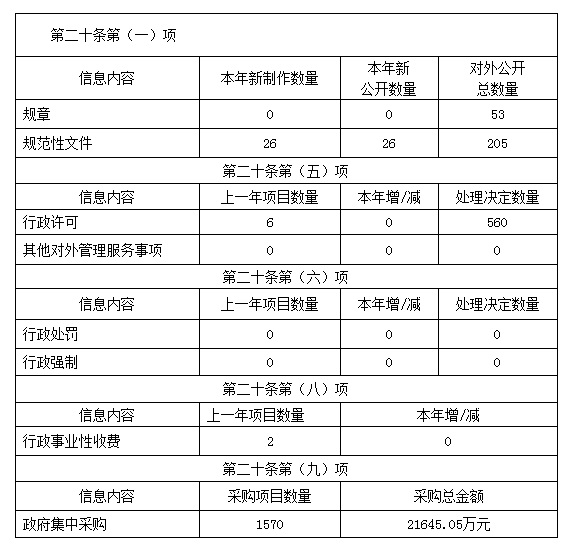
Overall Situation - In 2019, the Ministry of Water Resources focused on enhancing the quality and effectiveness of information disclosure, guided by Xi Jinping's thought and the new regulations on government information disclosure [2][3] - The ministry actively published 5,501 pieces of government information, covering various aspects of water administration and reform [2][3] - The ministry organized seven press conferences and launched several policy interpretation reports to promote water policies [2][3] Information Disclosure Efforts - The ministry received 78 applications for government information disclosure, all of which were processed in accordance with regulations [2][3] - The ministry established a comprehensive supervision and reporting platform, enhancing public engagement in water management [2][3] - The ministry's official website received 703 million visits, indicating a strong public interest in water-related information [2][3] Key Achievements - The ministry published 26 normative documents and 33 new standards, promoting transparency in water administration [3][4] - Significant progress was made in major water projects, with regular updates on investment plans and project statuses [3][4] - The ministry actively responded to public concerns, issuing over 10,000 pieces of warning information and addressing 2,145 public inquiries [3][4] Challenges and Future Plans - The ministry identified areas for improvement, including the need for deeper implementation of the new regulations and enhancing the comprehensiveness of disclosed information [9] - Plans for 2020 include strengthening training on the new regulations, improving the information disclosure system, and enhancing policy interpretation and public response mechanisms [9]
新疆乌苏市市场监管局着力提升政府信息处理能力
Zhong Guo Shi Pin Wang· 2025-08-19 07:53
Core Viewpoint - The article highlights the efforts of the Urumqi City Market Supervision Administration in Xinjiang to enhance government information processing capabilities through training and the implementation of a proactive information disclosure approach [1] Group 1: Training and Information Disclosure - The training focused on the theme of government information disclosure, explaining the definition of "government information" and clarifying the boundaries of three types of information: proactive disclosure, disclosure upon request, and non-disclosure [1] - The training aimed to improve the staff's awareness and capability in government information disclosure, using actual case studies to illustrate the requirements and considerations for standardized responses [1] Group 2: Regulatory Measures and Public Safety - The administration is committed to addressing the "key small matters" of the public by leveraging its market supervision functions, conducting comprehensive regulatory enforcement, and administrative supervision [1] - A systematic approach is being adopted to identify safety risks in food, pharmaceuticals, industrial products, and special equipment, with the establishment of problem lists, responsibility lists, and resolution lists to ensure effective rectification of identified issues [1] Group 3: Future Directions - The Market Supervision Administration plans to use the training as an opportunity to embed the principle of "openness as the norm, non-disclosure as the exception" into its regulatory processes, aiming to enhance the standardization and precision of information disclosure [1]
高速收费延期却不公开缘由,公众“质疑”有理
Qi Lu Wan Bao Wang· 2025-07-12 04:24
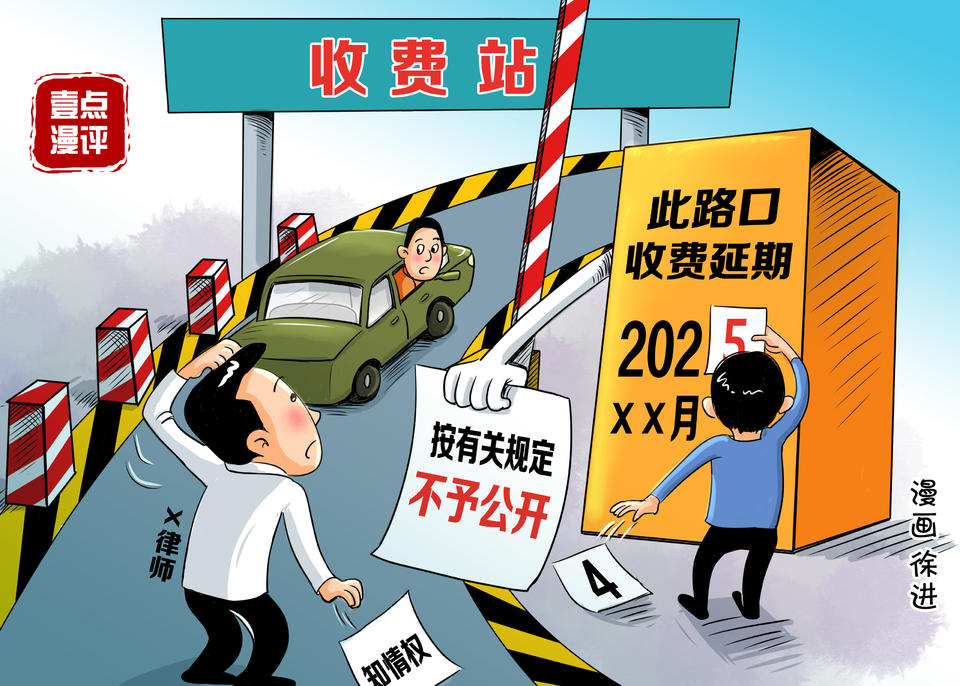
Core Points - The issue of delayed toll charges on a highway in Chengdu has sparked public debate due to a lack of transparency regarding the reasons for the extension [2] - The official documents indicate that the toll period should end on June 30, 2024, but the signage at the toll station shows an end date of September 17, 2025 [2] - The public has raised concerns about the absence of a clear explanation for the toll extension, which is seen as a violation of the public's right to information [2][3] Summary by Sections - **Public Reaction**: Citizens, including lawyer Hu Lei, have expressed dissatisfaction with the government's refusal to disclose the reasons for the toll extension, leading to a lawsuit against the Sichuan Provincial Transportation Department [3] - **Legal Framework**: The situation highlights the need for government transparency as outlined in China's "Regulations on the Disclosure of Government Information," which mandates the proactive release of information that affects public interest [2] - **Accountability and Oversight**: The case emphasizes the importance of public oversight in government actions, reinforcing the concept of "right to know" and the necessity for accountability in administrative decisions [3]
涉及政府信息公开 最高法相关负责人详解最新司法解释
Zhong Guo Chan Ye Jing Ji Xin Xi Wang· 2025-05-22 23:23
Core Viewpoint - The Supreme People's Court has issued a judicial interpretation regarding the handling of administrative cases related to government information disclosure, mandating that if the information is deemed public, it must be provided to the plaintiff within twenty working days starting from June 1 of this year [1][2]. Group 1: Rights of Plaintiffs - The interpretation emphasizes the right of plaintiffs to obtain government information legally, stating that if the information is determined to be public, the court will order its disclosure within twenty working days [2][5]. - The interpretation also specifies that courts should adopt appropriate trial methods to prevent the disclosure of information that involves state secrets, commercial secrets, or personal privacy [2][3]. Group 2: Abuse of Rights - The Supreme People's Court has acknowledged issues of abuse regarding the right to request government information, where some individuals repeatedly apply for the same information not for genuine interest but to draw attention to their claims [4][5]. - This abuse of rights has been noted to consume significant administrative and judicial resources, affecting the normal functioning of administrative bodies and courts [4]. Group 3: Responsibilities and Procedures - The latest judicial interpretation places the burden of proof on the plaintiff to demonstrate how the actions of the administrative agency regarding disclosure or non-disclosure may harm their rights [5]. - The interpretation also outlines specific circumstances under which actions that do not materially affect the rights and obligations of citizens or organizations may not be accepted for litigation, including cases where legal review procedures have not been followed [5].
政府信息公开有了新要求!最高法:相关诉讼要实质性回应 应公开的在20天内公开
2 1 Shi Ji Jing Ji Bao Dao· 2025-05-21 00:00
Core Viewpoint - The Supreme Court of China has issued an interpretation regarding the legal application of government information disclosure lawsuits, emphasizing that these lawsuits are classified as "payment lawsuits" requiring substantial responses from administrative agencies [1][2]. Group 1: Legal Framework - The interpretation clarifies that government information is categorized as public and must be disclosed within 20 working days following a court ruling [1][2]. - The interpretation aims to address issues where administrative agencies fail to disclose information even after a favorable ruling for the plaintiff, leading to repeated lawsuits [1][2]. Group 2: Burden of Proof - The interpretation specifies that the burden of proof lies with the defendant (administrative agency) when refusing to disclose information based on commercial secrets or personal privacy [3]. - Defendants must provide justification for public interest reasons and demonstrate how non-disclosure could significantly impact public interest [3]. Group 3: Practical Implications - There are concerns regarding the misuse of information requests by citizens, which can waste judicial resources and disrupt administrative processes [3]. - The interpretation aims to streamline the process and reduce frivolous lawsuits by clarifying the responsibilities of both parties involved in information disclosure cases [3].
最高法:审理政府信息公开案件应避免泄露国家秘密、商业秘密
Nan Fang Du Shi Bao· 2025-05-20 04:01
Group 1 - The Supreme People's Court has issued an interpretation regarding the handling of administrative cases related to government information disclosure, emphasizing the need to avoid leaking state secrets, commercial secrets, and personal privacy during the judicial process [1][2] - The interpretation outlines that the burden of proof lies with the defendant in cases where the information involves state secrets or could endanger national security, public safety, or social stability, balancing the public's right to know with the protection of sensitive information [1] - The court is required to adopt appropriate trial methods based on the specifics of each case, which may include public or non-public hearings, ensuring that sensitive information remains confidential while still making the results of the trials public [2]
