效率经济

Search documents
AI的入口变革与供给爆炸将重塑互联网产业逻辑
Tai Mei Ti A P P· 2026-01-14 00:43
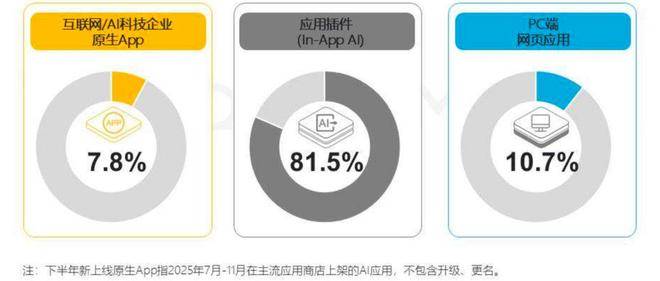
Core Insights - The internet industry is at the beginning of a structural transformation driven by AI, which will redefine interaction forms, business models, and value assessment systems by 2026 [1] - AI Agents and AIGC (AI-generated content) will collaborate to reshape the underlying logic of industries, marking a shift from traditional app-based user engagement to intent-driven interactions [2][5] Group 1: AI Agents and User Interaction - AI Agents will fundamentally change the flow distribution model, moving from traditional app matrices focused on user time consumption to efficient understanding and execution of user intent [2] - The transition from graphical user interfaces (GUI) to intent user interfaces (IUI) signifies a new era of human-computer interaction [2] - In 2025, 81.5% of newly launched AI applications will integrate as plugins within existing ecosystems, indicating a shift from plugin-based AI to system-level AI [2] Group 2: Competitive Landscape - Major tech companies are competing for the AI Agent entry point, which is expected to become an operating system-level traffic hub [4] - Google and OpenAI are enhancing their platforms to seamlessly integrate third-party services, while Alibaba, ByteDance, and Tencent are developing their own AI agents to connect various ecosystems [4][5] - The competition is fundamentally about migrating from attention economy to efficiency economy, where the most successful companies will be those that create indispensable entry points [5] Group 3: AIGC and Content Supply - AIGC is expected to lead to an explosion in content supply, lowering the production threshold for various content types to near-zero marginal costs [6] - The abundance of content will result in a devaluation of mediocre content, while high-quality, emotionally resonant, and culturally unique content will become more valuable [6] - Content consumption will evolve from passive viewing to active engagement, with new forms of interactive content emerging to fill the time saved by AI Agents [6] Group 4: Industry Impacts - In the gaming sector, AI is transitioning from a supportive tool to a core engine driving gameplay innovation, significantly enhancing asset generation efficiency [8] - The domestic gaming market is projected to reach a record revenue of 350.79 billion yuan in 2025, setting the stage for a significant year in 2026 [9] - In the film industry, competition among AI video models is intensifying, with companies focusing on industrialization and controllability to reshape the production chain [11] Group 5: Advertising and Efficiency - The transformation in the internet industry necessitates a closed-loop business model, with advertisers increasingly focusing on return on investment (ROI) [12] - Programmatic advertising platforms that leverage AI for precise matching and real-time optimization are outperforming the market [12] - Companies like AppLovin are experiencing significant revenue growth, indicating a shift in advertising from an art to a data-driven science [12] Group 6: Investment Opportunities - Investment opportunities are polarizing, with one side focusing on "entry builders" that can integrate large ecosystems and understand user intent, such as Alibaba, Tencent, and ByteDance [13] - The other side includes "supply cores" that possess scarce content and emotional connection capabilities, highlighting the value of top IPs and trusted brands [13] - Specific companies to watch include Giant Network, Century Huatong, and Kyeong Network in gaming, as well as Light Media and Huace Film in the film sector [13]




有人预言,10年后这3个行业比房子更有“钱途”,建议早点了解
Sou Hu Cai Jing· 2026-01-05 13:41
Core Insights - The traditional view of real estate as a "hard currency" is diminishing due to changing market dynamics, demographic shifts, and evolving consumer habits [1] - New investment opportunities are emerging, focusing on long-term demand, recurring purchases, and technological or service barriers [3] Group 1: Aging-Related Industries - Industries related to aging are quietly expanding, with increasing demand for health management, rehabilitation care, functional improvement, and life assistance [5] - This demand is gradual and persistent, leading to strong user loyalty and a business model that resembles a snowball effect rather than quick profits [7] - The aging sector is expected to be one of the least customer-deficient fields in the next decade, despite not being a get-rich-quick industry [7] Group 2: Efficiency-Oriented Businesses - Businesses that enhance efficiency are becoming increasingly valuable, addressing both physical and informational needs [8][9] - The most profitable aspects of these businesses often lie in the underlying systems, services, and solutions, which are scalable and have low replication costs [11] - Compared to real estate, efficiency-driven industries are characterized by being lightweight, fast, and scalable, with higher potential ceilings once a model is validated [11] Group 3: Emotional Value-Driven Consumption - Consumption related to emotional value is being redefined, with consumers willing to pay for feelings of happiness, ease, and understanding [13] - This sector includes leisure activities, companionship services, and niche markets focused on experiences, which are driven by ongoing societal pressures and fast-paced lifestyles [15] - Unlike real estate, these industries are dynamic and present continuous opportunities for those who understand user needs and can operate effectively [15] Group 4: Comparative Analysis with Real Estate - The profitability of these emerging industries is less dependent on economic cycles and more on sustained demand and individual capabilities, contrasting with real estate's reliance on market cycles [17] - Common characteristics of these industries include being less geographically constrained and exhibiting significant compounding effects, with early entry providing greater room for experimentation [17] - Mistakes in real estate investments can incur high adjustment costs, while experiences gained in emerging sectors are not wasted even if initial attempts are flawed [17] Group 5: Long-Term Trends - Trends develop gradually and often go unnoticed until they become mainstream, at which point they may no longer be affordable [19] - Companies and investors are encouraged to consider where to focus their time and energy for long-term growth and to identify potentially undervalued industries [19]