
教师转岗

Search documents
初中招生人数连增4年 多地小学老师被调去教初中
Di Yi Cai Jing· 2025-09-27 06:09
Group 1 - The number of junior high school enrollments in China increased by 941,200 in 2024, marking the fourth consecutive year of growth, while elementary school enrollments decreased by 2,612,500 [1][2] - In 2024, there are 5.21 million junior high schools in China, with total enrollments reaching 18.49 million and in-school students totaling 53.86 million [1] - The increase in junior high school enrollments is attributed to urbanization and rising demand in urban areas, as seen in cities like Fuzhou, which plans to increase the number of classes for public junior high schools [1] Group 2 - In Fengze District of Quanzhou, the total number of elementary school graduates is expected to reach 8,656 in 2025, a 4.3% increase from 2024, leading to an anticipated demand for 8,856 junior high school enrollments [2] - Zhengzhou reported an increase of 13,000 in the number of students participating in the transition from elementary to junior high school, with migrant children making up 29.8% of the total [2] - The Ministry of Education indicated that the scale of elementary school students has peaked, while the population of junior high school students continues to grow [2] Group 3 - In response to the surplus of elementary school teachers and the shortage of junior high school teachers, regions like Longyan City in Fujian Province are reallocating teachers from elementary to junior high schools [3] - The reallocation of teachers aims to optimize resource distribution without increasing fiscal burdens, although the suitability of elementary teachers for junior high positions depends on their qualifications and training [3] - Concerns exist regarding the ability of elementary teachers to adapt to junior high school teaching, particularly if they lack relevant educational backgrounds [3]
200万教师编制正在消失,教师行业将如何破局?
Sou Hu Cai Jing· 2025-09-16 00:34
Core Viewpoint - The crisis of teacher surplus in China is rapidly spreading, with projections indicating a potential surplus of 2 million teaching positions by 2035 due to a significant decline in newborns [1][3]. Group 1: Teacher Surplus and Employment Changes - By 2035, there will be a surplus of 1.5 million elementary school teachers and 370,000 middle school teachers, leading to a total of 2 million teaching positions disappearing [1]. - The education system is undergoing major reforms, such as the implementation of performance-based contracts for teachers, which could lead to job losses for those who do not meet performance standards [3]. - In Jiangxi Province, the number of new teacher recruitments is projected to drop from 20,775 in 2020 to just 2,146 by 2025, a staggering decline of 90% [3]. Group 2: School Closures and Teacher Placement - Between 2022 and 2023, a total of 20,400 kindergartens and 5,600 elementary schools were closed nationwide, with the Northeast region being particularly affected [5]. - Suggestions have been made to address the surplus by reducing class sizes, shifting from 50 students per class to 25 or even 15 [5]. Group 3: Proposed Solutions for Teacher Surplus - One proposed solution is to encourage older teachers to retire early or transition to administrative roles, allowing younger teachers to take on frontline teaching positions [9]. - Another suggestion is to facilitate the transfer of surplus teachers to other educational sectors, such as vocational schools and community education, where there is still demand for educators [12]. - Implementing a rotation system for teachers could help alleviate the surplus in urban areas by encouraging teachers to work in underserved rural regions [14].

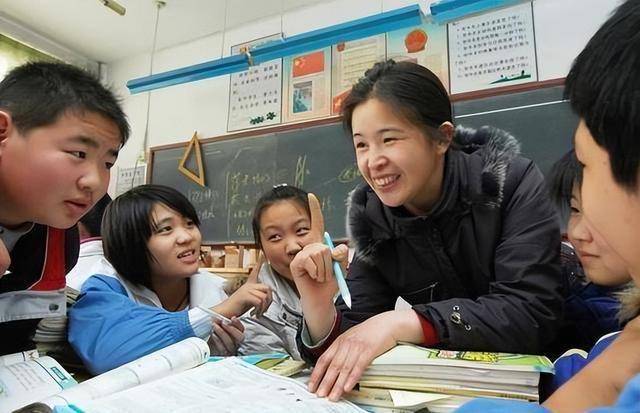
不需要那么多小学老师了,他们都去做什么?
Hu Xiu· 2025-09-15 23:46
Core Points - The closure of Shanghai Sanqiao Primary School, which had more teachers than students, highlights the issue of resource wastage in education due to declining student enrollment [1][2] - The trend of declining student numbers is a reflection of the broader demographic changes in China, particularly the decrease in birth rates since 2016 [3][7] - The Ministry of Education has reported a significant drop in primary school enrollment, with 16.16 million students enrolled in 2024, a decrease of 2.61 million from the previous year [3][10] Group 1: Declining Enrollment and Teacher Surplus - The phenomenon of schools announcing closures or mergers due to insufficient enrollment is becoming common across the country, with many parents expressing sadness over the closure of their alma maters [3][4] - Predictions indicate that the total demand for primary education teachers in China will decrease from approximately 15.70 million in 2025 to about 10.37 million by 2035, a reduction of 5.33 million [5][12] - The teacher-student ratio in primary schools has reached its lowest in a decade at 1:16.06 in 2024, indicating a surplus of teachers [10] Group 2: Teacher Reallocation and Transition - Many regions are implementing teacher reallocation strategies, moving surplus primary school teachers to teach in middle and high schools due to declining student numbers [14][19] - The Ministry of Education has emphasized the need for dynamic adjustments in teacher allocation to address the surplus in primary education while meeting the demand in higher education levels [24][22] - The transition of teachers from primary to secondary education is seen as a necessary strategy to manage the imbalance in teacher supply and demand [22][19] Group 3: Small Class Teaching and Resource Optimization - Experts advocate for the promotion of small class teaching as a means to improve educational quality and better utilize existing teaching resources [31][32] - Small class teaching, which limits class sizes to enhance personalized education, has been implemented in some regions, such as Jiangsu Province [36] - However, there are concerns that small class teaching alone cannot resolve the fundamental issues of teacher surplus and resource allocation [35][34] Group 4: Future Strategies and Recommendations - The need for a robust mechanism for teacher mobility and resource allocation is highlighted, with suggestions for policies that encourage teachers to move between urban and rural areas [29][30] - Recommendations include developing a teacher retirement and reallocation system to address the surplus while ensuring educational quality [37][38] - The experience of countries with low birth rates, such as South Korea and Japan, suggests that managing teacher numbers through natural attrition may be a viable long-term strategy [38]
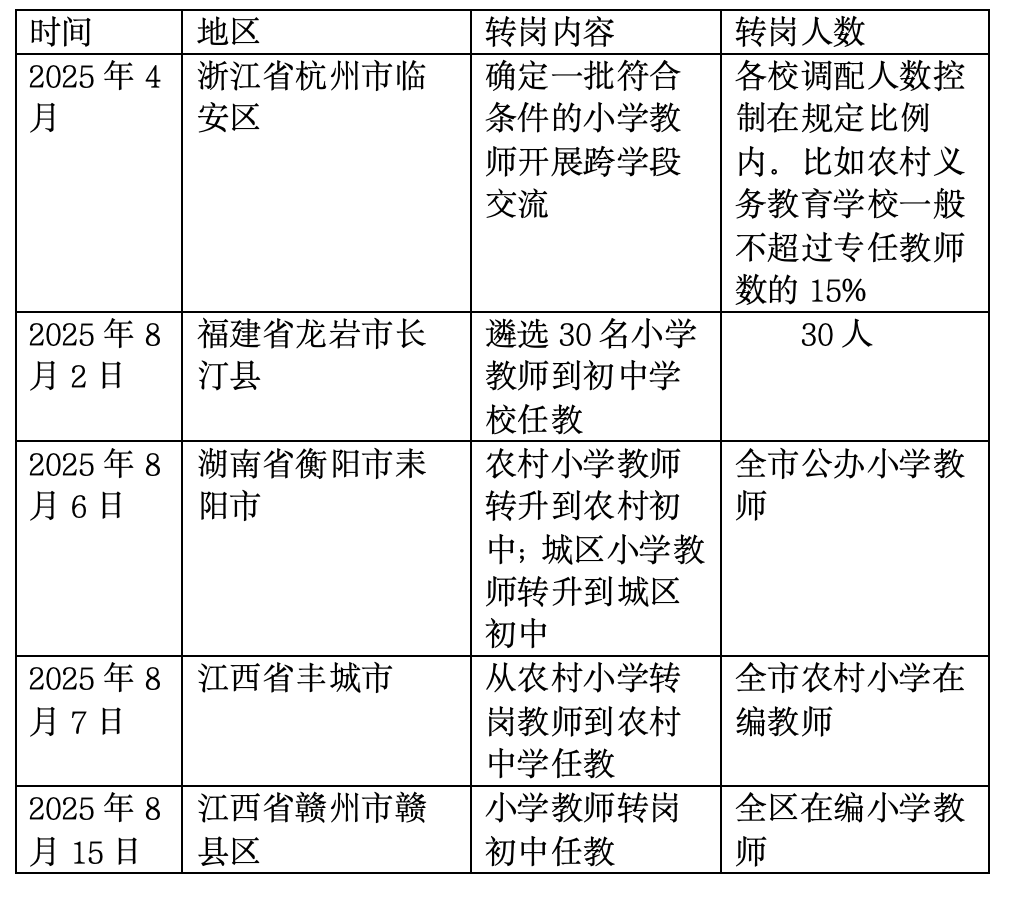
多地遴选小学教师转岗初中,积极应对学龄人口新变化
Di Yi Cai Jing· 2025-08-20 06:56
Core Insights - The article discusses the ongoing adjustments in the education sector in response to changing student demographics, particularly the surplus of primary school teachers and the shortage of middle school teachers [2][4][6] Group 1: Education Demographics - The scale of primary education has peaked in 2023, while the population of middle school students continues to rise [1][4] - In 2024, nationwide primary school enrollment is projected to be 16.17 million, a decrease of 2.61 million from the previous year, while middle school enrollment is expected to increase to 18.49 million, an increase of 0.94 million [4] Group 2: Teacher Allocation Strategies - Various regions are implementing strategies to address the imbalance in teacher resources, such as selecting primary school teachers to teach in middle schools [2][3][4] - Longyan City in Fujian Province plans to select 30 primary school teachers to teach in middle schools to alleviate teacher shortages [2] - Ezhou City in Hubei Province has decided to reduce the number of primary school teachers by 500 and reallocate those positions to middle schools [2][4] Group 3: Teacher Qualifications and Training - The effectiveness of transferring primary school teachers to middle school positions depends on the individual teacher's qualifications and teaching capabilities [5][6] - Training programs are being established to enhance the teaching skills of selected primary school teachers, ensuring they can adapt to middle school education [5][6] - The need for a comprehensive evaluation system for teacher performance post-transfer is emphasized to ensure quality education [4][5]