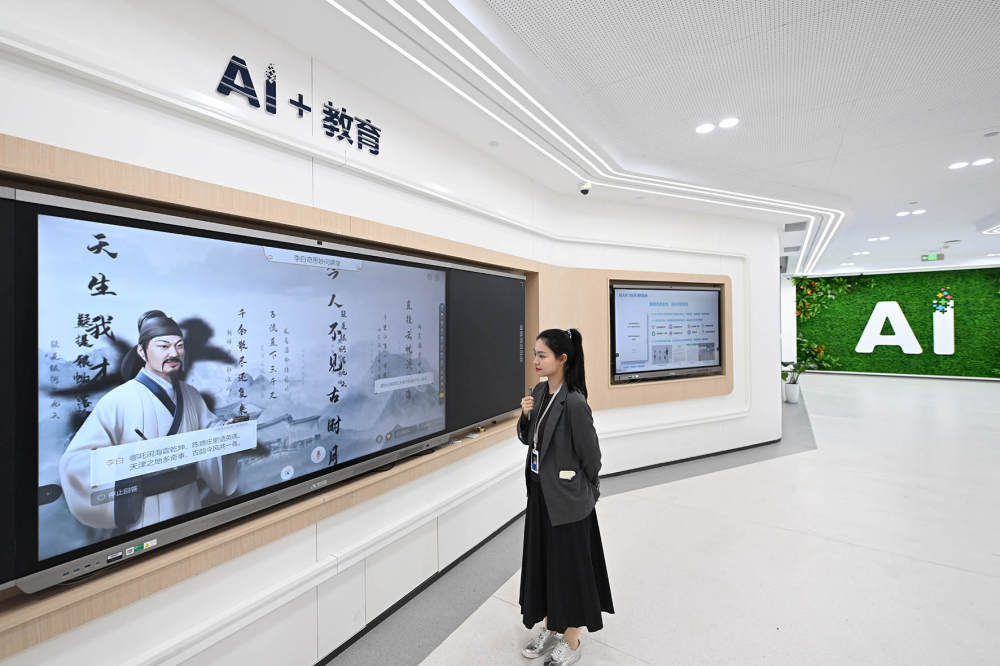
教育评价

Search documents
逾千人参与深圳龙岗这场盛会,全景展现区域教育创新生态
Nan Fang Du Shi Bao· 2026-01-29 01:48
Core Insights - The 2025 Longgang Education Panorama Expo aims to showcase regional educational innovations and promote collaborative innovation in education [1] Group 1: Event Overview - The expo is the first of its kind in Longgang, integrating various educational achievements into a large-scale display and exchange platform [1] - The event attracted 1,228 participants, including educational leaders, teachers, and researchers from within and outside the province [1] Group 2: Educational Innovation Marketplace - The core innovation project, the Longgang Education Knowledge Product Marketplace, features four thematic zones, creating a large educational innovation "experimental field" [2] - The marketplace includes various exhibits such as the "Weekly Half-Day Plan" from Shenzhen Science High School and the "Seeking Dragon" course design from Longcheng Primary School, attracting significant visitor engagement [2] - Participants engage in deep discussions and exchanges, fostering a collaborative environment for educational innovation [2] Group 3: Development Focus - The Longgang Education Bureau emphasizes three key development areas: improving educational culture, integrating AI into education, and supporting teacher development [3] - The goal is to achieve quality balanced development in compulsory education and establish Longgang as a pioneer in educational AI [3] Group 4: Evaluation Mechanism Innovation - Professor Zhao Decheng from Beijing Normal University discussed innovative evaluation mechanisms in school governance, emphasizing measurable educational goals and results-oriented assessments [4] - Key concepts include the importance of quantifiable objectives, focusing on outcomes rather than intentions, and ensuring the validity of evaluation tools [4] Group 5: Collaborative Ecosystem - The expo featured lightning talks from six schools showcasing their representative educational products, highlighting diverse paths of educational innovation [6] - Professor Zhao praised the marketplace for creating a "co-build and share" innovation mechanism and suggested that successful practices should be transformed into regional baseline standards for collective improvement [6]
今日问政(728)丨担心高考备战“开盲盒”,成都家长呼吁恢复高一高二调研考试。教育局回应
Xin Lang Cai Jing· 2026-01-06 11:13
Group 1 - The core issue raised by parents in Chengdu is the cancellation of unified assessment exams for high school grades one and two, which they believe is essential for objectively measuring student performance and preparing for college entrance exams [1][2] - The Chengdu Education Bureau's response indicates that the cancellation aligns with the Ministry of Education's regulations prohibiting regional or inter-school exams for non-graduating grades [1][2] - The rationale for this decision includes reducing student stress related to exam rankings, allowing schools to tailor assessments to their specific student needs, and enhancing the capacity for schools to create their own exam content [2][1] Group 2 - Concerns were raised about environmental pollution from an open construction site operated by a local company in Aba, which has been reported to cause dust and noise pollution [2][4] - The Aba Ecological Environment Bureau confirmed that the company is undergoing technical upgrades and plans to implement a closed production line by April 2026, following environmental regulations [4][2] Group 3 - A query was made regarding the possibility of applying for special disease status for bipolar disorder, with concerns about the high costs of hospitalization [5] - The response from the Guang'an Medical Insurance Bureau clarified that bipolar disorder can be registered as a chronic special disease, but the reimbursement rate for hospitalization will not be increased, with a cap of 5,000 yuan per year for outpatient treatment [5][5] Group 4 - A request was made for the establishment of direct bus routes from Hongya to nearby cities to enhance tourism, but the local transportation authority indicated that current conditions do not support this initiative [6] - The authority plans to optimize existing bus services and increase frequency during peak travel times to improve passenger experience [6][6]

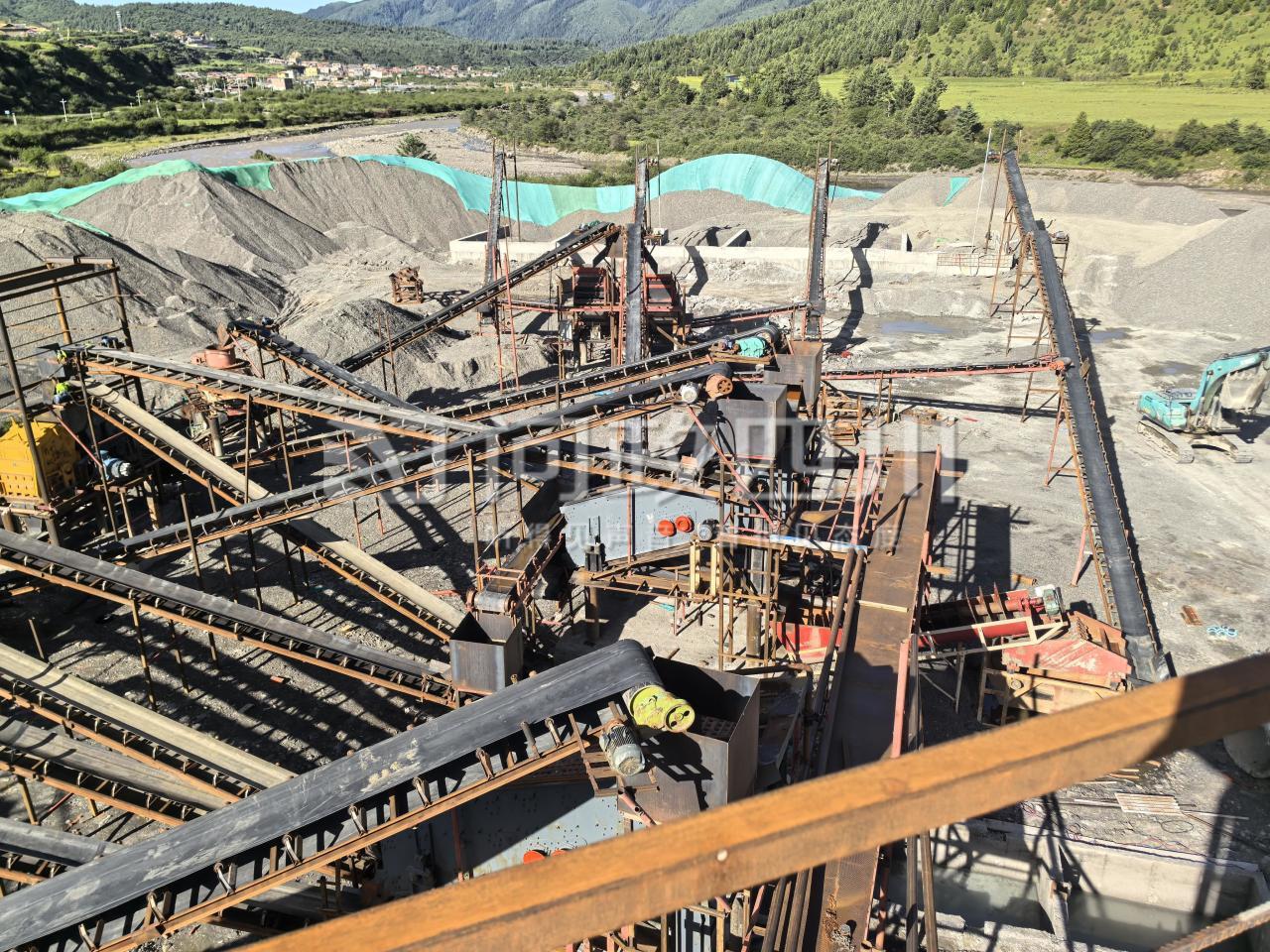
教育部:工程教育占到我国高等教育人才培养规模的1/3
Jing Ji Guan Cha Bao· 2025-12-12 05:49
Core Viewpoint - The Ministry of Education in China is reforming the training of outstanding engineers to enhance the integration of education and industry, focusing on key strategic areas such as integrated circuits and artificial intelligence, which are crucial for national development [1][2]. Group 1: National Strategy Orientation - The reform emphasizes alignment with national strategic needs, concentrating on 18 key areas, leading to a significant adjustment in academic disciplines and professional settings [1]. - Over 20% of academic programs have been optimized in 2023 alone, enhancing the overall structure of disciplines and strengthening talent cultivation [1]. Group 2: Updating Academic Content - The reform employs innovative paradigms such as "Four Commons" and "Four Connections" to systematically reshape core elements like curriculum, faculty, and teaching methods, resulting in a comprehensive upgrade of academic content [2]. - This successful practice provides a reference for updating the content of other academic disciplines [2]. Group 3: New Evaluation Standards - A new evaluation standard has been established, replacing traditional thesis requirements with practical outcomes, which is expected to drive deeper integration across education, talent, industry, and innovation chains [2]. - The first batch of engineering master's graduates includes over 60 individuals who obtained degrees based on practical achievements, indicating a shift towards a more application-oriented evaluation system [2].
中学名校长反对AI进课堂
21世纪经济报道· 2025-11-27 13:24
Core Insights - The impact of AI on education is profound, transitioning from a mere tool revolution to a catalyst for educational reform [2] - The forum discussed the dual nature of AI's influence on education, highlighting both its benefits and drawbacks [2] Group 1: AI's Role in Education - AI can enhance teaching efficiency and broaden students' knowledge, but it also poses risks such as facilitating cheating and undermining critical thinking [2] - The traditional examination system, which emphasizes memorization, is at odds with AI capabilities, necessitating a reform in assessment methods [3] - Suggestions include using AI to generate challenging questions that promote deep thinking and exploration among students [4] Group 2: Educational Assessment Challenges - The current educational evaluation system may exacerbate student burdens due to frequent standardized testing driven by technology [5] - AI could narrow educational assessments by focusing on comparative performance among peers, potentially increasing educational inequality [5] - The need for a natural integration of AI into education rather than forced administrative implementation is emphasized [5] Group 3: Opportunities for Reform - AI presents a chance to reconnect learning and assessment, shifting focus from rote knowledge to understanding and cognitive expansion [7] - Teachers can leverage AI to observe diverse learning styles and redesign educational environments to meet varied needs [8] - Recommendations include maintaining foundational knowledge without AI reliance, combining open and closed book assessments, and ensuring personal evaluation by teachers [8]
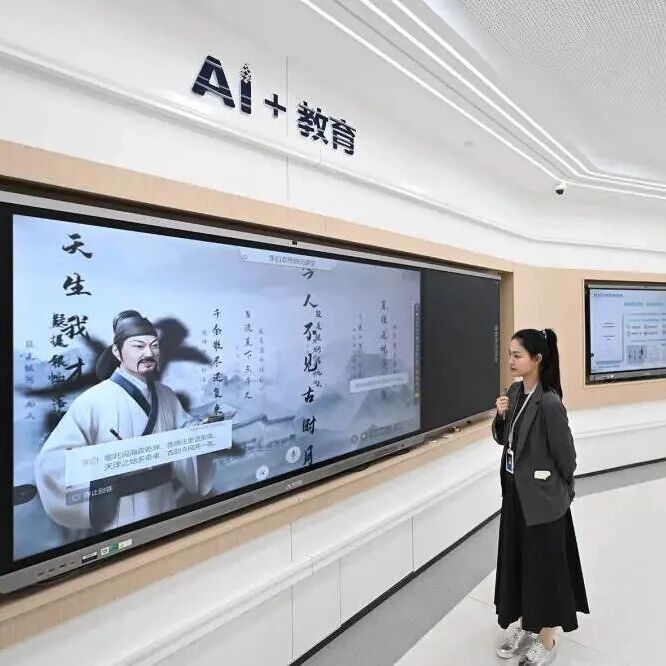
中学名校长反对AI进课堂,为什么?
2 1 Shi Ji Jing Ji Bao Dao· 2025-11-27 10:51
Core Viewpoint - The impact of AI on education is profound, transforming it from a mere tool revolution to a fundamental educational revolution, necessitating a reevaluation of traditional assessment methods [2] Group 1: AI's Impact on Education - AI enhances teaching efficiency and expands students' knowledge but also facilitates cheating and undermines critical thinking [2] - The intersection of AI and exam-oriented education raises questions about academic competition anxiety and the need for new evaluation methods [2] - AI's ability to make knowledge readily available diminishes its scarcity, leading to a need for reform in assessment systems to focus on understanding and application rather than rote memorization [2] Group 2: Educational Strategies and Teacher Roles - Teachers should design challenging questions and utilize AI to encourage deep thinking and exploration among students [3] - The essence of education should return to learning, with students taking more responsibility for their education through AI, while teachers transition to coaching roles [3] Group 3: Negative Consequences of AI in Education - AI may exacerbate unreasonable educational evaluations, increasing students' academic burdens [4] - The misuse of technology can lead to frequent standardized testing, contributing to heavier workloads for students [5] - AI could narrow educational assessments, focusing on peer comparisons and neglecting individual potential, potentially increasing educational inequality [6] Group 4: Opportunities for Improvement - AI presents a significant opportunity to integrate learning and assessment, moving away from superficial knowledge testing [7] - The focus should shift from what students know to how they learn and expand their understanding, allowing for a more adaptive and interactive learning environment [8] - Recommendations include combining open-book and closed-book exams, ensuring foundational knowledge without over-reliance on AI, and maintaining personal assessments by teachers [8]