数据库自主创新

Search documents
从王坚的一问,到上万名大学生的赛场:中国数据库的“换道超车”之路
Sou Hu Cai Jing· 2026-01-24 01:17
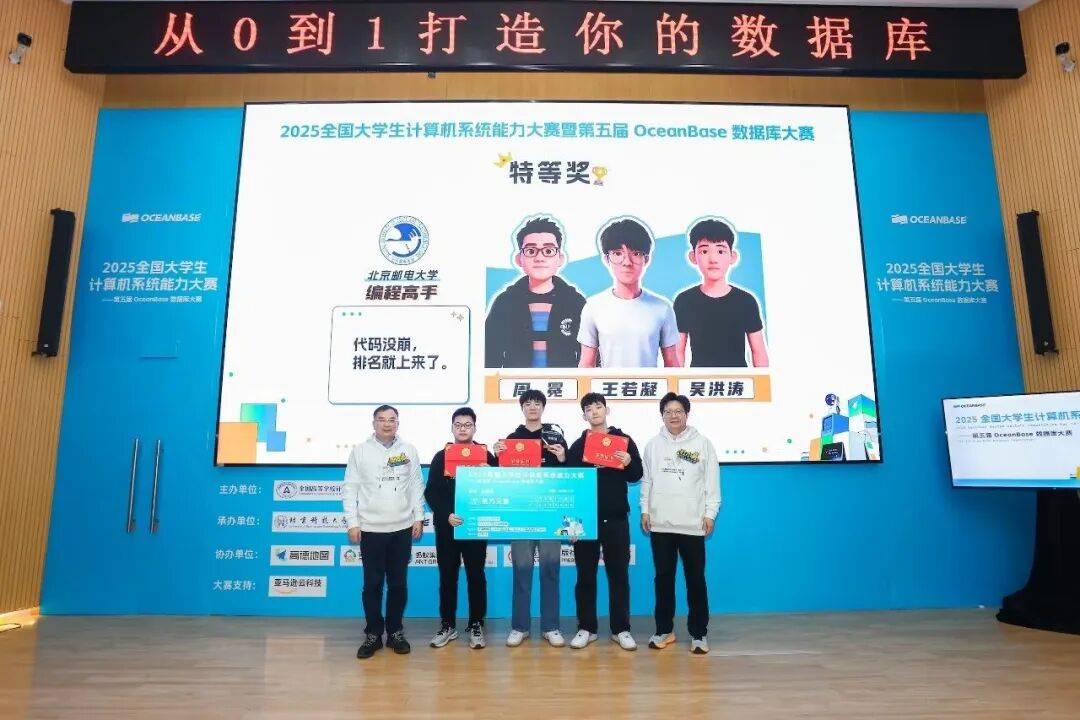
Core Insights - The article discusses the evolution of the Chinese database industry, highlighting the shift from reliance on foreign technology to the development of domestic solutions, initiated by Alibaba's "Go IOE" campaign [2][12]. Group 1: Historical Context - The question posed by Alibaba's chief architect, Wang Jian, about the necessity of purchasing an IBM mainframe in 2010 sparked a pivotal moment for Alibaba and the Chinese internet economy, emphasizing the need for self-reliance in core database systems [2]. - The "Go IOE" campaign marked a significant turning point in China's tech landscape, leading to the development of domestic databases and reducing dependence on foreign technology [2][12]. Group 2: Recent Developments - The 2025 National College Student Computer System Capability Competition, including the fifth OceanBase Database Competition, attracted 1,223 teams and 2,620 students, showcasing the growing interest and talent in the field [3]. - The competition focused on real-world industry problems, challenging participants to optimize the OceanBase database under limited hardware resources and develop a multi-modal RAG system [3][4]. Group 3: Educational Impact - The competition serves as a bridge between academia and industry, with winners receiving direct recruitment opportunities from OceanBase, highlighting the importance of practical experience in education [7]. - The event reflects a shift in educational philosophy, emphasizing the need for students to engage with real-world challenges rather than theoretical knowledge alone [3][8]. Group 4: Philosophical Insights - The understanding of data has evolved from being merely a record-keeping tool to a critical production factor, necessitating a shift in how databases are perceived and utilized [8][9]. - The article discusses the need for databases to transform into "data empowerment platforms" that can unlock the value of data in the age of big data and AI [8][10]. Group 5: Future Outlook - The future of the database industry in China hinges on an open and collaborative approach, leveraging open-source technologies to foster innovation and adaptability [11]. - The article emphasizes the importance of addressing real-world challenges in China to cultivate a skilled workforce capable of driving technological advancements [15][16].

苏州农商行联合华为落地全国首个区域银行存算分离核心数据库样板
Huan Qiu Wang· 2025-10-13 07:46
Core Insights - Suzhou Rural Commercial Bank, in collaboration with Huawei, has completed a significant transformation of its core system using Huawei's GaussDB database and OceanStor Dorado all-flash storage, marking a key step for regional banks in China [1][3] - The core database is identified as the "heart" of financial IT systems, essential for digital transformation, with a focus on self-innovation, high availability, and performance [1][3] - The bank's core system has achieved a smooth transition from traditional commercial databases to GaussDB, supporting daily transaction volumes of tens of millions, with system performance improved by over 40% and recovery times reduced to seconds [5][7] Industry Challenges and Solutions - The financial industry faces three main challenges: accelerated business iteration requiring higher system elasticity, frequent security threats necessitating stronger architecture, and regulatory and cost pressures driving efficient infrastructure evolution [3] - Huawei emphasizes the need for a self-innovative core database system to maintain development control, proposing the "GaussDB + separation of storage and computing" architecture as a solution [3] Practical Implementation and Recommendations - A white paper released during the event outlines the technology selection, deployment models, and risk control points for regional banks undergoing transformation, recommending a "gradual replacement + dual-active disaster recovery" strategy [5] - Jiang Wei, Assistant General Manager of the Financial Technology Department at Suzhou Rural Commercial Bank, highlighted the successful implementation of a dual-active deployment model, which enhances system resilience and operational efficiency [5][7] Broader Implications - The experience shared by Suzhou Rural Commercial Bank serves as a model for small and medium-sized banks, balancing security, performance, and cost-effectiveness in their transformation efforts [7] - The collaboration between Huawei and Suzhou Rural Commercial Bank is expected to provide a valuable reference path for regional banks in their self-research transformation and digital competitiveness [7]