去IOE

Search documents
被踢出中国市场!垄断中国市场30年,却扬言:绝不培养中国员工
Sou Hu Cai Jing· 2026-02-19 13:49
Core Viewpoint - Oracle's dominance in the Chinese database market has significantly declined due to rising local competition and internal management issues, leading to a loss of market share and influence. Group 1: Historical Context and Growth - Oracle entered the Chinese market in 1989, filling a gap in database technology as the software industry was just beginning [2] - By the early 2000s, Oracle dominated the enterprise application market in China, with no local products able to compete [4] - The company established multiple R&D centers in China by 2008, contributing significantly to its global revenue growth [4] Group 2: Market Changes and Rising Competition - Post-2010, Oracle began increasing licensing and service fees, leading to dissatisfaction among Chinese enterprises [6] - Chinese companies, including Alibaba, started developing their own database solutions in response to Oracle's price hikes and perceived arrogance [10][19] - By 2022, local vendors gained significant market share, with Oracle's presence declining as government policies favored domestic innovation [21] Group 3: Internal Issues and Management Challenges - Oracle faced internal complaints regarding limited promotion opportunities for Chinese employees and allegations of discriminatory hiring practices [11][13] - The closure of Oracle's Beijing R&D center in 2019 and subsequent layoffs sparked protests among local staff, who viewed it as a discriminatory action [17] - The company's management style, perceived as favoring American personnel for key positions, further alienated the local workforce [10][13] Group 4: Current Status and Future Outlook - As of 2023, Oracle's influence in China has diminished, with local database solutions proving to be more cost-effective and efficient [25] - The company continues to face challenges in regaining its market position, with ongoing competition from local firms and a tarnished reputation due to legal issues [23] - Oracle's leadership remains focused on AI and cloud services, but the loss of market share in China has impacted its global standing [23]



从王坚的一问,到上万名大学生的赛场:中国数据库的“换道超车”之路
Sou Hu Cai Jing· 2026-01-24 01:17
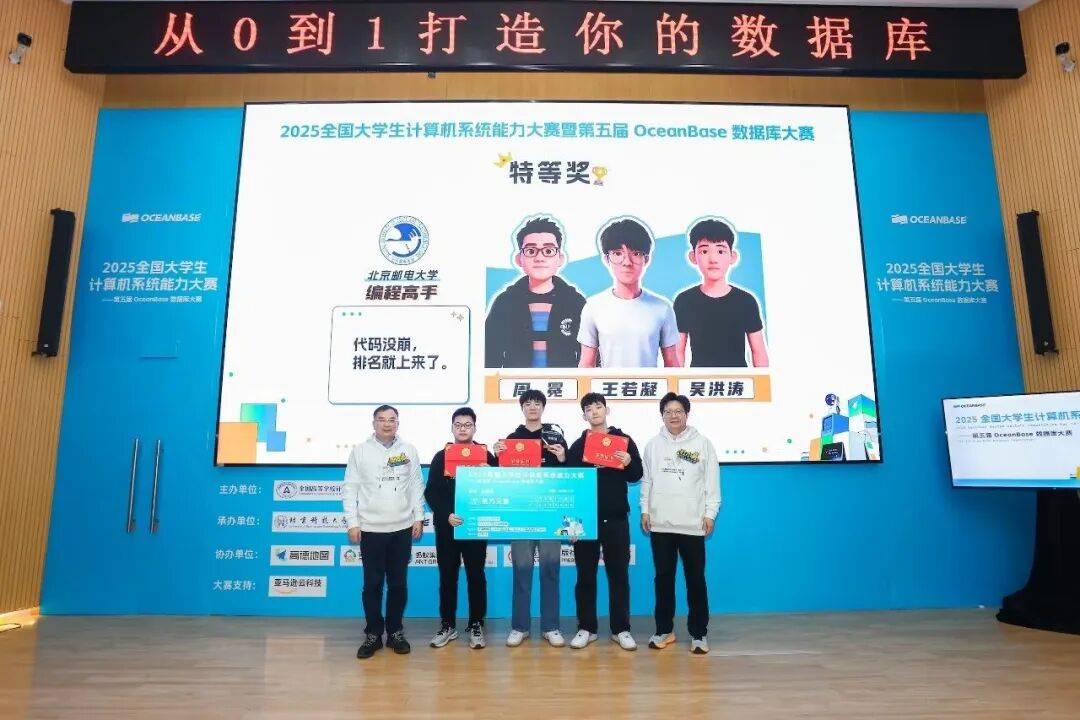
Core Insights - The article discusses the evolution of the Chinese database industry, highlighting the shift from reliance on foreign technology to the development of domestic solutions, initiated by Alibaba's "Go IOE" campaign [2][12]. Group 1: Historical Context - The question posed by Alibaba's chief architect, Wang Jian, about the necessity of purchasing an IBM mainframe in 2010 sparked a pivotal moment for Alibaba and the Chinese internet economy, emphasizing the need for self-reliance in core database systems [2]. - The "Go IOE" campaign marked a significant turning point in China's tech landscape, leading to the development of domestic databases and reducing dependence on foreign technology [2][12]. Group 2: Recent Developments - The 2025 National College Student Computer System Capability Competition, including the fifth OceanBase Database Competition, attracted 1,223 teams and 2,620 students, showcasing the growing interest and talent in the field [3]. - The competition focused on real-world industry problems, challenging participants to optimize the OceanBase database under limited hardware resources and develop a multi-modal RAG system [3][4]. Group 3: Educational Impact - The competition serves as a bridge between academia and industry, with winners receiving direct recruitment opportunities from OceanBase, highlighting the importance of practical experience in education [7]. - The event reflects a shift in educational philosophy, emphasizing the need for students to engage with real-world challenges rather than theoretical knowledge alone [3][8]. Group 4: Philosophical Insights - The understanding of data has evolved from being merely a record-keeping tool to a critical production factor, necessitating a shift in how databases are perceived and utilized [8][9]. - The article discusses the need for databases to transform into "data empowerment platforms" that can unlock the value of data in the age of big data and AI [8][10]. Group 5: Future Outlook - The future of the database industry in China hinges on an open and collaborative approach, leveraging open-source technologies to foster innovation and adaptability [11]. - The article emphasizes the importance of addressing real-world challenges in China to cultivate a skilled workforce capable of driving technological advancements [15][16].
60 亿估值神话破灭,国产芯片该祛 “虚火” 了
是说芯语· 2025-07-30 05:04
Core Viewpoint - The rise and fall of HeXin Technology serves as a microcosm of the domestic server CPU industry, highlighting the risks associated with over-reliance on government policies and the challenges of aligning technology with market demand [2][4]. Group 1: Company Overview - HeXin Technology, established in 2014, quickly became a benchmark for domestic alternatives in the server CPU sector, leveraging IBM's Power instruction set architecture [2]. - The company's valuation reached 6 billion yuan in 2023, positioning it close to "unicorn" status [2]. - However, by the end of 2023, the company faced a severe cash flow crisis, leading to unpaid employee wages and ultimately a court ruling for bankruptcy liquidation in April 2025 [2]. Group 2: Technological Challenges - The core product of HeXin Technology is based on IBM's Power instruction set architecture, which has seen a decline in market share, now accounting for less than 1% of the global server CPU market, dominated by x86 architecture [3]. - Despite attempts to innovate with the HX-C1000 chip, the product remained confined to niche markets, with limited demand from sectors like banking and government [3]. - The second-generation chip, HX-C2000, faced performance criticisms and funding issues, preventing it from reaching production [3]. Group 3: Financial Issues - HeXin Technology's collapse was not merely a result of failed financing but also revealed an over-dependence on government subsidies and state capital investments [4]. - A significant investment of 500 million yuan in 2020 raised the company's valuation but created a fragile financial structure reliant on policy support [4]. - The failure of a 500 million yuan financing deal at the end of 2023 marked a critical turning point for the company [4]. - The ownership structure, combining private and state capital, led to conflicts during financing negotiations, contributing to the company's financial instability [4]. Group 4: Business Model Limitations - HeXin Technology's business model failed to achieve self-sustainability, with low market acceptance of its products leading to insufficient revenue to cover R&D costs [5]. - The HX-C2000 project incurred over 100 million yuan in R&D expenses without achieving mass production, illustrating the unsustainable "burning cash for valuation" strategy [5].

低谷与高光:阳振坤与国产数据库坎坷十五年
雷峰网· 2025-06-19 06:11
Core Viewpoint - The article highlights the journey of OceanBase, a distributed database developed by Alibaba, under the leadership of Yang Zhenkun, showcasing its evolution from a nascent project to a leading product in the database market, overcoming numerous challenges along the way [2][4][40]. Group 1: OceanBase's Development Journey - Yang Zhenkun's commitment to developing OceanBase was marked by a bold promise to jump out of a window if the project failed, reflecting his determination [2][4]. - OceanBase faced initial skepticism in a market dominated by centralized databases, but Yang successfully convinced Alibaba's executives to invest in its development [4][9]. - The database achieved significant milestones, including surpassing Oracle in the TPC-C benchmark test, marking a pivotal moment in its recognition [8][40]. Group 2: Overcoming Challenges - Yang Zhenkun encountered multiple challenges, including gaining trust from various business lines within Alibaba and proving OceanBase's capabilities through practical applications [15][18]. - The first major success came from integrating OceanBase with the Taobao Favorites feature, which significantly improved performance and reduced server requirements [23][24]. - Despite initial successes, OceanBase struggled to find additional large-scale applications, leading to a critical moment when Yang had to pivot towards Alipay to demonstrate the database's reliability [27][30]. Group 3: Achievements and Recognition - OceanBase's breakthrough came during the "Double Eleven" shopping festival, where it successfully handled a significant portion of Alibaba's transaction volume, solidifying its reputation [32][33]. - The database transitioned from a semi-distributed to a fully distributed system, enhancing its capabilities and allowing it to replace Oracle in critical applications [34][35]. - In 2019, OceanBase achieved a major milestone by passing the TPC-C benchmark test, leading to its establishment as an independent company and the decision to open-source the database [40][41]. Group 4: Market Strategy and Future Outlook - Yang Zhenkun emphasized the importance of balancing technical development with market needs, leading to the introduction of a "single-machine distributed integration" concept to cater to small and medium-sized enterprises [41]. - The article concludes with reflections on Yang's career and the impact of OceanBase on the database industry, highlighting its potential for future growth and innovation [43][49].