
文化产业赋能

Search documents
推进现代化人民城市建设 以人文经济学引领发展
Su Zhou Ri Bao· 2026-01-23 23:50
Group 1 - The meeting focused on advancing the construction of a modern people's city, with over 180 members from various sectors participating in discussions about regional development and governance modernization [1][2] - Suggestions included continuing the renovation of old residential areas built before 2000 to enhance citizens' sense of gain during the "15th Five-Year Plan" period [1] - Emphasis was placed on leveraging cultural heritage and local characteristics to enhance urban competitiveness and guide city renewal [2] Group 2 - Recommendations were made to explore new paths for modern people's city construction, optimizing governance centered on the people and highlighting governance effectiveness [2] - The need for a systematic approach to top-level design and overall planning for sustainable development in ancient cities was highlighted, focusing on enhancing living environments and creating a technology ecosystem [2] - Various departments and units, including the municipal development and reform commission and environmental agencies, participated in the meeting to gather opinions and suggestions [3]
文化激活乡村,产业赋能振兴(延伸阅读)
Ren Min Ri Bao· 2025-12-05 22:03
Group 1 - The core viewpoint of the articles highlights the transformation of Yuanqiao Village in Dengfeng, Henan, through cultural industry empowerment, turning it into a new path for rural development by leveraging historical resources and modern media opportunities [1][2] - The development of the micro-short film industry in Zhengzhou has provided a significant opportunity for Yuanqiao Village, leading to the revitalization of old resources and the emergence of new business formats, which in turn has facilitated the gathering of talent, capital, and services [1] - The implementation of the rural revitalization strategy during the 14th Five-Year Plan has resulted in effective policies supporting cultural development in rural areas, showcasing unique practices across various villages in Henan that enhance income for farmers and reshape rural landscapes [1] Group 2 - Looking ahead to the 15th Five-Year Plan, the articles suggest that rural revitalization will enter a new stage, emphasizing the need for cultural industry empowerment to activate rural human and natural resources while promoting the integration of primary, secondary, and tertiary industries [2] - Recommendations include fostering a batch of influential and competitive cultural industry brands and distinctive villages through creative design, film production, and non-heritage research, encouraging more villages to follow the example of Yuanqiao Village in promoting cultural prosperity [2]
文化激活乡村 产业赋能振兴(延伸阅读)
Ren Min Ri Bao· 2025-12-05 22:03
Group 1 - The core viewpoint is that cultural industries are empowering rural revitalization in Henan, exemplified by the transformation of Yuanqiao Village into a cultural hub through policy support and the development of new business models [1][2]. - Yuanqiao Village has leveraged its historical resources and the booming micro-short film industry in Zhengzhou to attract talent, capital, and services, leading to environmental improvements and a win-win situation for cultural industries and rural characteristics [1]. - During the "14th Five-Year Plan" period, a series of policies supporting rural cultural development have been effectively implemented, showcasing distinctive practices in Henan as an agricultural and cultural province [1]. Group 2 - Looking ahead to the "15th Five-Year Plan," rural revitalization will enter a new stage, focusing on the protection and reasonable utilization of cultural and natural resources to promote the integration of primary, secondary, and tertiary industries [2]. - It is suggested to cultivate influential and competitive cultural industry brands and characteristic villages through creative design, film production, and intangible cultural heritage studies, encouraging more villages to follow Yuanqiao's example [2].
重走驼铃古道,中央民大师生在模式口历史文化街区触摸城市更新
Xin Jing Bao· 2025-10-31 13:50
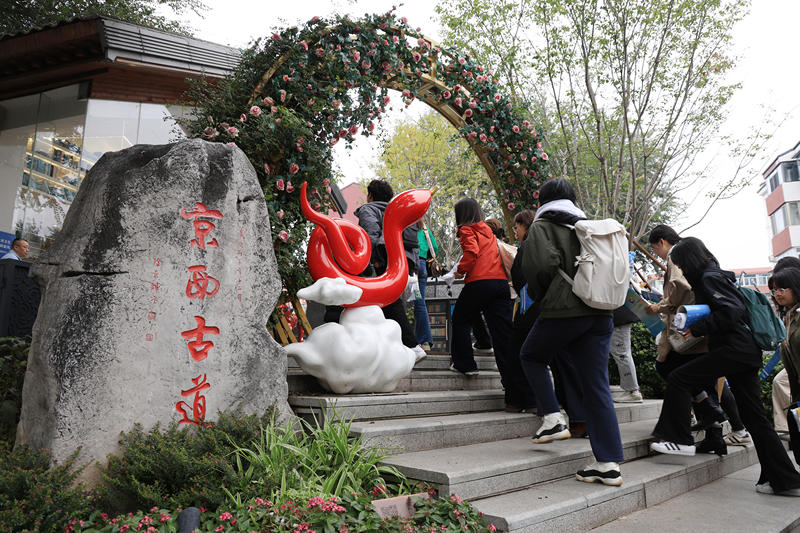
Core Viewpoint - The article highlights the revitalization of the Modekou Historical and Cultural District in Beijing, showcasing how urban renewal can enhance cultural vitality and integrate local heritage with modern life [1][10]. Group 1: Urban Renewal and Cultural Heritage - The Modekou Historical and Cultural District has undergone significant urban renewal, transforming from an old street into a national-level tourist and leisure area, emphasizing the importance of preserving cultural heritage while improving local living conditions [2][10]. - The district's renovation follows a core principle of balancing cultural preservation, environmental improvement, organic updates, and enhancing local livelihoods [8][10]. Group 2: Educational Engagement - Students from Minzu University of China participated in a guided tour of the district, learning about its historical significance and the impact of urban renewal on local culture and community [3][11]. - The educational experience included visits to various cultural sites and businesses, allowing students to understand the integration of industry and daily life in the context of urban renewal [5][10]. Group 3: Cultural and Economic Development - The district has focused on developing industries that align with local culture, such as hospitality, dining, and cultural creativity, to stimulate economic activity and cultural engagement [8][10]. - The introduction of digital technology in cultural preservation, such as the restoration of ancient murals at Fahai Temple, exemplifies how modern techniques can enhance the appreciation of historical art [6][7].

兴化入选全国文化产业 赋能乡村振兴试点名单
Jiang Nan Shi Bao· 2025-05-14 00:04
Core Viewpoint - The article highlights the inclusion of Xinghua City in the second batch of cultural industry empowerment pilot projects for rural revitalization, emphasizing its agricultural heritage and innovative strategies for industry upgrade and cultural integration [1][2]. Group 1: Cultural and Agricultural Integration - Xinghua leverages its status as a global important agricultural cultural heritage site and "crab hometown" to promote industry upgrades through a "chain thinking" approach [2]. - The city focuses on integrating culture with agriculture and tourism, creating the "Thousand Ditch Flower Sea" cultural tourism IP, which supports the development of homestays, agritourism, and agricultural product processing clusters [2]. - By utilizing the river crab as a medium, Xinghua constructs a comprehensive "5G" ecosystem for crab-related industries, including markets, storage, pre-prepared food parks, and logistics stations, covering the entire production chain [2]. Group 2: Agricultural Innovation and Support - Xinghua has established a "3+1" agricultural technology expert service system to ensure full coverage in towns, accelerating the introduction of agricultural technology and cultivating a new generation of farmers [3]. - The city has developed a "2+N" agricultural full industry chain focusing on high-quality grains and specialty aquatic products, enhancing the brand culture of local products like Xinghua rice and crabs [3]. - Initiatives such as the "insurance + futures" projects for pigs and eggs have been implemented to address financial bottlenecks, injecting vital financial resources into rural development [3]. Group 3: Future Directions - Xinghua plans to use its pilot project status as a starting point to establish a robust working mechanism, enhancing county-level planning and resource allocation to effectively implement rural revitalization tasks [3]. - The city aims to explore new pathways for cultural industry empowerment in rural revitalization, adapting strategies to local conditions [3].