文化台独

Search documents
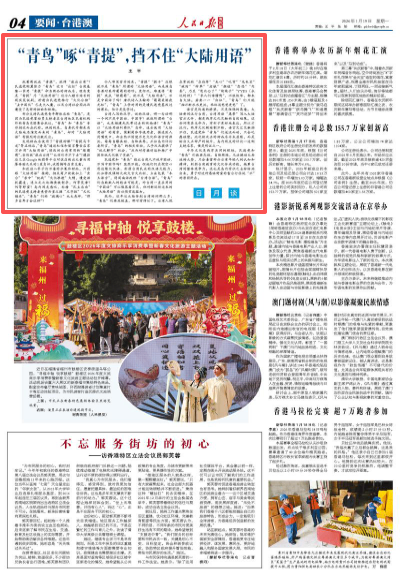
“青鸟”啄“青提”,挡不住“大陆用语”(日月谈)
Ren Min Ri Bao Hai Wai Ban· 2026-01-18 22:50
Core Viewpoint - The article highlights the absurdity of political and cultural censorship in Taiwan, particularly by the Democratic Progressive Party (DPP) and its youth group "Qingniao," which targets businesses for using terms deemed as "mainland Chinese language" [1][2][3]. Group 1: Cultural and Political Context - The DPP and its supporters are accused of promoting "cultural independence" and "de-Sinicization," leading to a distorted societal perception in Taiwan [1][2]. - The term "青提" (green grape) used by a dessert shop was criticized by "Qingniao" for being a "mainland term," despite its origins in Hong Kong [2][3]. - The actions of "Qingniao" reflect a broader trend of cultural suppression, where even benign terms are politicized, leading to harassment of businesses [2][3]. Group 2: Language and Identity - The article argues that the DPP's attempts to marginalize Mandarin Chinese and promote local languages weaken the cultural and linguistic ties between Taiwan and mainland China [3][4]. - The youth group "Qingniao" is portrayed as hypocritical, as they use a name derived from a mainland city while condemning the use of "mainland terms" [1][2]. - The article emphasizes that language is a bridge for communication and cultural exchange, and attempts to sever these ties are ultimately futile [3][4]. Group 3: Public Reaction and Support - The dessert shop targeted by "Qingniao" received significant support from the public, indicating a backlash against the group's actions [3][4]. - Online comments from Taiwanese netizens largely sided with the shop, showcasing a collective resistance to the censorship imposed by the DPP and its affiliates [3][4].

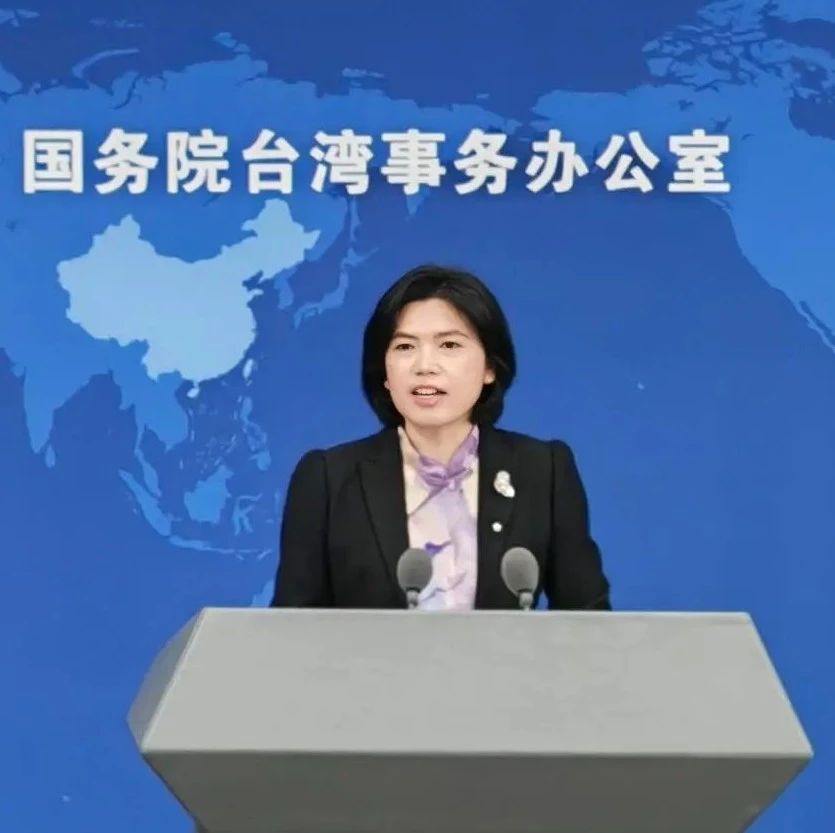
民进党秘书长将台湾民众使用大陆用语渲染为所谓“文化渗透”,国台办:荒唐可笑
Xin Lang Cai Jing· 2026-01-14 04:07
Group 1 - The core viewpoint of the articles emphasizes the ongoing cultural tensions between Taiwan and mainland China, particularly regarding the use of language and cultural identity [1][2] - The spokesperson from the Taiwan Affairs Office highlighted incidents where Taiwanese businesses faced backlash for using mainland Chinese terms, indicating a rise in irrational and hostile reactions within Taiwanese society [1] - The articles argue that the Democratic Progressive Party (DPP) is manipulating cultural narratives to promote a "Taiwan independence" agenda, which is seen as an attempt to sever historical and cultural ties between Taiwan and mainland China [1][2] Group 2 - The articles assert that both sides of the Taiwan Strait share a common cultural heritage, and the notion of "cultural infiltration" is dismissed as unfounded [2] - The DPP's actions are characterized as attempts to distort cultural exchanges and promote a "Taiwan independence" perspective, which is viewed as lacking public support [2] - The commitment to enhancing cultural exchanges and fostering a sense of belonging and identity among the Chinese people is reiterated, emphasizing the importance of cultural preservation and innovation [2]
共同传承弘扬中华文化(观沧海)
Ren Min Ri Bao· 2025-11-15 21:51
Core Viewpoint - The article emphasizes the deep-rooted connection of Chinese culture in Taiwan and the ongoing efforts to promote and preserve this cultural heritage despite political challenges [1][2][3]. Group 1: Cultural Heritage and Events - The Palace Museum in Taipei is hosting a series of exhibitions to celebrate the 100th anniversary of the Palace Museum in Beijing, showcasing numerous cultural treasures that attract many visitors [1]. - Taiwanese visitors express a strong desire to experience the cultural offerings of the Beijing Palace Museum, highlighting a deep yearning for cultural roots [1]. Group 2: Cultural Exchange and Influence - Recent years have seen a vibrant exchange of Chinese culture between the mainland and Taiwan, with popular media such as the game "Black Myth: Wukong" and the animated film "Nezha" gaining traction in Taiwan [2]. - Taiwanese youth are increasingly embracing "new Chinese-style" fashion, indicating a cultural resonance and shared identity [2]. Group 3: Political Context and Challenges - The article discusses the challenges posed by the current Taiwanese administration, which is accused of attempting to sever cultural ties and promote a narrative of "cultural independence" [2]. - Historical context is provided, noting that even during Japanese colonial rule, the transmission of Chinese culture in Taiwan persisted, showcasing resilience against cultural suppression [2][3]. Group 4: Cultural Identity and Unity - The article asserts that Chinese culture is an intrinsic part of Taiwanese identity, with historical events reinforcing this connection [3]. - It argues that the shared cultural heritage serves as a fundamental bond between the people on both sides of the Taiwan Strait, emphasizing the importance of collaboration in preserving this heritage [3].
毒害台湾青少年 其行可恶其心可诛(微言)
Ren Min Ri Bao· 2025-09-20 21:48
Core Viewpoint - The article discusses the Taiwanese government's recent educational reforms aimed at promoting a "Taiwan independence" narrative, which is seen as an attempt to sever cultural and historical ties with mainland China [1][2]. Group 1: Educational Reforms - The Taiwanese government has mandated the creation of 13 supplementary textbooks titled "Understanding the Chinese Threat," to be used in the upcoming school term, reflecting a shift towards "cultural Taiwan independence" [1]. - The history curriculum has been criticized for inadequately covering over 2,000 years of Chinese history in just 1,600 words, indicating a trend of "de-Sinicization" in education [1]. Group 2: Cultural and Historical Context - The article emphasizes that the Taiwanese and mainland Chinese share a common cultural and historical heritage, which the government’s educational policies threaten to undermine [1][2]. - Despite political pressures, many Taiwanese citizens showed enthusiasm for the recent military parade in Beijing, indicating a continued connection to Chinese national pride [1]. Group 3: Political Implications - The article warns that the Taiwanese government's actions could lead to increased tensions across the Taiwan Strait, fostering societal divisions and undermining the shared identity of the Chinese people [1][2]. - It asserts that attempts to erase Chinese cultural identity in Taiwan will ultimately fail, as the deep-rooted cultural recognition among the Taiwanese population remains intact [2].
赖清德称台北故宫博物院不打算与北京故宫博物院合作,国台办回应
第一财经· 2025-06-25 03:17
Core Viewpoint - The article discusses the cultural and historical significance of the Palace Museum in Beijing and the National Palace Museum in Taipei, emphasizing their shared heritage and the responsibility of both sides to preserve and promote Chinese cultural heritage despite political tensions [1]. Group 1: Cultural Heritage - The Palace Museum and the National Palace Museum share a common origin and are repositories of Chinese historical and cultural treasures [1]. - Both museums represent a collective memory of the Chinese people, highlighting the importance of cultural unity across the Taiwan Strait [1]. Group 2: Political Context - The article criticizes the Democratic Progressive Party (DPP) for promoting "cultural independence" and "de-Sinicization" while simultaneously exploiting Chinese cultural treasures for political gain [1]. - It warns that attempts to sever historical and cultural ties will ultimately fail, as the cultural identity of the Taiwanese people is deeply rooted in Chinese heritage [1].