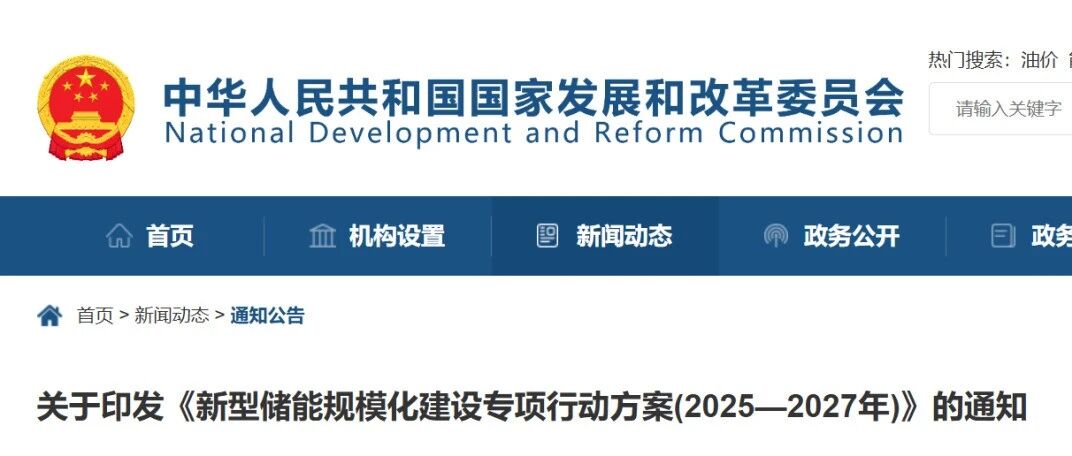
新型储能规模化

Search documents
探秘全球最大电网侧分布式模块化储能电站,CNESA储能媒体行首站启幕!
中关村储能产业技术联盟· 2025-09-19 11:43
Core Viewpoint - The energy storage industry is transitioning from a strong supply-driven model to a market-driven approach, creating significant market opportunities while raising operational performance requirements for energy storage stations [2] Group 1: Industry Trends - The operational effectiveness of energy storage has become a core competitive factor as the industry moves towards large-scale and market-oriented development [3] - Key performance indicators for energy storage stations include online rate, operational efficiency, depth of discharge (DOD), and battery capacity degradation rate [3][4] Group 2: Performance Metrics - Online rate determines how long the system can operate at full power [4] - Operational efficiency reflects the quality of energy utilization [4] - Depth of discharge affects the single output capability of the system [4] - Capacity degradation rate impacts the long-term service life of the energy storage system [4] Group 3: Case Study - The Huayan First Energy Storage Station in Ningxia is the world's largest distributed modular energy storage project, with a capacity of 200MW/400MWh, and has been operational for 21 months since December 2023 [5][6] - The project utilizes a distributed modular smart energy storage system and has consistently ranked high in charging and discharging volumes, playing a crucial role in regional grid regulation [6] Group 4: Media Engagement - The "2025 CNESA Energy Storage Media Tour" aims to explore the successful operational strategies of the Huayan First Energy Storage Station, involving stakeholders such as investors, operators, equipment suppliers, and media [7] - The event will focus on key topics such as policy mechanisms, station operations, technical solutions, and performance factors affecting profitability [7]


关于组织召开《温室气体 产品碳足迹量化方法与要求 锂电池储能系统》团体标准讨论会的通知
中关村储能产业技术联盟· 2025-09-17 08:55
Group 1 - The group standard "Quantification Methods and Requirements for Product Carbon Footprint of Greenhouse Gases in Lithium Battery Energy Storage Systems" has completed its first draft and a discussion meeting is scheduled for September 26, 2025 [2] - The meeting will take place at the Luyuan Jingshang Yi International Hotel in Weihai, Shandong Province, from 09:00 to 12:00 [2] - The agenda includes an introduction of the standard content by the project team, a discussion session, and a visit to the 200MW/400MWh shared energy storage project in Rongcheng, Weihai in the afternoon [2] Group 2 - The article mentions the upcoming ESIE 2026 event, which is positioned as a barometer for the development of the energy storage industry [4] - The article highlights the significant growth in new energy storage installations, with August seeing 2.9GW/7.97GWh, representing a year-on-year increase of 285% and 354% respectively [7] - It notes that the focus on "scale" has become a key priority for the development of new energy storage [7]

电力政策专家分析会议
2025-09-15 01:49
Summary of Key Points from the Conference Call Industry Overview - The conference call focused on the **electric power industry** in China, particularly regarding the recent policies released by the National Energy Administration and the National Development and Reform Commission aimed at promoting market-oriented electricity systems and new energy systems [1][2][3]. Core Insights and Arguments - **Policy Initiatives**: The government has introduced several policies, including the establishment of an electricity spot market, near-consumption of new energy projects, and large-scale construction of new energy storage systems. These policies are seen as a continuation of previous initiatives rather than standalone measures [1][2][3]. - **New Energy System Characteristics**: The new energy system is centered around load, emphasizing interaction between sources and networks. It is characterized by being clean, low-carbon, safe, abundant, economically efficient, and flexible [6][8]. - **Near-Consumption Pricing Mechanism**: This mechanism applies not only to distributed photovoltaic projects but also to large wind power bidding projects, encouraging the use of cheap and clean new energy to meet demand [7][8]. - **Market Mechanisms for Profitability**: The government aims to ensure profitability for all parties involved through market mechanisms, including capacity pricing policies and the encouragement of emerging business entities [10][13]. - **Emerging Business Entities**: New business models such as green electricity direct connection and zero-carbon parks are encouraged, but these entities must also bear costs such as transmission and distribution fees [5][13]. Important but Overlooked Content - **Storage's Role in New Energy**: Storage plays a crucial role in the new energy market, allowing for the storage of energy during low-price periods and selling it during high-price periods, thus enhancing overall profitability [19][20]. - **Projected Growth of Storage Capacity**: By the end of 2024, the total installed capacity of new storage is expected to reach 74 GW, increasing to 180 GW by the end of 2027, indicating a significant growth trajectory [18][22]. - **Challenges in Large-Scale Projects**: The development of large-scale renewable energy bases in regions like Northwest China faces challenges such as slow construction of ultra-high voltage transmission lines and insufficient power delivery capacity [47][49]. - **Impact of Spot Market on Profitability**: The establishment of the electricity spot market is expected to significantly influence the profitability of power generation and consumption entities, with an increasing demand for auxiliary services as renewable energy penetration rises [50]. Conclusion The conference highlighted the ongoing transformation in China's electric power industry, driven by new policies aimed at enhancing market efficiency and promoting renewable energy. The emphasis on storage solutions and the establishment of a spot market are critical for the future profitability and stability of the energy sector.
到2027年,全国新型储能装机规模超1.8亿千瓦——推动新型储能实现规模化、市场化发展
Ren Min Ri Bao Hai Wai Ban· 2025-09-14 04:01
Core Insights - The National Development and Reform Commission and the National Energy Administration have issued a new action plan for large-scale construction of new energy storage, aiming for an installed capacity of over 180 million kilowatts by 2027, with direct investment of approximately 250 billion yuan [1] - As of the end of 2024, the installed capacity of new energy storage in China is expected to reach 73.76 million kilowatts, reflecting rapid development since the 14th Five-Year Plan [1] - The action plan outlines five key measures to promote the large-scale construction of new energy storage, including expanding application scenarios, enhancing utilization levels, leading innovation and integration, strengthening standard system construction, and accelerating market mechanism improvement [1] Group 1: Application Scenarios - The action plan considers the needs of the new power system, focusing on application scenarios such as industrial parks, computing facilities, distributed photovoltaics, and communication bases to enhance energy efficiency [2] - It encourages the development of innovative application models to improve energy utilization [2] Group 2: Market Mechanisms - The action plan emphasizes the need to improve market mechanisms related to new energy storage, urging local governments to accelerate the construction of long-term and spot electricity markets [2] - It aims to establish a reasonable pricing mechanism for the charging and discharging of new energy storage [2]
推动新型储能实现规模化、市场化发展
Ren Min Ri Bao· 2025-09-12 19:48
Core Insights - The National Development and Reform Commission and the National Energy Administration have issued a plan to achieve a new energy storage capacity of over 180 million kilowatts by 2027, with an estimated direct investment of approximately 250 billion yuan [1] - As of the end of 2024, China's new energy storage capacity is projected to reach 73.76 million kilowatts, reflecting rapid development since the 14th Five-Year Plan [1] - The action plan outlines five key measures to promote the large-scale construction of new energy storage systems, supporting China's green and low-carbon energy transition [1] Group 1: Development Goals - The target for new energy storage capacity is set at over 180 million kilowatts by 2027, with a direct investment of around 250 billion yuan [1] - Current new energy storage capacity is 73.76 million kilowatts, indicating significant growth since the start of the 14th Five-Year Plan [1] Group 2: Key Measures - The action plan includes five measures: expanding application scenarios, enhancing utilization levels, leading innovation and integration, strengthening the standard system, and accelerating market mechanism improvements [1] - The plan emphasizes the need to innovate application models in various scenarios such as industrial parks, computing facilities, distributed photovoltaics, and communication bases to improve energy efficiency [2] - It encourages the establishment of market mechanisms for new energy storage, including the development of long-term and spot electricity markets and the formation of reasonable charging and discharging prices [2]
重磅 | 2027新型储能装机180GW!两部门印发新型储能规模化建设专项行动方案
中关村储能产业技术联盟· 2025-09-12 02:07
Core Viewpoint - The article outlines the "New Energy Storage Scale Construction Special Action Plan (2025-2027)" issued by the National Development and Reform Commission and the National Energy Administration, aiming to promote the development of new energy storage systems in China, with a target of achieving an installed capacity of over 180 million kilowatts by 2027, driving direct investment of approximately 250 billion yuan [3][8]. Overall Goals - By 2027, new energy storage will achieve scale and market development, with technology innovation and equipment manufacturing capabilities ranking among the top globally, and a multi-dimensional energy storage system for stable operation of the new power system will be initially established [7][8]. Application Scenarios - The plan emphasizes the expansion of application scenarios for new energy storage, including collaboration with renewable energy sources, grid stability support, and innovative applications in smart microgrids and virtual power plants [9][10]. Utilization Level Improvement - The action plan aims to innovate control methods for new energy storage, enhance the calling level of new energy storage, and improve the adaptability of scheduling to ensure safe and stable operation of the power system [12][13]. Innovation and Integration - The plan promotes technological innovation in new energy storage, supporting key technology breakthroughs and the establishment of a collaborative innovation ecosystem among enterprises [13][14]. Standard System Construction - There is a focus on accelerating the establishment of a standard system for new energy storage, ensuring that standards are aligned with technological advancements and industry needs [15][16]. Market Mechanism Improvement - The plan encourages new energy storage to participate in the energy market comprehensively, promoting integrated participation in energy trading and auxiliary service markets [16][17]. Organizational Assurance - The National Development and Reform Commission and the National Energy Administration will coordinate efforts across provinces to ensure the effective implementation of the action plan, emphasizing safety management and talent development [17][18].