
新能源就近消纳

Search documents
山东就近消纳项目:输配电费按容(需)量缴纳,下网电量不收输配电费
中关村储能产业技术联盟· 2026-03-02 05:58
Core Viewpoint - The article discusses the implementation of a new pricing policy for near-consumption renewable energy projects in Shandong Province, aimed at promoting the development and utilization of renewable energy resources, particularly wind and solar energy [6][7]. Group 1: Project Definition and Scope - Near-consumption renewable energy projects are defined as those that connect power sources, loads, and energy storage to the Shandong power grid, forming clear physical and safety responsibility interfaces, including green electricity direct connections and integrated energy systems [7]. - The projects must ensure that the annual self-consumed electricity accounts for at least 60% of the total available generation capacity and at least 30% of the total electricity consumption, with new projects starting from 2030 required to meet a minimum of 35% [6]. Group 2: Pricing Policy - The pricing policy for near-consumption projects stipulates that they will pay transmission and distribution fees based on capacity (demand), with monthly capacity fees calculated using existing standards and average load rates [8]. - For the electricity consumed from the grid, projects will no longer pay system reserve fees or transmission-related electricity fees, while other electricity pricing policies will follow current regulations [9]. - Self-consumed electricity will be exempt from most fees, except for government funds and additional charges [9]. Group 3: Additional Provisions - Capacity backup projects can choose to continue under the existing two-part pricing model, with capacity fees based on current policies and electricity fees based on actual consumption [9]. - Near-consumption projects are expected to participate as a unified entity in the electricity market, directly engaging in market transactions without being represented by grid companies [10]. - Approved near-consumption projects will follow the new pricing policy upon connection to the grid, and if the qualification for green electricity direct connections is revoked, they will revert to standard commercial user pricing [10][11].


关于加快推进新疆新能源就近消纳有关事项的通知
中国有色金属工业协会硅业分会· 2026-01-19 01:48
Core Viewpoint - The article emphasizes the importance of promoting local consumption of renewable energy through direct connections to power users, enhancing the efficiency of renewable energy utilization, and ensuring safety and responsibility in the integration with the public grid [1][2][3]. Group 1: Expansion of Local Renewable Energy Consumption - The initiative aims to accelerate the development of green electricity direct connections, allowing renewable energy to supply power directly to single users, thereby reducing reliance on coal and gas power plants [1][2]. - Encouragement is given for existing loads in zero-carbon parks to adopt local renewable energy consumption practices [1][2]. Group 2: Coordinated Development of Source, Network, Load, and Storage - The principle of "source determined by load" is highlighted to ensure that the scale of renewable energy construction is reasonable and efficient [2]. - The article advocates for enhancing self-regulation capabilities through the integration of storage solutions and the exploration of new technologies like virtual power plants [2][3]. Group 3: Market and Pricing Mechanisms - Local renewable energy consumption projects are encouraged to participate equally in the electricity market, with specific trading arrangements based on market outcomes [2][3]. - Projects are required to bear their share of social responsibilities, including fair payment of transmission and distribution fees [3]. Group 4: Safety and Responsibility - Clear boundaries of responsibility are established between renewable energy projects and the public grid to ensure safety and risk management [3][4]. - Projects must implement strict safety management measures to ensure stable operation and timely risk assessments [4]. Group 5: Implementation and Management - Local energy authorities are tasked with project management and monitoring, ensuring compliance with approval procedures and timely reporting of project progress [4][5]. - The article outlines the requirements for project applications, including the need for various approvals and assessments from relevant authorities [5][6].

三峡能源:绿电直连作为提升新能源就近消纳能力、满足绿色用能需求的重要途径
Zheng Quan Ri Bao Wang· 2026-01-07 12:41
Core Viewpoint - The company emphasizes the importance of green electricity direct connection as a means to enhance the consumption capacity of renewable energy and meet the demand for green energy, which is receiving support from national and local authorities [1] Group 1 - The company is actively researching the development model of green electricity direct connection, which is seen as a crucial method for improving renewable energy consumption [1] - There is ongoing research needed regarding the implementation of specific policies and the economic viability of investments in this area [1] - The company plans to leverage its experience in renewable energy project development to explore new avenues for energy utilization at the appropriate time [1]

两部门:探索通过算力电力协同及绿电直连、源网荷储一体化等新能源就近消纳新业态
Zheng Quan Shi Bao Wang· 2025-12-23 01:55
Core Viewpoint - The National Development and Reform Commission and the National Energy Administration have issued guidelines to promote the large-scale development of solar thermal power generation, emphasizing the need for coordinated layout with industrial development [1] Group 1: Policy Initiatives - The guidelines encourage the integration of solar thermal power as a supporting and regulating energy source within new energy projects, particularly in high-energy industries such as mineral resource development, computing power centers, battery manufacturing, and lithium extraction from salt lakes [1] - Research will be conducted to develop collaborative layout plans for solar thermal power and related industries, focusing on sector-specific applications [1] Group 2: Industry Development - The initiative aims to explore new business models for the efficient utilization of renewable energy, including the integration of computing power and electricity, direct connections to green electricity, and the comprehensive integration of source, grid, load, and storage [1] - The guidelines promote the construction of industrial parks with a high proportion of renewable energy supply, facilitating the local consumption of renewable energy [1]
中集安瑞科与大唐海南签署战略合作协议 拟在海南儋州合作落地绿色甲醇项目
Zheng Quan Ri Bao Wang· 2025-12-22 13:45
Core Viewpoint - The collaboration between CIMC Enric, Datang Hainan, and the Yangpu Economic Development Zone aims to establish a green methanol full industry chain project in Danzhou, Hainan Province, focusing on renewable energy consumption and production [1][2]. Group 1: Project Details - CIMC Enric and Datang Hainan signed a memorandum with the Yangpu Management Committee to develop a green methanol demonstration project with a designed capacity of 100,000 to 200,000 tons per year [1]. - The project will encompass various aspects of green methanol, including production, certification, trade, and refueling, while exploring high-value utilization of biomass and supply chain construction [1]. Group 2: Company Developments - CIMC Enric's first bio-methanol project in Zhanjiang, Guangdong, has commenced production with an annual output of 50,000 tons, and a second phase project with a capacity of 200,000 tons has signed an investment intention agreement with local authorities [2]. - The company has established a comprehensive "raw material to refueling" solution for green methanol and has built the first "production-storage-transportation-application" supply chain ecosystem in South China [2]. - Following the collaboration with Datang Hainan, CIMC Enric's green methanol project footprint in South China will expand to Hainan, benefiting from the region's favorable renewable energy resources and free trade zone policies [2].

中集安瑞科与大唐海南签署战略合作协议,拟在儋州合作落地绿色甲醇项目
Xin Lang Cai Jing· 2025-12-22 12:47
Core Viewpoint - CIMC Enric announced a collaboration with Datang Hainan Company and the Yangpu Economic Development Zone Management Committee to develop a green methanol demonstration project in Danzhou, Hainan [1] Group 1: Partnership and Collaboration - CIMC Enric's subsidiary, CIMC Green Energy, signed a memorandum of cooperation with Datang (Danzhou) Marine Energy Development Co., Ltd. [1] - The partnership aims to support the research and implementation of a green methanol project with a designed capacity of 100,000 to 200,000 tons per year [1] Group 2: Project Scope and Objectives - The collaboration will focus on the industrialization of green methanol in Hainan, covering production, certification, trade, and refueling [1] - The three parties will explore high-value utilization of biomass and supply chain construction [1]
分布式储能累计装机近6年增长超5倍,商业模式多元化破局
2 1 Shi Ji Jing Ji Bao Dao· 2025-12-18 08:18
Core Viewpoint - The development of distributed energy storage is accelerating due to decreasing construction and operational costs, extensive development of distributed energy, and supportive policies, with a focus on achieving market-oriented and diversified growth through policy improvement and market reform [1][2]. Group 1: Industry Overview - Distributed energy storage refers to small storage systems located on the user side (homes, factories, shopping malls) or at distribution network nodes, becoming crucial for addressing the challenges of local renewable energy consumption [2]. - From 2019 to the third quarter of 2025, China's cumulative installed capacity of distributed energy storage increased over fivefold, from 570 MW to 3,638 MW, with six major application scenarios identified [2]. - The most mature application is commercial energy storage, which relies on time-of-use electricity price arbitrage, significantly influenced by regional price difference policies [2]. Group 2: Challenges and Development Path - Despite impressive growth, the industry faces challenges such as insufficient policy continuity, single revenue sources, inadequate safety standards and operational systems, and a lack of cost guidance mechanisms [3]. - To enhance the utilization and economic viability of distributed energy storage, a phased development path is proposed: from 2025 to 2027, focus on widening time-of-use price differences and improving demand response mechanisms; from 2028 to 2030, deepen electricity market reforms and explore the potential of distributed energy storage in green electricity and carbon markets [3]. Group 3: Virtual Power Plants - Virtual power plants, as aggregators of distributed energy storage, are gaining attention, but their current participation rate remains low due to limited aggregated resources and challenges in independent metering [3]. - Experts recommend installing separate meters for distributed energy storage and utilizing AI technology for coordinated scheduling with the grid, while expanding auxiliary service scenarios such as frequency and voltage regulation [3]. Group 4: Capacity Market Exploration - The capacity market is under exploration, with Shanxi province investigating the aggregation of distributed energy storage through virtual power plants to participate in capacity market trading, providing long-term capacity support to the power system [5].
四川绿电直连实施细则征求意见:配套储能不得独立参与电力市场和对外租赁盈利
中关村储能产业技术联盟· 2025-12-09 10:43
Core Viewpoint - The article discusses the draft implementation details for promoting green electricity direct connection projects in Sichuan Province, aiming to leverage the region's clean energy advantages and accelerate the development of related support measures [9][12]. Group 1: General Principles - The implementation details apply to green electricity direct connection projects within the administrative region of Sichuan Province, focusing on new energy sources such as wind, solar, and biomass, excluding existing hydropower and other renewable sources [13]. - The development goal is to meet the green energy needs of various enterprises while ensuring the stability of the public power grid and fair market operations [13]. Group 2: Basic Requirements for Green Electricity Direct Connection Projects - Projects must scientifically determine the types and scales of new energy sources based on load characteristics, with at least 60% of the annual self-generated electricity from new energy sources and at least 30% of total electricity consumption being self-generated [16]. - Projects are not allowed to feed electricity back to the public grid before the continuous operation of the electricity spot market, and after that, they can adopt a model primarily focused on self-consumption [16]. Group 3: Pricing and Trading Mechanisms - The pricing mechanism for green electricity direct connection projects must comply with national regulations, and projects in specific regions are exempt from peak pricing policies [21]. - Projects must participate in the electricity market as a unified whole and cannot have their supporting storage facilities operate independently in the market [21]. Group 4: Management and Implementation - Project owners must submit applications for approval or record-keeping according to regulations, and if projects are not commenced within two years of approval, the allocated new energy resources will be revoked [25][26]. - The overall implementation plan must be evaluated and approved by local energy authorities, ensuring that all components of the project are constructed and put into operation simultaneously [24]. Group 5: Safety and Monitoring - Projects must establish clear safety responsibility interfaces with the public grid and adhere to safety management measures to ensure stable operation [19]. - The provincial energy bureau is responsible for guiding the evaluation of project demand and monitoring project management and operation [26].

价格杠杆撬动新能源就近消纳市场
中国能源报· 2025-11-01 00:39
Core Viewpoint - The implementation of the "Notice on Improving Price Mechanism to Promote Local Consumption of Renewable Energy" (referred to as "Document 1192") is seen as a critical supplement to the renewable energy consumption policy framework, aiming to guide renewable energy projects and user energy management towards refined operations and promote high-quality industry development [1][3]. Group 1: Policy Implementation and Objectives - Document 1192 marks a new phase in local consumption policies, focusing on "self-consumption ratio" and "new calculation methods for transmission and distribution prices" [3]. - The document addresses the increasing pressure on the power system due to the rapid expansion of renewable energy installations and aims to clarify the physical and safety responsibility boundaries of local consumption projects [3][6]. - It establishes that projects must bear corresponding stable supply guarantee costs, including transmission and distribution prices and system operation fees, to enhance operational precision [3][6]. Group 2: Transition from Scale to Efficiency - The policy aims to shift the industry focus from "heavy scale" to "heavy consumption," emphasizing the importance of consumption efficiency and market value over mere capacity expansion [4][5]. - The document outlines three basic conditions for local consumption projects: clear interface, accurate metering, and a minimum proportion of renewable energy generation [6]. Group 3: Pricing Mechanism and Economic Impact - Document 1192 resolves the pricing mechanism issues left unresolved by the previous "Document 650," establishing a "who benefits, who bears" principle for stable supply services [7]. - The new pricing mechanism encourages users to more accurately assess their electricity needs and promotes a "pay-as-you-use" model, potentially altering project cost structures and economic viability [7][8]. - The mechanism is expected to drive projects to enhance their operational capabilities, with low load rates or unstable loads facing increased costs and reduced profit margins [8]. Group 4: Challenges and Future Considerations - Despite the clear policy direction, challenges remain in the implementation of Document 1192, particularly in managing supply-demand fluctuations and the economic viability of projects [10][11]. - The dynamic nature of the average load rate for industrial users as a billing reference may impact cost calculations, necessitating further research and refinement [11].
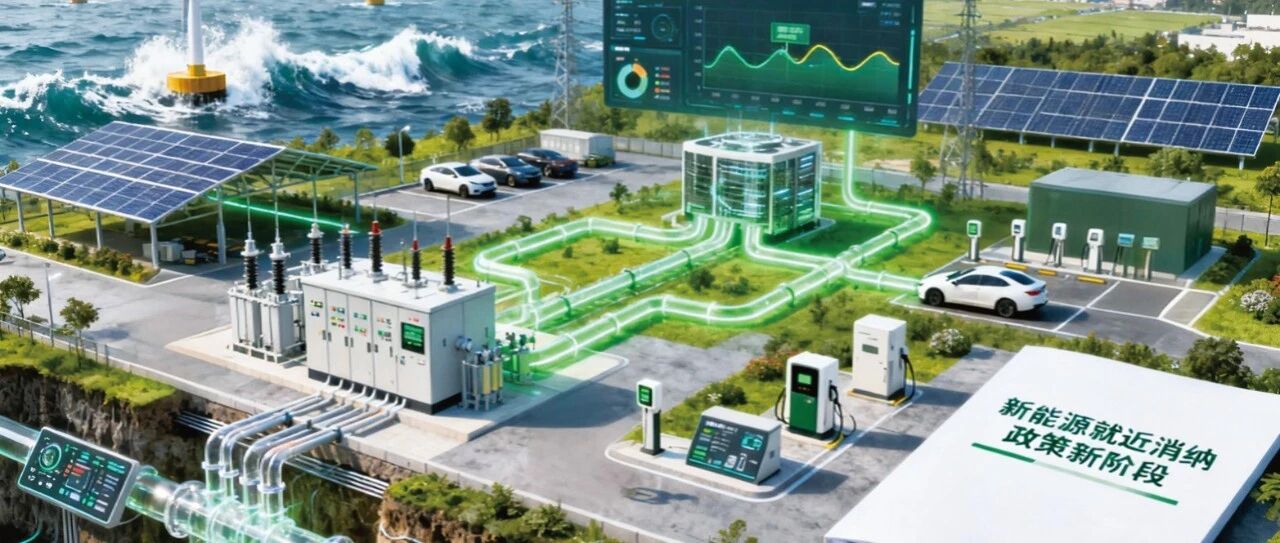
价格杠杆倒逼精细化运营,新能源就近消纳迎来经济性大考
Zhong Guo Neng Yuan Wang· 2025-10-30 01:25
Core Viewpoint - The implementation of the "Notice on Improving Price Mechanisms to Promote Local Consumption of Renewable Energy" (referred to as "Document 1192") marks a new phase in the local consumption policy of renewable energy, focusing on "self-consumption ratio" and "new calculation methods for transmission and distribution prices" [1] Group 1: Policy Framework and Objectives - Document 1192 is seen as a "key patch" in the renewable energy consumption policy system, clarifying the physical and safety responsibility boundaries of local consumption projects and requiring them to bear corresponding stability supply guarantee costs [1][2] - The policy aims to shift the industry focus from "scale" to "consumption efficiency," addressing the "last mile" issue where renewable energy sources are physically close to users but not directly utilized [1][2] Group 2: Project Requirements and Conditions - Local consumption projects must meet three basic conditions: clear interface, accurate metering, and a minimum of 60% of annual self-consumed renewable energy in total available generation [2] - The framework encourages various models such as green electricity direct connection, integrated source-load-storage, and smart microgrids to facilitate direct access of green electricity to users [2] Group 3: Pricing Mechanism and Economic Impact - The new pricing mechanism under Document 1192 resolves outstanding issues from Document 650, establishing a "who benefits, who bears" principle for costs related to stable supply services [3] - This mechanism is expected to lead to a more precise assessment of electricity demand by users, promoting a "pay-as-you-go" model [3][5] - The economic structure of projects will be significantly altered, with low load rates or unstable loads facing increased costs, potentially impacting project viability [3][4] Group 4: Challenges and Future Considerations - The implementation of local consumption projects faces challenges, including the need for resilience against load fluctuations and the dynamic nature of average load rates used for billing [6][7] - The transition from policy to practice requires further optimization, particularly in matching new local loads and allowing projects to shift to market-oriented models [6][7]