新工科教育

Search documents
XbotPark机器人基地发起人李泽湘:C端创业一举六得
Nan Fang Du Shi Bao· 2026-02-24 08:20
Group 1 - The core idea of the article is the promotion of a new engineering education system and entrepreneurial ecosystem in Guangdong, focusing on robotics and technology startups, which aims to enhance the region's economic structure and innovation capacity [2][3] - The establishment of the Songshan Lake Robotics Base in Dongguan in 2014 aimed to address the low success rate of professors in entrepreneurship by systematically training student entrepreneurs and integrating robotics competitions into the curriculum [2] - The new engineering education system emphasizes "entrepreneurial density" as a key metric for assessing students' entrepreneurial capabilities, with a structured incubation process designed to lower the difficulty of entrepreneurship [2] Group 2 - From 2014 to 2020, over 60 teams were incubated with an 80% survival rate, and 15% of these became unicorns or potential unicorns, with some achieving valuations exceeding 10 billion USD [2] - The sales revenue of 114 startups incubated after 2021 is projected to reach 1.39 million USD in 2024 and 7.84 million USD in 2025, representing a growth of 5.6 times [3] - The cumulative valuation of over 270 hard-tech companies incubated across various platforms is estimated to exceed 350 billion USD, with 4 companies listed and 12 recognized as unicorns or potential unicorns [3]


大疆教父正在成为IPO发动机
Xin Lang Cai Jing· 2025-12-24 10:20
Core Insights - The article highlights the significant role of Li Zexiang, known as the "DJI Father," in fostering innovation in the hardware technology sector, particularly through his involvement in multiple IPOs and startups [3][17] - Two hard-tech companies, Xidi Zhijia and Woan Robotics, are set to go public, marking a milestone in the development of artificial intelligence and robotics in China [3][17] Investment Philosophy - Li Zexiang's investment philosophy is rooted in his engineering background and industry vision, focusing on empowering entrepreneurs who can solve real problems with hard technology [4][18] - Over the past thirty years, Li has participated in the cultivation of over 250 startups, with more than thirty projects achieving unicorn or quasi-unicorn status [4][18] Notable Investments - Li Zexiang has invested in various sectors, including energy storage, industrial robotics, autonomous driving, exoskeletons, household robots, and AI emotional toys [4][18] - Notable companies he has supported include Li Qun Automation, Yidong Technology, Yunqing Intelligent, and Zhenghao Innovation, with some currently preparing for IPOs [4][18] Entrepreneurial Support - Li Zexiang provides comprehensive support to entrepreneurs, including technical guidance, funding, and strategic advice, often described as being both a father and a mother figure to them [5][19] - His approach emphasizes the importance of market value and practical application of innovations rather than purely technical advancements [21] Educational Initiatives - Li Zexiang has initiated reforms in engineering education to better cultivate entrepreneurs capable of driving innovation from 0 to 1, leading to the establishment of the "New Engineering Education" model [9][22] - He has introduced practical competitions and hands-on experiences in educational settings to attract students interested in robotics and innovation [10][23] Incubation and Support Structures - The establishment of the XbotPark robotics incubation base in Dongguan serves as a hub for startups, providing resources for research, entrepreneurship, and manufacturing [11][24] - The base has successfully incubated over 80 projects, collectively valued at over $10 billion, demonstrating the effectiveness of Li's incubation model [12][24] Collaborative Ecosystem - Li Zexiang's efforts are supported by various institutions, including investment funds and local government initiatives, creating a collaborative ecosystem for innovation [14][26] - His investment network includes notable partners and institutions, enhancing the support available to startups in the hardware technology sector [14][26]
李泽湘:没有供应链支撑 科创只能停留在实验室和教室
2 1 Shi Ji Jing Ji Bao Dao· 2025-12-14 14:51
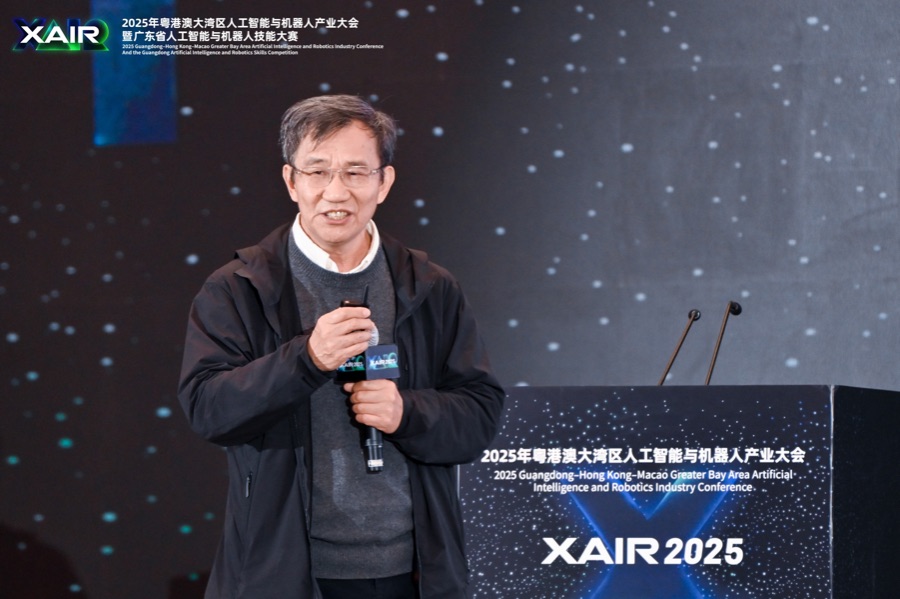
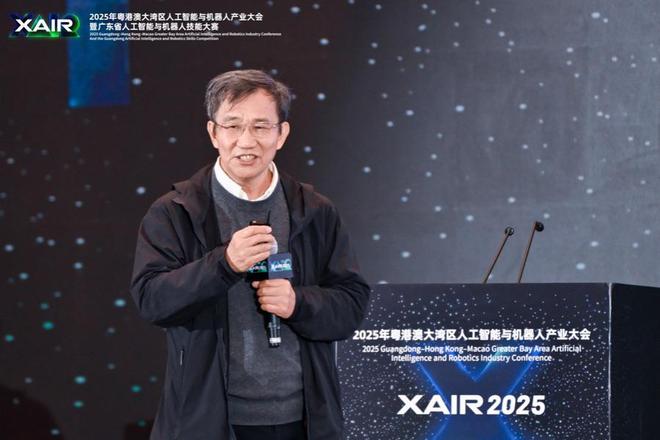
Group 1 - The conference on the AI and robotics industry in the Guangdong-Hong Kong-Macao Greater Bay Area highlighted the importance of new engineering education in cultivating innovative talents and enhancing product and enterprise iteration [1] - The unique supply chain advantages of the Greater Bay Area are emphasized, with iteration speeds reaching 10 to 30 times that of Silicon Valley and costs only one-tenth of Silicon Valley [3] - The focus on consumer-oriented (To C) product innovation is seen as a key driver for the manufacturing sector in the Greater Bay Area, contrasting with technology-driven business-to-business (To B) products [3] Group 2 - The emergence of young entrepreneurs like DJI and Yunji is noted as a solid foundation for the development of "new manufacturing," which aims to cultivate local consumer brands and upgrade low-end industries [4] - A shared factory initiative has been established to provide over 100 startups with one-stop services from concept validation to mass production, facilitating the transition from technology to product [4] - The gap between domestic education and industry needs to be bridged through platform building and reform in new engineering education, which has been implemented through project-based learning [5] Group 3 - The project-driven, interdisciplinary collaboration and real-world scenario orientation are identified as the core of new engineering education, essential for closing the loop from education to entrepreneurship and from technology to product [6] - The success of students in creating companies like DJI is attributed to the skills gained through project-based courses, supported by the efficient supply chain and application ecosystem in Shenzhen [6]
李泽湘:没有供应链支撑,科创只能停留在实验室和教室
2 1 Shi Ji Jing Ji Bao Dao· 2025-12-14 06:39
Core Insights - The conference on AI and robotics in the Guangdong-Hong Kong-Macao Greater Bay Area emphasizes the importance of new engineering education in cultivating innovative talent and enhancing product and enterprise iteration [1][6] - The unique supply chain advantages of the Greater Bay Area are highlighted, with iteration speeds reaching 10 to 30 times that of Silicon Valley and costs only one-tenth [3][4] - The focus on consumer-oriented (To C) product innovation is seen as a key driver for the manufacturing sector in the Greater Bay Area, contrasting with technology-driven business-to-business (To B) products [3][4] Supply Chain and Innovation - The lack of supply chain resources can hinder the practical application of innovative education, necessitating a full-chain support system including materials and chips [3] - The Greater Bay Area's supply chain is described as the most unique globally, providing a solid foundation for manufacturing and innovation [3][4] - The region has transitioned from a contract manufacturing model to developing its own consumer brands, leveraging its complete industrial chain [4] New Manufacturing and Startups - Emerging startups like DJI and Yunji are recognized for laying a strong foundation for "new manufacturing," which focuses on nurturing local consumer brands [4] - A shared factory initiative has been established to support startups with a one-stop service from concept validation to mass production, with over 100 companies already participating [5] Educational Reform - The gap between academia and industry is identified as a significant challenge, necessitating reforms in engineering education to better align with market needs [6][7] - A project-based learning model has been implemented in engineering education, emphasizing real-world applications and market-driven problem-solving [6][7] - The importance of role models in education is underscored, with examples of successful entrepreneurs inspiring students to define their own projects rather than following traditional methods [6][7]
李泽湘:中国新生代创业者正迎来“从模仿到创造”的新纪元
Zheng Quan Shi Bao Wang· 2025-05-23 14:15
Core Insights - The BEYOND Expo 2025 showcased various tech companies, with a notable presence from XbotPark and over 20 enterprises led by Li Zexiang, highlighting advancements in smart hardware across multiple sectors [1][2] Group 1: Company Highlights - Participating companies included Xiyang Technology, Jicui Innovation, and others, demonstrating innovations in smart sports, health, pet care, and entertainment [2] - Li Zexiang, founder of XbotPark, emphasized the evolution of Chinese entrepreneurs who are now creating entirely new product categories, moving away from imitation [3][4] - XbotPark has successfully incubated over 60 startup teams with an 80% survival rate from 2014 to 2020, with 15% evolving into hard-tech unicorns [4] Group 2: Educational Initiatives - Li Zexiang has been exploring new engineering education to bridge the gap between traditional education and industry needs, establishing XbotPark as a systematic entrepreneurial platform [4][6] - Collaborations with various universities across China aim to create innovation ecosystems and enhance smart manufacturing talent [6] Group 3: Market Trends - By 2025, 20 companies from the XbotPark ecosystem are set to launch crowdfunding campaigns, with a total of 29 projects raising over $50 million on platforms like Kickstarter and Indiegogo [5] - The average funding per project reached $1.8 million, indicating a strong market interest in hard-tech innovations [5]