新结构

Search documents
市场当前炒作逻辑是什么?资金都去哪儿了?
Xin Lang Cai Jing· 2026-02-08 14:24
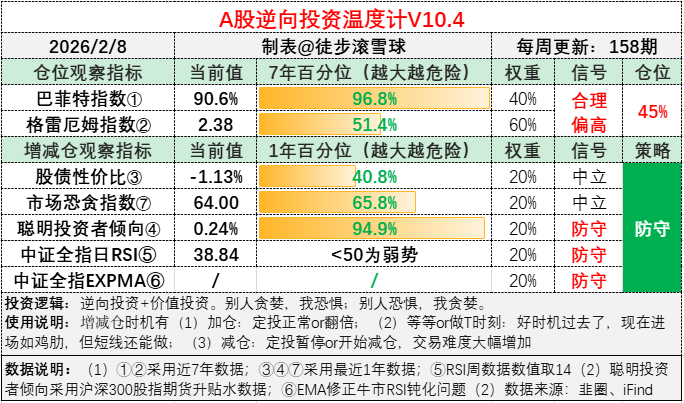
Group 1 - The core viewpoint of the article highlights that Nvidia's latest earnings report and shipment expectations for GB300/NVL72 are currently the main drivers of the market, with significant capital expenditure guidance igniting the global AI computing power supply chain [1] - The market is experiencing a shift in speculation from upstream chips to midstream manufacturing and downstream cooling/connection sectors, driven by the logic of "paying for certain incremental growth" [1] - The robotics sector is entering a critical phase of "distilling the genuine from the false," with companies in Tesla's core supply chain benefiting from a premium due to their association with strong industrialization entities [1] Group 2 - The market style is rapidly switching between "institutional investment in large-cap blue chips (such as AI and core T-chain)" and "retail speculation in thematic small caps (such as satellite communication and brain-computer interfaces)" [1] - Overall risk appetite is constrained by macro uncertainties (such as U.S. Treasury yields and tariffs), leading funds to favor sectors with strong fundamental data support (like capital expenditure and orders) [1] - The current market valuation is considered reasonably high, with an appropriate position of about 45% based on a composite of the Buffett and Graham indices [2] Group 3 - Recent data indicates a significant surge in the scale of the Hang Seng Technology Index ETF, which increased by 110.46 million in the past week, despite the overall lack of enthusiasm for the Hang Seng Technology sector [5] - The article notes that the Hong Kong stock market has potential for upward movement and certainty following the U.S. and A-share markets [4] - The article outlines various investment strategies, including value selection and valuation-based positioning, emphasizing a defensive approach in the current market environment [10][11]


马上评|冲刺“十四五”收官战,上海继续挑大梁
Sou Hu Cai Jing· 2025-12-05 03:30
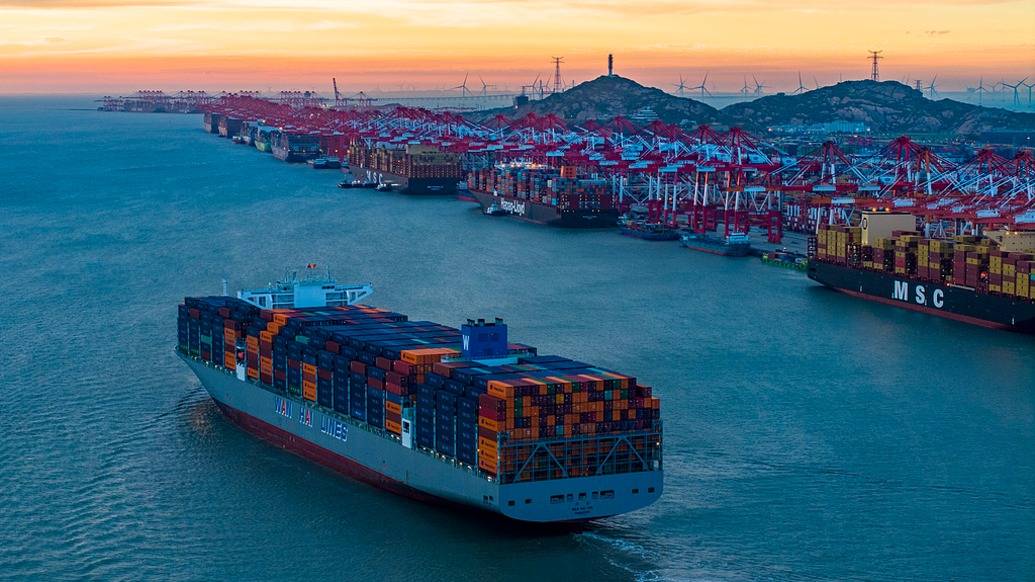
Core Insights - Shanghai's port throughput has surpassed 50 million TEUs ahead of schedule, indicating strong economic recovery and growth momentum as the city approaches the end of the 14th Five-Year Plan [2] - The city's GDP growth rate for the first three quarters reached 5.5%, outpacing the national average, with significant contributions from strategic emerging industries [3] - Shanghai's retail sales and tourism have shown robust growth, with a notable increase in consumer spending and new business models emerging [4] Economic Performance - Shanghai's economy has shown resilience, with a steady recovery and better-than-expected performance in the first three quarters of the year [2] - The city achieved a record intent transaction amount of $83.49 billion at the recent China International Import Expo, reflecting a 4.4% increase from the previous year [2] - The total number of inbound and outbound passengers at Pudong International Airport exceeded 30 million, marking a 19.8% year-on-year increase [2] Industrial Development - The share of strategic emerging industries in Shanghai's total industrial output has risen to 44.1%, with manufacturing output in key sectors like AI and biomedicine growing by 8.5% [3] - Shanghai is actively exploring non-traditional markets for exports, with significant growth in exports to India (44.2%), Hong Kong (43.5%), and ASEAN (27.6%) [3] Consumer Trends - The total retail sales of consumer goods in Shanghai reached 1.2303 trillion yuan, with a year-on-year growth of 4.3% [4] - Major events and exhibitions have driven consumer engagement, with over 2.55 million tourists during the National Day and Mid-Autumn Festival holidays, reflecting a nearly 20% increase [4] Future Outlook - Shanghai aims to solidify its position as a world-class modern socialist city, focusing on technological innovation and industrial upgrades as it transitions into the 15th Five-Year Plan [5] - The city is committed to playing a leading role in China's modernization efforts, with ongoing projects in the Lingang New Area and the Yangtze River Delta integration [5]