
新能源汽车售后市场

Search documents
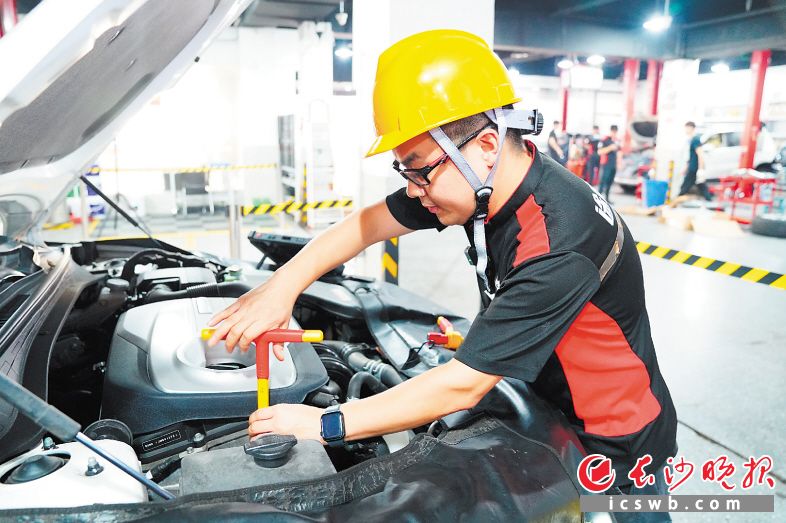
绝缘布上精准实施“数据诊疗”|长假我在岗
Chang Sha Wan Bao· 2025-10-04 23:48
Core Viewpoint - The article highlights the growing demand for maintenance services in the electric vehicle (EV) sector, particularly focusing on the efforts of Tuhu Car Maintenance to establish a robust service network for new energy vehicles in China [4][7]. Group 1: Industry Trends - The number of new energy vehicles in China has surpassed 30 million, indicating a significant growth in the aftermarket service market [4]. - Tuhu Car Maintenance is actively building a maintenance capability system for new energy vehicles, with over 7,200 service centers undergoing upgrades for electric vehicle repairs [4]. Group 2: Technical Expertise - The maintenance of new energy vehicles requires specialized knowledge, particularly in the "three electric" systems: battery, motor, and electronic control [6]. - Approximately 50% of the technicians at Tuhu Car Maintenance's service center have obtained two relevant certifications, with over 1,000 technicians holding low-voltage electrician certificates, positioning the company as a leader in the industry [6]. Group 3: Service Innovations - Tuhu Car Maintenance has secured authorization from over ten major battery manufacturers, allowing them to perform standard repairs on vehicles still under warranty, thus saving time and costs for vehicle owners [8]. - The company promotes a "repair over replace" philosophy, exemplified by a case where a damaged battery was successfully repaired at a fraction of the cost of a full replacement [8]. Group 4: Future Outlook - The increasing rate of new energy vehicles coming in for maintenance is seen as just the beginning of a vast market opportunity [8]. - Tuhu Car Maintenance has established a systematic training program for new energy technicians, emphasizing the importance of continuous learning to meet the challenges of the new energy era [8].

中国新能源汽车澳洲受指控,“维修权”究竟该归谁?
Jing Ji Guan Cha Bao· 2025-09-15 00:50
Core Insights - The core issue revolves around the high maintenance costs and insurance fees for electric vehicles (EVs) due to monopolistic practices by manufacturers, which consumers did not anticipate [1][3][4] Group 1: Market Dynamics - Five Chinese EV manufacturers, including BYD and Xpeng, are accused of monopolizing repair services in Australia by delaying and restricting access to independent repair services and diagnostic software [1][5] - The Australian Automotive Service and Repair Authority (AASRA) has reported these practices to the Australian Competition and Consumer Commission (ACCC), which could lead to significant penalties for the companies involved [5][6] Group 2: Consumer Impact - Consumers are facing challenges in accessing affordable and timely repair services, as authorized service centers are often located far away, leading to increased costs and inconvenience [1][2] - The high maintenance costs associated with EVs contradict the initial appeal of lower overall usage costs compared to traditional fuel vehicles [1][3] Group 3: Regulatory Environment - The Australian Motor Vehicle Service and Repair Information Scheme (MVIS) mandates that manufacturers must provide independent repairers with access to essential diagnostic software and technical data, which the accused companies allegedly failed to comply with [5][6] - The ACCC is responsible for enforcing MVIS, with penalties for non-compliance reaching up to AUD 10 million (approximately RMB 47 million) [5] Group 4: Industry Perspectives - Industry experts highlight that the current closed service model of Chinese EV manufacturers is a significant barrier to the development of a competitive aftermarket [3][4] - Concerns about safety and liability in third-party repairs are cited as reasons for manufacturers' reluctance to open their data and services to independent repairers [4][6] Group 5: Future Considerations - The need for a balanced ecosystem that allows for fair competition while ensuring safety standards is emphasized, requiring collaboration among manufacturers, independent repairers, regulatory bodies, and insurance companies [6] - The situation in Australia reflects a broader trend of increasing regulatory scrutiny in the automotive sector, particularly regarding consumer rights and anti-competitive practices [6]


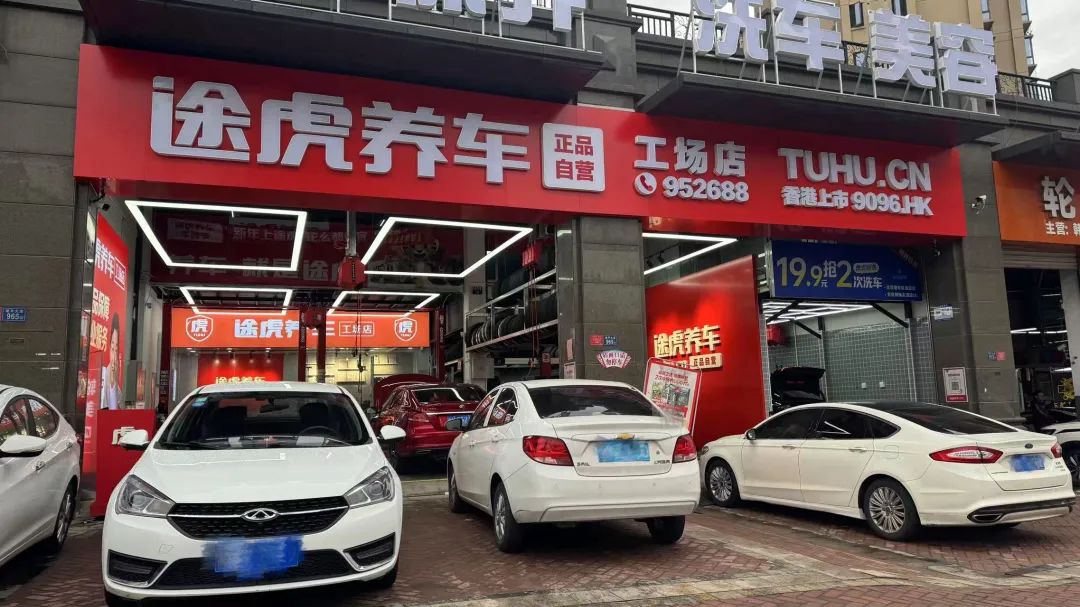
7205家途虎“包围县城”
Guo Ji Jin Rong Bao· 2025-08-22 11:46
Core Viewpoint - The automotive maintenance industry is experiencing significant growth alongside increasing market differentiation, with major players like Tuhu gaining competitive advantages over smaller repair shops [1][6]. Financial Performance - Tuhu achieved a revenue of 7.88 billion yuan in the first half of the year, representing a year-on-year growth of 10.5%, with a gross profit of 1.98 billion yuan and an adjusted net profit of 410 million yuan, up 14.6% [3]. - The company's free cash flow reached 350 million yuan, a 32.2% increase compared to the same period last year, with total cash exceeding 7.5 billion yuan [3]. Market Expansion - As of June 30, Tuhu operated 7,205 service stations, an increase of 894 stations or 14.2% from the end of last year, indicating a rapid expansion strategy [4]. - The automotive maintenance market in China is projected to exceed 7 trillion yuan by 2025, with the maintenance sector expected to approach or surpass 2 trillion yuan [5]. Industry Differentiation - The industry is witnessing a stark divide, with large chains like Tuhu and Tmall Auto benefiting from brand strength and standardized services, while many small independent repair shops face survival challenges [6]. - According to F6 Big Data Research Institute, 54% of repair shops are expected to see a decline in vehicle visits in 2024, with 13% experiencing a drop of over 25% [6]. User Growth - Tuhu registered over 150 million users and 26.5 million transaction users in the first half of the year, marking increases of 18.8% and 23.8% respectively [8]. Strategic Initiatives - Tuhu is implementing support policies for both new and existing franchisees, including financial and operational assistance tailored to different market characteristics [10]. - The company is focusing on deep penetration into lower-tier markets, enhancing store profitability through digital tools and operational efficiency [11]. New Energy Vehicle (NEV) Focus - Tuhu's user base for NEVs reached 3.4 million, a growth of 83.5%, now accounting for over 12% of total transaction users [12]. - The company is expanding its services in NEV maintenance, including battery testing and repair services, anticipating a growing market for NEV after-sales services, projected to reach 300 billion yuan by 2025 [14].
今年将有超350万辆新能源车“脱保” 维修难、价格贵成为行业发展的痛点 新能源汽车维修只能去4S店?
Guang Zhou Ri Bao· 2025-06-08 19:01
Core Insights - The rapid growth of the independent aftermarket for electric vehicles (EVs) is anticipated as over 3.5 million EVs will exit their warranty period by 2025, leading to a surge in demand for components related to the three electric systems (battery, motor, and control system) [1][2] - The current after-sales market for EVs is estimated to reach 300 billion yuan by 2025, but faces challenges such as high repair costs, insufficient authorized service points, and limited capabilities in the maintenance and testing of the three electric systems [1][2][3] Market Dynamics - The number of EVs in China is projected to exceed 50 million by 2025, with the number of vehicles out of warranty increasing from 1.36 million in 2024 to 3.5 million in 2025 [2] - The current workforce in the EV repair sector is less than 100,000, highlighting a significant shortage of skilled technicians, with a gap of over 80% expected in 2025 [2][3] Repair Challenges - Third-party repair shops face significant difficulties in servicing EVs due to the proprietary nature of the technology and lack of standardized parts in the secondary market [2][3] - The absence of a unified assessment standard for the three electric systems results in repair costs being dictated by the manufacturers, complicating the pricing landscape for consumers [4] Regulatory Environment - Recent policy measures aim to enhance the supply channels for EV repair parts and encourage manufacturers to open up technology for better economic viability in battery repairs [5] - The emergence of third-party testing services and platforms is expected to benefit the independent repair market for out-of-warranty EVs [5] Data Sharing and Collaboration - Breaking down "information silos" and achieving data sharing among manufacturers is crucial for the sustainable development of the EV aftermarket [6] - Utilizing big data to assess the remaining lifespan of the three electric systems and the residual value of used vehicles can enhance service offerings and consumer trust [6]