新能源汽车行业转型

Search documents
北汽新能源:昔日销冠的落寞与重生挣扎
Zhong Guo Qi Che Bao Wang· 2025-11-27 09:11
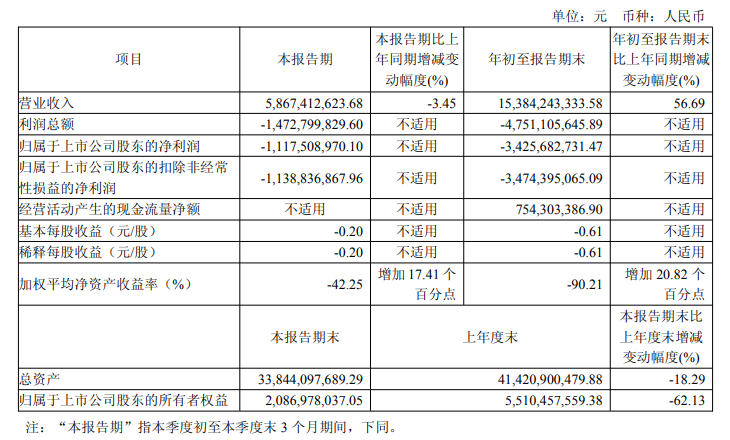
Core Viewpoint - Recently, BAIC Blue Valley received approval from the China Securities Regulatory Commission to issue shares to specific investors, raising 6 billion yuan, which is timely for the company's ongoing transformation [1] Group 1: Financial Performance - From January to October, BAIC Blue Valley sold 142,000 vehicles, a year-on-year increase of 73% [1] - For the first three quarters, the company reported revenue of 15.384 billion yuan, a year-on-year growth of 56.7% [1] - The net loss attributable to shareholders for the same period was 3.426 billion yuan, with a basic earnings per share of -0.61 yuan [1][3] Group 2: Historical Context - BAIC New Energy, established in 2009, was one of the first independent new energy vehicle companies in China and became the first listed new energy vehicle company in 2018 [4] - In 2017, the company achieved sales of 103,000 vehicles, a 98% increase, and became the global sales champion for pure electric vehicles [4][5] - The company's peak sales were supported by government subsidies and a strong B-end market presence, which accounted for over 70% of its business at one point [5] Group 3: Challenges and Strategic Shifts - The company faced challenges due to its reliance on the B-end market, leading to a lack of brand recognition in the C-end market and a perception of low-end products [6][7] - In 2019, the reduction of government subsidies triggered a decline in sales, with total sales dropping to 150,600 vehicles, a year-on-year decrease of 4.69% [6] - By 2020, the company experienced a drastic drop in sales to 25,900 vehicles, exacerbated by the COVID-19 pandemic and a lack of technological differentiation [7] Group 4: Future Outlook - In 2024, BAIC New Energy initiated a strategic transformation with a dual-brand strategy aimed at increasing sales and market penetration [9] - Despite projected sales growth, the company continues to report significant net losses, with cumulative losses exceeding 30 billion yuan by 2025 [9][10] - The recent 6 billion yuan financing is intended for new energy vehicle development and AI technology projects, but it may not resolve the underlying competitive challenges faced by the company [10]

上市却不融资,岚图图什么?
Hu Xiu· 2025-10-15 05:20
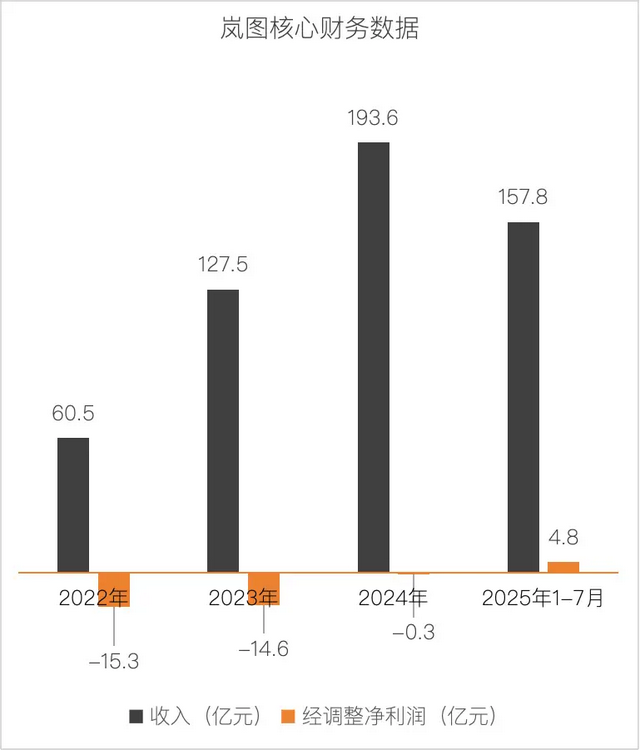
Core Viewpoint - Two domestic electric vehicle companies, Seres and Lantu, are simultaneously attempting to enter the Hong Kong stock market, with Lantu opting for a non-fundraising listing approach while Seres plans to raise approximately HKD 15.6 billion through an IPO [2][3][26]. Company Overview - Seres, in collaboration with Huawei, aims for a sales target of 430,000 units in 2024 [2]. - Lantu, a high-end electric vehicle brand under Dongfeng, targets 80,000 units in 2024, ranking 12th in the industry [3]. - Lantu's flagship model, the MPV "Dreamer," is expected to sell 47,000 units in 2024, making it the second in the new energy MPV market [3]. Financial Performance - Lantu reported a revenue of CNY 15.78 billion in the first seven months of 2025, with a year-on-year growth rate exceeding 90% [6]. - The gross profit margin for Lantu reached 21.3%, second only to Seres in the industry [6][16]. - Lantu achieved an adjusted net profit of CNY 479 million in the first seven months of 2025, marking it as the fastest electric vehicle company to reach quarterly profitability [7][15]. Government Subsidies - Lantu received CNY 640 million in government subsidies in the first seven months of 2025, raising questions about the sustainability of its profitability without these funds [8][9]. Sales Challenges - Lantu set a sales target of 200,000 units for 2025 but only sold 97,000 units in the first nine months, achieving less than half of its goal [10][41]. - The sales structure is heavily reliant on the "Dreamer" model, with other models like "Chasing Light" and "FREE" not contributing significantly to overall sales [11][42]. Market Positioning - Lantu focuses on the high-end market segment priced between CNY 300,000 to 400,000, avoiding intense competition in the sub-CNY 200,000 range [6][20]. - The company’s sales strategy emphasizes high average selling prices and profit margins despite lower overall sales volume compared to competitors [20][21]. Technological Advantages - Lantu utilizes the ESSA architecture, allowing for a 90% commonality in hardware across different models, which helps reduce costs [22][23]. - The support from Dongfeng's supply chain enhances Lantu's cost control and operational efficiency [25]. Listing Strategy - Lantu chose a non-fundraising introduction listing to leverage its existing cash reserves and positive cash flow, indicating confidence in its profitability [36][38]. - The decision to list without raising funds is seen as a strategic move to gain market valuation without the pressures of traditional IPO fundraising [30][49]. Future Growth Prospects - Lantu plans to launch 1-3 new models annually and expand its sales network to 1,000 outlets by 2026, with a focus on overseas markets [46][47]. - The company aims to address its sales structure imbalance by enhancing its product lineup and marketing strategies to compete effectively in the crowded market [45][50].