新能源汽车补能网络

Search documents
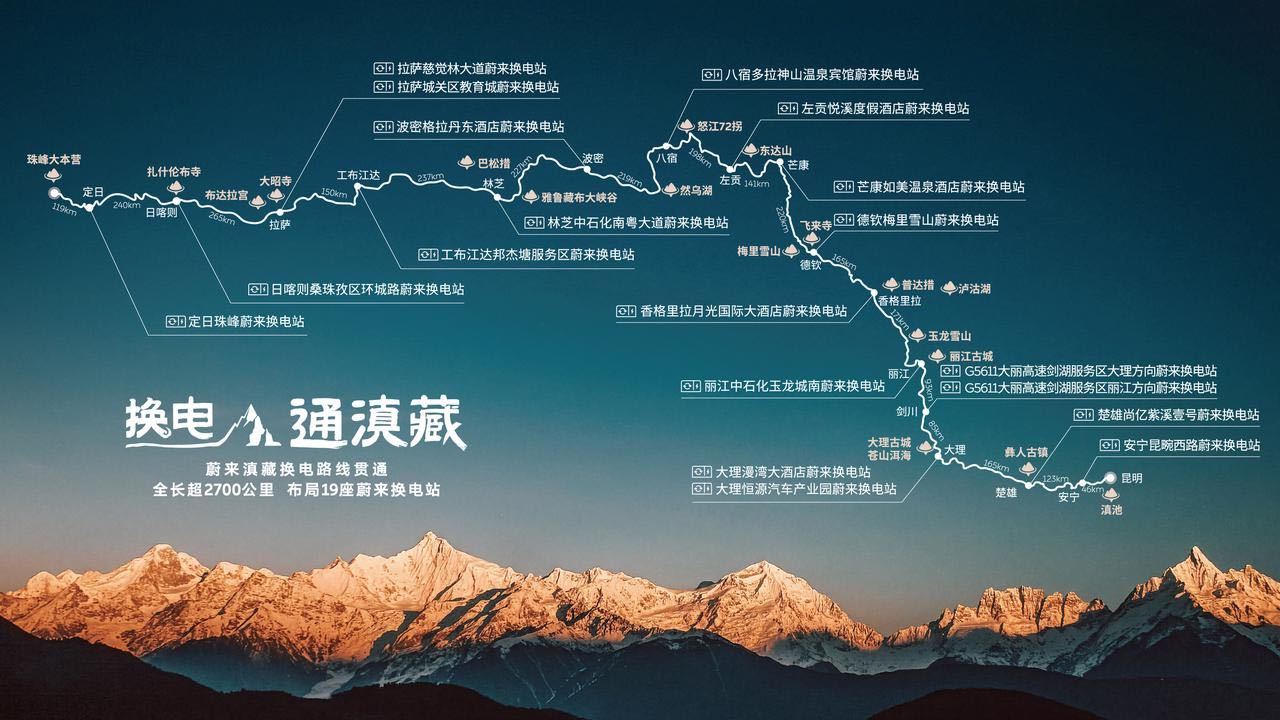
蔚来滇藏换电路线贯通,全程换电到珠峰
Zhi Tong Cai Jing· 2026-01-01 11:47
Core Viewpoint - The official launch of NIO's battery swap station on January 1, 2026, marks the completion of the NIO Yunnan-Tibet battery swap route, enhancing the convenience of electric vehicle charging across a significant distance [1] Group 1: Route Details - The NIO Yunnan-Tibet battery swap route starts in Kunming, Yunnan, and spans over 2,700 kilometers [1] - The route connects 19 battery swap stations in key tourist cities such as Dali, Lijiang, Shangri-La, Nyingchi, Lhasa, and Shigatse, with an average of one station every 142 kilometers [1] Group 2: User Experience - Yunnan users can travel from Kunming to the base camp of Mount Everest using battery swaps, ensuring a seamless charging experience [1] - National users can rely on over 3,670 NIO battery swap stations to reach the base camp of Mount Everest, providing a charging experience comparable to refueling a traditional vehicle [1]


蔚来在上海建成500座充换电站,日均提供电量超过60万度
Guan Cha Zhe Wang· 2025-12-15 10:48
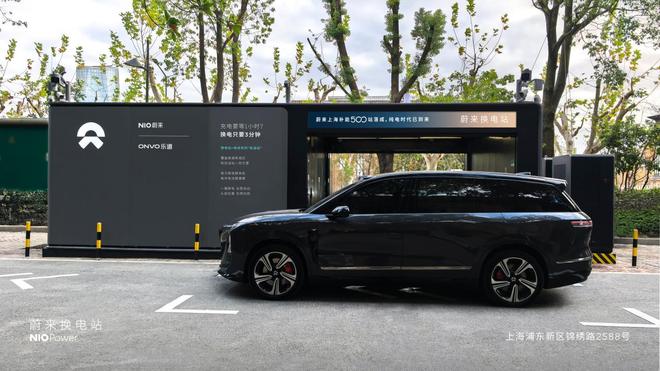
Core Insights - NIO has established a robust energy and service network in Shanghai, with 198 battery swap stations and 302 charging stations, providing over 600,000 kWh of energy daily [1][3]. Group 1: Battery Swap Station Details - The newly operational battery swap station at Shanghai Pudong Xinghe Bay Hotel features 23 battery slots, supports multiple battery specifications and brands, and can service up to 480 swaps per day, with an average swap time of 2 minutes and 24 seconds [3]. - The station's computing power reaches 1016 TOPS, equipped with high-performance intelligent perception hardware, allowing users to utilize smart assisted parking for easy access [3]. Group 2: Network Coverage and Performance - The coverage rate of NIO's battery swap stations within 3 kilometers of users' residences has significantly increased from approximately 40% in 2020 to 95% [3]. - In the area within Shanghai's outer ring, there is an average of one battery swap station every 8.5 square kilometers [3]. Group 3: Market Position and Growth - Shanghai has become a leading city for new energy vehicle consumption in China, with a projected market penetration rate of over 64% for new energy vehicles by October 2025, and pure electric vehicle penetration exceeding 50% for three consecutive months [5]. - Nationally, as of October 2025, the total number of electric vehicle charging infrastructure has reached 18.645 million, a year-on-year increase of 54%, with public charging facilities growing by 39.5% [5]. - From January to November 2025, the cumulative retail sales of new energy vehicles in China reached 11.472 million units, marking a year-on-year growth of 19.6% [5].
李斌将自驾到珠峰验收318川藏换电路线
Zhong Guo Qi Che Bao Wang· 2025-08-13 13:14
Core Viewpoint - NIO is expanding its battery swapping network with the upcoming completion of the G318 route, allowing users to travel to Mount Everest with battery swaps, enhancing the practicality of electric vehicles in challenging terrains [2] Group 1: Company Developments - NIO's CEO Li Bin expressed gratitude to users for their support in establishing the G318 route, which is crucial for the connectivity of this significant road [2] - The "Power UP 2025" event will take place on August 16, where Li Bin will drive the new ES8 from Lhasa to the Everest Base Camp, showcasing the completed battery swapping route [2] - NIO has conducted multiple live assessments of its charging and battery swapping infrastructure across various regions, including Xinjiang, Northeast China, and Guangdong [2] Group 2: Infrastructure Expansion - As of now, NIO has established a total of 8,159 charging and battery swapping stations nationwide, which includes 3,449 battery swapping stations and 4,710 charging stations, leading the industry in infrastructure development [2]

预计35万元起!理想汽车首款纯电SUV开启预订,“九纵九横”高速超充网络已贯通
Mei Ri Jing Ji Xin Wen· 2025-07-17 11:34
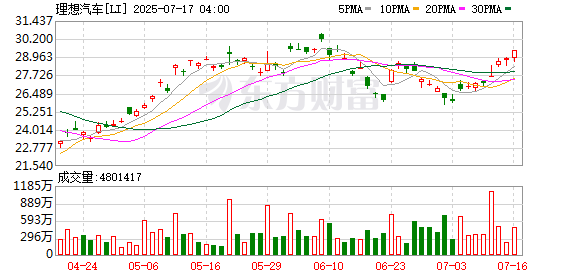
Core Viewpoint - Li Auto's first pure electric SUV, the Li Auto i8, has begun pre-orders with an expected price range of 350,000 to 400,000 yuan, aiming to fill a gap in the mid-large six-seat SUV market [2][7]. Group 1: Product Features and Specifications - The Li Auto i8 features a front and rear motor with maximum power outputs of 150 kW and 250 kW, respectively, and is equipped with a 5C ternary lithium battery pack [3]. - The vehicle has a power consumption of 13.4 kWh per 100 km and a maximum CLTC range of 720 km, with the ability to recharge 500 km of range in just 10 minutes [3]. - The interior design continues the family style, featuring a rear entertainment screen, small tables, a car refrigerator, heated seats in the third row, independent air conditioning vents, and a split sunroof [2]. Group 2: Market Strategy and Positioning - Li Auto aims to establish a direct sales model without the need for small deposits or launch events, similar to Tesla's approach [2]. - The i8 is targeted at family users, particularly in coastal areas with good electric vehicle infrastructure, and is positioned as a necessary upgrade for existing users of 150,000 to 250,000 yuan electric vehicles [7]. - The company plans to focus sales efforts in first and second-tier cities and coastal regions, without separating the sales networks for the i and L series [7]. Group 3: Charging Infrastructure Development - Li Auto has announced the completion of its "Nine Vertical and Nine Horizontal" high-speed supercharging network, with a total of 959 supercharging stations [3]. - As of July 15, 2025, the company has installed a total of 2,878 supercharging stations nationwide, with a goal of reaching 4,000 by the end of 2025 [6]. - The supercharging network aims to alleviate consumer concerns about charging convenience and is expected to surpass Tesla's network density in China [6][8]. Group 4: Stock Market Reaction - Following the announcement of the i8 pre-orders, Li Auto's stock price on the Hong Kong market rose by over 10%, reaching 123.7 HKD per share, with a gain of 9.37% at the time of reporting [3]. Group 5: Future Goals and Market Position - The launch of the i8 marks a strategic shift for Li Auto from focusing solely on extended-range electric vehicles (EREV) to diversifying its electric vehicle product lineup [8]. - The company aims to establish itself as a leading brand in the pure electric vehicle segment within three years, focusing on product, experience, and service improvements [8].