新能源汽车车辆购置税减免政策

Search documents
重要升级!辽宁省电子税务局 1 月功能优化清单来了,办税更便捷!
蓝色柳林财税室· 2026-01-07 10:21
Group 1 - The article discusses the optimization and upgrade of the online tax payment experience in Liaoning Province, aligning with the latest requirements from the State Administration of Taxation [2] - A key change in the vehicle purchase tax declaration function is that from January 1, 2026, only vehicles included in the new 05 type model catalog will be eligible for tax exemptions [2] - Taxpayers are advised to confirm whether their purchased electric vehicles are listed in the 05 type model catalog before making a purchase to avoid issues with tax exemptions [3] Group 2 - The optimization of value-added tax and additional tax declaration for general taxpayers includes adjustments to the correction declaration query rules, making tax reporting more precise [4] - The editability of specific sections in the supplementary table has been improved to better reflect actual business operations [5] Group 3 - For resident enterprises under account auditing, a new data prompt has been added to assist platform enterprises in accurately filling out their income tax declarations [6] - The system has optimized the comparison rules for employee compensation data to reduce unnecessary verification interference while ensuring data accuracy [7] - The issue of a one-cent discrepancy in the main declaration form has been resolved through updated calculation rules [8] Group 4 - The optimization of withholding corporate income tax reporting and self-declaration for non-resident enterprises has enhanced the comprehensiveness of national taxpayer information display [9] Group 5 - The annual declaration function for resident enterprises has introduced two new data comparison rules to facilitate accurate annual reporting [11] - The optimization of non-tax income general declaration ensures that the payment deadline is locked and cannot be modified, maintaining consistency with fee source information [13] Group 6 - The one-stop tax refund function has been optimized for efficiency and transparency, including intelligent sampling for tax refund applications [17] - The optimization of the property and behavior tax source collection and combined declaration function focuses on improving the accuracy of environmental protection tax reporting [19] Group 7 - The optimization of the land value-added tax final declaration function has improved the accuracy of data collection for final payments [21] - The tax reduction report function has adjusted the rules for the "retirement date" field to ensure standardized data transmission [23] Group 8 - The intelligent declaration self-inspection service has updated the comparison rules for value-added tax and cultural construction fees, enhancing the accuracy of self-inspections [25] - The collection of supplementary information on key tax sources has been optimized to ensure consistency between collected data and reported data [26]


划重点!2026年新能源汽车车购税优惠这样享
蓝色柳林财税室· 2026-01-05 07:50
Core Viewpoint - The article discusses the adjustments to the new energy vehicle (NEV) purchase tax exemption policy, effective from 2026, as announced by the Ministry of Finance, State Taxation Administration, and the Ministry of Industry and Information Technology [1]. Summary by Sections Tax Exemption Policy - NEVs purchased between January 1, 2024, and December 31, 2025, will be exempt from vehicle purchase tax, with a maximum exemption of 30,000 yuan per vehicle [3]. - From January 1, 2026, to December 31, 2027, NEVs will be subject to a 50% reduction in vehicle purchase tax, with a maximum reduction of 15,000 yuan per vehicle [3]. Examples of Tax Calculation - For a NEV priced at 200,000 yuan (excluding VAT), the vehicle purchase tax at a rate of 10% would be 20,000 yuan. Under the exemption policy, the buyer would not need to pay any tax as it is within the exemption limit [3]. - For a NEV priced at 400,000 yuan, the tax would be 40,000 yuan, but the buyer can only claim a maximum exemption of 30,000 yuan, resulting in a tax payment of 10,000 yuan [3]. 2026 Tax Reduction Example - If a NEV is purchased for 150,000 yuan in 2026, the tax would be 15,000 yuan, and under the 50% reduction policy, the buyer would pay 7,500 yuan [4]. - For a NEV priced at 400,000 yuan, the tax would be 40,000 yuan, and the buyer would only receive a maximum reduction of 15,000 yuan, resulting in a tax payment of 25,000 yuan [4]. Special Considerations for Battery Swap Models - NEVs sold under the "battery swap model" must meet specific technical standards, and the vehicle purchase tax will be calculated based on the price excluding the battery [6]. - For a NEV priced at 140,000 yuan (excluding battery) and a battery priced at 60,000 yuan, the tax on the vehicle would be 14,000 yuan, with a 50% reduction leading to a tax payment of 7,000 yuan [7].

注意!一批新规,今起施行!每一条都能帮你省钱
Xin Lang Cai Jing· 2026-01-01 11:31
Group 1 - The National Development and Reform Commission and the Ministry of Finance announced a policy for large-scale equipment updates and consumer goods replacement in 2026, focusing on various sectors including public welfare, safety, and consumer infrastructure [1] - The policy includes subsidies for the replacement of old vehicles and household appliances, specifically targeting six categories such as refrigerators, washing machines, televisions, air conditioners, computers, and water heaters [1] - The scope of the new digital product subsidy has been expanded to include smartphones, tablets, smartwatches, smart glasses, and smart home products, including those designed for elderly care [1] Group 2 - The Ministry of Finance and the State Taxation Administration issued a notice regarding the value-added tax policy for personal housing sales, effective January 1, 2026, imposing a 3% tax on properties sold within two years of purchase and exempting those sold after two years [3] - For housing provident fund loans issued before May 8, 2025, the interest rate will be reduced by 0.25 percentage points starting January 1, 2026, with new rates set for first and second home loans [5] - A joint notice from the National Development and Reform Commission, the Ministry of Education, and the Ministry of Finance outlines the kindergarten fee policy effective January 1, 2026, establishing government-guided pricing for non-profit kindergartens and market-regulated pricing for for-profit institutions [6] Group 3 - The Ministry of Finance, the State Taxation Administration, and the Ministry of Industry and Information Technology announced a continuation and optimization of the tax exemption policy for new energy vehicles, reducing the vehicle purchase tax by half for purchases made between January 1, 2026, and December 31, 2027, with a maximum tax reduction of 15,000 yuan per vehicle [8] - The policy specifies that new energy vehicles must meet certain technical requirements to qualify for tax exemptions, including a minimum electric driving range for plug-in hybrid vehicles [8]

公益性捐赠税务处理指南
蓝色柳林财税室· 2025-12-26 01:28
Core Viewpoint - The article discusses the tax deduction policies for charitable donations made by enterprises and individuals in China, highlighting the types of donations, confirmation of donation amounts, and the relevant tax deduction standards and procedures. Group 1: Donation Types and Confirmation - Monetary donations are confirmed based on the actual amount received, while non-monetary donations are confirmed at their fair value [3] - For non-monetary donations, a fair value proof is required when donating to public welfare organizations or government entities [6] Group 2: Deduction Standards for Enterprises - General deduction limits allow enterprises to deduct charitable donations up to 12% of their annual profit before tax, with excess amounts eligible for carryover for up to three years [7] - Special full deduction applies to donations made for poverty alleviation in targeted areas from January 1, 2019, to December 31, 2025, allowing for actual deductions in taxable income [8] Group 3: Deduction Calculation Rules - Annual profit is defined as the positive amount calculated according to national accounting standards [9] - Unused charitable donation amounts can be carried forward for up to three years, with previous years' amounts deducted first [9] Group 4: Simplified Reporting Procedures - Zhejiang Province has integrated donation ticket information into the electronic tax bureau, allowing automatic pre-filling of donation details in tax returns [10] Group 5: Individual Donation Tax Deductions - Individuals can deduct charitable donations made to public welfare organizations or government entities from their taxable income, with monetary donations confirmed based on actual amounts donated [11] - General deduction allows individuals to deduct up to 30% of their taxable income for charitable donations, while specific full deductions apply to designated charitable organizations [12][13] Group 6: Documentation and Reporting for Individuals - Charitable organizations must issue donation receipts, and individuals can use bank payment proofs temporarily if receipts are not available [15] - Individuals must provide donation receipts within 90 days to the withholding agent, and failure to do so requires reporting to tax authorities [16] - Individuals must retain donation receipts for five years for tax purposes [17]

一问一答 | 12月办税注意事项
蓝色柳林财税室· 2025-12-20 01:20
Group 1 - The purchase of new energy vehicles will not enjoy the vehicle purchase tax exemption policy next year [2] - From January 1, 2026, to December 31, 2027, new energy vehicles will be subject to a halved vehicle purchase tax, with a maximum tax reduction of 15,000 yuan per vehicle [3] - The purchase date is determined by the issuance date of valid documents such as the unified invoice for motor vehicle sales or the customs duty payment certificate [3] Group 2 - Individual businesses that have previously been assessed on a fixed basis will not automatically continue this assessment after the year-end [5] - Taxpayers changing to an accounting-based assessment must file their own tax returns [6] Group 3 - Companies can deduct costs and expenses without invoices during the corporate income tax declaration, provided they obtain valid deduction certificates before the end of the annual tax settlement period [7] Group 4 - Confirmation of special additional deductions for individual income tax must be completed in December [8] - If taxpayers do not confirm in time, the withholding agent will suspend deductions starting January of the following year [8] Group 5 - Small-scale taxpayers whose sales exceed 5 million yuan within a 12-month period may need to register as general taxpayers [9][10] - The calculation period for annual taxable sales is not a complete calendar year but rather a continuous 12-month period or four quarters [10]

电子税务局之代理通道相关提示提醒处理方式操作方法
蓝色柳林财税室· 2025-11-03 01:28
Core Viewpoint - The article discusses the changes in the vehicle purchase tax policy for new energy vehicles (NEVs) in China, highlighting the transition from tax exemption to reduced tax rates starting January 1, 2026, and the adjustments in technical requirements for eligible vehicles [10][12]. Group 1: Tax Policy Changes - From January 1, 2024, to December 31, 2025, NEVs will be exempt from vehicle purchase tax, with a maximum exemption of 30,000 yuan per vehicle for passenger cars [12]. - From January 1, 2026, to December 31, 2027, NEVs will have a reduced vehicle purchase tax, with a maximum reduction of 15,000 yuan per vehicle for passenger cars [12]. Group 2: Eligibility Criteria - Vehicles purchased before December 31, 2025, must be listed in the "Catalog of NEVs Eligible for Vehicle Purchase Tax Exemption" and meet the technical requirements specified in the announcement for 2026-2027 to qualify for tax exemptions [14]. - The purchase date for tax exemption is determined by the date on the unified invoice or customs tax payment document [13]. Group 3: Technical Requirements - NEVs must comply with the technical requirements outlined in the announcement regarding the 2026-2027 vehicle purchase tax exemption to remain eligible for the tax benefits [14][16].

明确!工信部等三部门调整2026—2027年减免车辆购置税新能源汽车产品技术要求丨快讯
Sou Hu Cai Jing· 2025-10-09 12:33
Core Viewpoint - The Ministry of Industry and Information Technology, the Ministry of Finance, and the State Taxation Administration jointly announced adjustments to the vehicle purchase tax exemption policy for new energy vehicles (NEVs) for the years 2026-2027, focusing on technical requirements for pure electric and plug-in hybrid vehicles [2] Summary by Sections Adjustments to Technical Requirements for Pure Electric Vehicles - The energy consumption limit for pure electric passenger vehicles should not exceed the specified limits in the standard GB 36980.1-2025 [2] Adjustments to Technical Requirements for Plug-in Hybrid Vehicles - The minimum equivalent all-electric range for plug-in hybrid vehicles has been significantly increased from 43 kilometers to 100 kilometers [2] - Fuel consumption limits for plug-in hybrid vehicles in electric mode are set to be less than 70% for vehicles with a curb weight below 2510 kg and less than 75% for those at or above that weight [3] - Energy consumption limits for plug-in hybrid vehicles in electric mode are set to be less than 140% for vehicles with a curb weight below 2510 kg and less than 145% for those at or above that weight [4] Other Technical Requirements and Implementation Timeline - Other technical requirements will continue to follow the previous announcements [4] - From January 1, 2026, vehicles included in the tax exemption directory must comply with the new requirements, and non-compliant vehicles will be removed from the directory [4] - Vehicles that were included in the directory before December 31, 2025, and meet the new requirements will automatically transition to the 2026 directory [4][5]
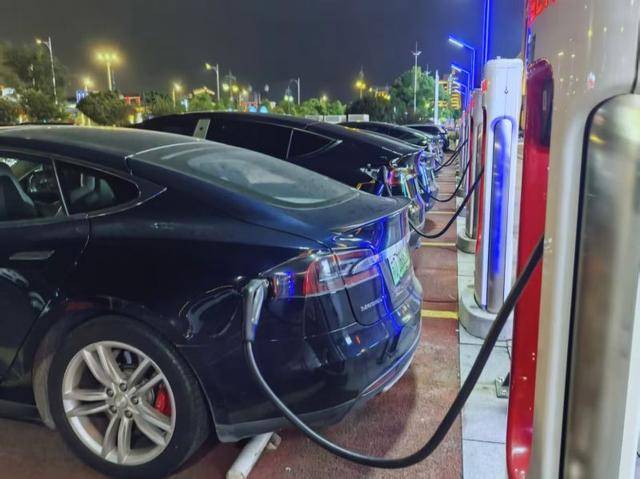
事关车辆购置税减免!三部门,重大调整
Zheng Quan Shi Bao· 2025-10-09 12:06
Core Points - The Ministry of Industry and Information Technology, the Ministry of Finance, and the State Taxation Administration announced adjustments to the technical requirements for new energy vehicles (NEVs) eligible for vehicle purchase tax exemptions for 2026-2027 [1][2] Group 1: Technical Requirements for Pure Electric Vehicles - The energy consumption limit for pure electric passenger vehicles should not exceed the specified limits in GB 36980.1-2025 [2] - For passenger vehicles with a maximum design total mass exceeding 3500 kg, the energy consumption limit will refer to the limits for vehicles with a maximum design total mass of 3500 kg in GB 36980.1-2025 [2] Group 2: Technical Requirements for Plug-in Hybrid Vehicles - Plug-in hybrid vehicles must have an equivalent all-electric range of no less than 100 km [3] - The fuel consumption limit for plug-in hybrid vehicles in electric mode must be less than 70% for vehicles with a curb weight below 2510 kg and less than 75% for those above [3] - The energy consumption limit in electric mode for plug-in hybrid vehicles must be less than 140% for vehicles below 2510 kg and less than 145% for those above [4] Group 3: Implementation Timeline and Directory - From January 1, 2026, vehicles listed in the "Directory of New Energy Vehicles Eligible for Vehicle Purchase Tax Exemption" must comply with the new technical requirements [5] - Vehicles that were already listed in the directory before December 31, 2025, and meet the new requirements will automatically transition to the first issue of the 2026 directory [4][5] - Vehicles that do not meet the requirements will be removed from the directory and can reapply for inclusion [4]
2026年买新能源车恢复征税
第一财经· 2025-09-11 06:53
Core Viewpoint - The article discusses the upcoming changes in China's vehicle purchase tax policy for new energy vehicles (NEVs), highlighting the end of tax exemptions in 2025 and the introduction of a reduced tax rate for 2026 and 2027 [3]. Tax Policy Changes - 2025 marks the last year for the exemption of vehicle purchase tax for NEVs, with the tax set to resume in 2026 at a reduced rate [3]. - From January 1, 2026, to December 31, 2027, NEVs will be subject to a 50% reduction in vehicle purchase tax, with a maximum tax reduction of 15,000 yuan per vehicle [3][4]. - The current vehicle purchase tax rate is 10%, meaning the effective rate for NEVs will be 5% during this period [3]. Tax Calculation Details - The tax is calculated based on the total price paid by the buyer (excluding VAT), with the maximum tax reduction applicable to vehicles priced at 300,000 yuan or below [4]. - For vehicles priced above 300,000 yuan, the tax will be calculated at 10% of the total price minus the maximum reduction of 15,000 yuan [4]. - An example provided indicates that a 500,000 yuan NEV would incur a tax of 35,000 yuan after applying the reduction [4]. Market Context - The policy aims to prevent high-end luxury NEVs from disproportionately benefiting from tax incentives, as some models exceed 1 million yuan [4]. - The article notes that the NEV market in China has significantly diversified, necessitating a fair distribution of tax benefits [4]. Industry Performance - Data from the China Association of Automobile Manufacturers indicates that from January to July this year, total vehicle production and sales reached 18.235 million and 18.269 million units, respectively, marking year-on-year growth of 12.7% and 12% [5]. - NEV production and sales during the same period reached 8.232 million and 8.22 million units, with year-on-year growth of 39.2% and 38.5%, respectively, accounting for 45% of total new vehicle sales [5].

电子税务局丨如何删除办税人员?
蓝色柳林财税室· 2025-08-31 03:13
Group 1 - The article provides a step-by-step guide on how to delete tax personnel information from the electronic tax bureau, emphasizing the importance of timely updates after personnel changes [2][4][10] - Users can log in as the legal representative or financial responsible person to access the account center and manage personnel permissions [2][4] - The process includes navigating to the existing tax personnel section and selecting the delete option for the personnel to be removed [4][6] Group 2 - The article highlights that if a company fails to delete tax personnel information promptly after their departure, individuals can apply online to解除相关人员关联关系 [10][13] - It also mentions the availability of various guides related to tax services and personnel management within the electronic tax bureau [12][29]