新能源购置税补贴退坡

Search documents
主机厂原材料涨价后续影响分析
Zhong Guo Neng Yuan Wang· 2026-02-03 01:55
Core Viewpoint - The automotive industry has experienced significant price increases in raw materials since 2020, primarily driven by two distinct phases of price surges, with lithium carbonate leading the increases [1][2]. Group 1: Price Trends - The first phase of price increases occurred from Q3 2020 to Q1 2022, where the average price of battery-grade lithium carbonate rose from 40,000 yuan/ton in Q3 2020 to 550,000 yuan/ton by Q4 2022 [1][2]. - The second phase began in Q4 2025, with notable increases in prices for lithium carbonate, lithium hexafluorophosphate, copper, and aluminum, with price increases of 187% for lithium carbonate and 180% for lithium hexafluorophosphate compared to their lowest values in 2025 [2]. Group 2: Impact on Stakeholders - The price increases have been shared among upstream component suppliers, manufacturers, and consumers, with component suppliers experiencing a decline in gross margins from 19.3% in Q3 2020 to 15.3% in Q4 2021 [3]. - Vehicle manufacturers also faced margin pressures, with gross margins for passenger vehicles dropping from 12.7% in Q4 2020 to 8.8% in Q4 2021 [3]. - Consumers have seen price increases for electric vehicles, with companies like BYD raising prices by 1,000 to 7,000 yuan due to rising raw material costs and subsidy reductions [3]. Group 3: Future Outlook - The automotive industry is expected to manage raw material cost increases through moderate price hikes or product enhancements, rather than significant price increases, to avoid negatively impacting sales [4]. - The penetration rate of new energy vehicles is projected to reach 54% by 2025, which may influence pricing strategies as manufacturers navigate subsidy reductions and rising costs [4]. - The domestic passenger car market may face challenges due to raw material price increases, but high-end manufacturers are expected to maintain profitability, while exports of new energy vehicles are anticipated to grow [5].
中国汽车流通协会:预计12月份全月乘用车终端销量235万辆左右
智通财经网· 2025-12-18 09:35
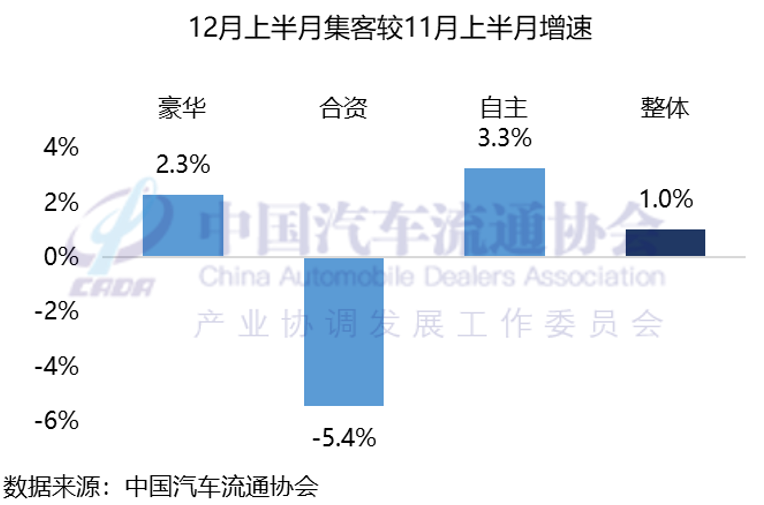
Core Viewpoint - The Chinese automotive market is expected to see a moderate recovery in December, driven by year-end promotions and the release of pre-holiday purchasing demand, although significant "tail-end" effects are not anticipated due to various factors [1][2][3]. Group 1: Market Performance and Projections - December's terminal sales volume for passenger cars is projected to be around 2.35 million units, reflecting a stable year-on-year performance [2]. - The overall retail volume for passenger cars in 2025 is expected to reach 23.55 million units, remaining flat compared to 2024 [2]. - The end of the new energy vehicle purchase tax exemption policy is anticipated to create a temporary sales peak in late December, but the overall market is unlikely to experience a significant "tail-end" effect [2][3]. Group 2: Consumer Behavior and Policy Impact - The "National Subsidy" policy has significantly boosted automotive consumption, with over 11.2 million vehicles replaced under the trade-in program, accounting for more than half of the total retail volume this year [3]. - Consumer sentiment is currently cautious, with many holding off on purchases due to tightening trade-in subsidy policies and the impending reduction of the new energy vehicle purchase tax exemption [2][3]. - Various local governments have introduced diverse purchase subsidy policies to stimulate demand, which may accelerate purchasing decisions, especially among first-time buyers [8][12]. Group 3: Sales and Inventory Trends - In the first half of December, sales increased by 1.5% compared to the same period in November, although there was a significant decline of 23.7% compared to the second half of November [12]. - Inventory levels decreased by 10.9% in the first half of December compared to the end of November, indicating a faster sales pace as dealers respond to year-end pressures [16].