新自由主义改革

Search documents
石油巨头裹足不前的心理阴影:委内瑞拉与美国的百年石油恩怨
Xin Lang Cai Jing· 2026-01-11 02:46
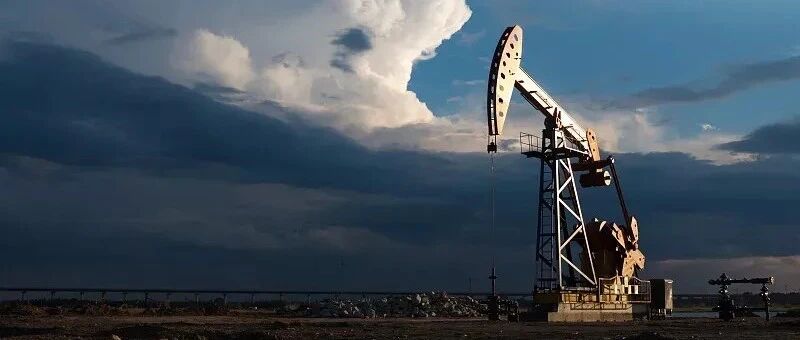
Group 1 - The U.S. military action against Venezuela has prompted President Trump to announce that major U.S. oil companies will invest billions to repair the country's damaged oil infrastructure and generate profits for the U.S. [1] - Trump held a meeting with executives from U.S. oil giants, urging them to invest in Venezuela and promising full security guarantees, although executives expressed caution regarding the investment [1][6] - The historical relationship between U.S. oil companies and Venezuela has been complex, with U.S. firms initially dominating the industry before nationalization efforts in the 1970s and subsequent re-engagement in the late 1990s [2][3] Group 2 - The political landscape in Venezuela has shifted significantly since the rise of Hugo Chávez, who restructured the oil industry to increase state control and revenue distribution, leading to disputes with foreign companies [3][4] - Trump's strategy appears to be a response to domestic pressures, aiming to lower oil prices and assert U.S. energy dominance in the Western Hemisphere, while also countering the influence of countries like Russia and China [4][5] - The U.S. has reached an agreement with Venezuela's transitional government for the supply of 50 million barrels of oil, which will be sold by the U.S. and the proceeds managed by the U.S. [5] Group 3 - U.S. oil companies have shown a lukewarm response to Trump's proposed investment plan, as the potential returns from Venezuela are not significant enough to alter their overall business outlook [6][7] - Companies like ExxonMobil and ConocoPhillips remain cautious due to past experiences with nationalization and the current unstable political environment, preferring to wait for clearer investment guarantees [6][7] - Chevron, while maintaining a presence in Venezuela, is also hesitant to expand operations without assurances regarding safety and financial conditions [7]


透视委内瑞拉:历史、资源与转型 | 高毅读书会
高毅资产管理· 2026-01-09 07:03
Core Viewpoint - The article discusses the complex historical and political dynamics of Venezuela, particularly focusing on how its vast oil resources have shaped its state formation and governance, leading to both opportunities and challenges for the nation [2][4][22]. Group 1: Historical Context of State Formation - Latin American countries, including Venezuela, primarily experienced state formation through trade rather than military conflict, leading to a focus on creating favorable commercial environments for international trade [2][3]. - Venezuela's state formation was significantly influenced by compromises between the central government and local caudillos, resulting in a weak central authority and persistent local power [3][4]. Group 2: Oil Wealth and Economic Transformation - The transition of Venezuela from a debt-ridden agricultural nation to a wealthy oil-exporting country in the early 20th century was marked by significant economic growth and changes in social structure [4][5]. - Oil revenues created a strong central government capable of suppressing local elites, but also led to a dependency that weakened other economic sectors and governance capabilities [5][10]. Group 3: Political Dynamics and Governance - The oil wealth facilitated the establishment of a democratic system in Venezuela, where the distribution of oil revenues became a key factor in political legitimacy and social stability [8][18]. - However, the reliance on oil revenues resulted in a lack of diversification in the economy and governance, leading to inefficiencies and corruption within the political system [11][17]. Group 4: Economic Crises and Reform Challenges - Venezuela's economy faced severe crises in the 1980s, marked by a failure to implement coherent economic reforms, leading to social unrest and political instability [19][24]. - The government's inability to adapt to changing economic conditions and the reliance on oil revenues hindered effective policy responses, resulting in a cycle of economic tightening and loosening without substantial progress [24][25]. Group 5: The Concept of "Weak States" - Venezuela exemplifies the concept of "weak states," where the government struggles to provide public goods and maintain effective governance due to historical legacies and economic dependencies [29][30]. - The article emphasizes the need for Venezuela to explore pathways for economic diversification and stronger state capacity to overcome its historical challenges and achieve sustainable development [29][30].

找不到稳定工作不是你的错
Hu Xiu· 2025-10-10 07:20
Core Points - The article discusses the rise of non-regular employment in Japan, particularly focusing on the "lost generation" who entered the job market during the economic downturn of the late 1990s and early 2000s, leading to a significant increase in non-regular workers from 8.81 million in 1990 to over 20 million by 2016 [2][4] - It highlights the systemic issues that have led to this phenomenon, including government policies favoring flexible employment and the impact of neoliberal reforms on job security and income inequality [4][6] Group 1: Employment Trends - The increase in non-regular employees began in the mid-1990s, with many graduates unable to find stable jobs, leading to a significant portion of the workforce remaining in non-regular positions well into their 40s [1][2] - The proportion of non-regular employees who are "involuntary" is notably high, with 70.7% of men and 57.6% of women in non-regular positions not choosing this path voluntarily [2][3] - The "lost generation" faces stark disparities in marriage rates compared to regular employees, with only 24.4% of non-regular male employees married by age 30-39, compared to 69.3% of regular employees [2] Group 2: Socioeconomic Implications - The article points out that the rise of non-regular employment has contributed to the creation of a "lower class" in Japan, characterized by low education and income levels, with a significant number of single women and single mothers [3][4] - The neoliberal reforms initiated in the 1980s have led to a labor market that favors low-cost, flexible employment, exacerbating the issues faced by the lost generation [4][5] - The widening income gap and the perception of poverty as a personal failure are prevalent, with a significant portion of the lower class internalizing the belief that their economic struggles are due to a lack of effort rather than systemic issues [12][13] Group 3: Political and Economic Context - The article discusses how political decisions, particularly tax reforms favoring corporations and the wealthy, have contributed to the growing income inequality and the challenges faced by the lower class [6][12] - It emphasizes the low political engagement of the lost generation, which is paradoxical given their direct experience with the consequences of neoliberal policies [8][9] - The concept of "parental gacha" reflects the deterministic view of socioeconomic mobility in Japan, where individuals feel their fortunes are largely dictated by their family background [10][11]