
无人智能技术

Search documents
美记者:在中国农村,看到无人驾驶卡车给牛让路…
Xin Lang Cai Jing· 2025-12-19 11:15
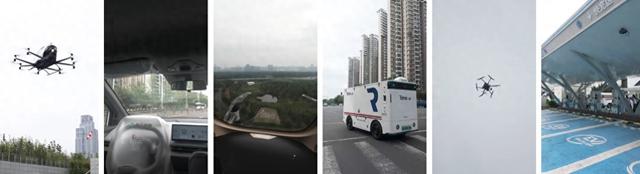
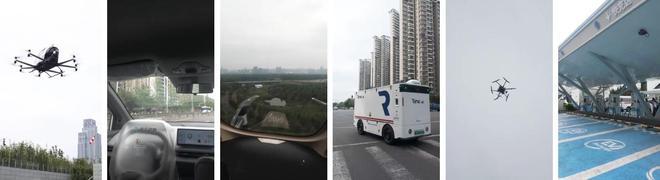
Core Insights - China is making significant advancements in autonomous technologies, including self-driving delivery vehicles, flying cars, and battery-swapping robots, which are being rapidly deployed in urban settings [1][2][3] Group 1: Autonomous Vehicles and Delivery Systems - The city of Hefei is leading in low-altitude economy and electric vertical takeoff and landing (eVTOL) aircraft, with its "air taxi" service transitioning from testing to commercial operation [3] - Autonomous delivery vehicles are increasingly replacing human drivers in the "last mile" delivery segment, with small self-driving trucks capable of carrying 300 to 500 packages [9][11] - The deployment of autonomous delivery systems is not limited to urban areas; these technologies are also being utilized in rural regions, as evidenced by the experience of a self-driving truck yielding to water buffalo [1][9] Group 2: Electric Vehicles and Charging Infrastructure - China has established 18.6 million public charging stations, effectively addressing range anxiety for electric vehicle users, even in remote areas [5][6] - New electric vehicle models can achieve a fast charge in just five minutes, showcasing advanced technology comparable to mobile smartphones [5] - Automated battery-swapping stations are common, allowing for battery replacement in just three minutes, enhancing the convenience of electric vehicle usage [6][12] Group 3: Drone Delivery and Urban Logistics - Drone delivery services are being utilized for various applications, including the rapid transport of medical supplies and food, demonstrating their potential to improve urban logistics [9][12] - The integration of drones into everyday life is seen as a significant advancement in addressing delivery delays caused by ground traffic congestion [9] Group 4: Broader Technological Integration - The rapid testing and implementation of various technologies, such as autonomous buses and hydrogen fuel cell vehicles, reflect China's commitment to technological innovation in public transport [12] - The use of unmanned systems in public services, such as automated vending machines, indicates a willingness to push the boundaries of transportation technology [12] - China's approach contrasts with the more cautious stance of Western countries, emphasizing a strong desire to lead in clean energy technologies and their global market deployment [12]

美记者:在中国农村,我看到震撼一幕
Guan Cha Zhe Wang· 2025-12-19 10:57
Core Insights - China is making significant advancements in autonomous technologies, including self-driving delivery vehicles, flying cars, and battery-swapping robots, which are being rapidly deployed in urban settings [1][12] - The city of Hefei is at the forefront of low-altitude economy and electric vertical takeoff and landing (eVTOL) aircraft, transitioning from testing to commercial operations [3][12] - The integration of advanced technologies into daily life in China is creating a competitive edge in future transportation and urban management [1][12] Autonomous Vehicles and Delivery Systems - Hefei has implemented small autonomous delivery vehicles capable of carrying 300 to 500 packages, which navigate complex urban traffic using advanced sensors and software [9] - The use of autonomous delivery vehicles is expanding into rural areas, demonstrating their versatility and adaptability in various environments [9] - The city has also introduced drone delivery services for urgent medical supplies, showcasing the technology's potential to enhance public welfare [9] Electric Vehicles and Charging Infrastructure - China has established 18.6 million public charging stations, effectively addressing range anxiety for electric vehicle users [5] - New electric vehicle models can achieve a fast charge in just 5 minutes, reflecting the advanced technology in Chinese electric cars [5] - Automated battery-swapping stations are becoming common, allowing for battery replacements in just three minutes, further enhancing the convenience of electric vehicle usage [6] Urban Transportation Innovations - Hefei's "air taxis" are now in commercial operation, with a flight duration of up to 25 minutes and a speed of approximately 128.75 km/h [3] - The integration of autonomous driving technology in public transportation, including subways and buses, is being actively tested across various cities in China [12] - High-speed rail services are also incorporating innovative features, such as in-seat ordering for food and beverages, enhancing passenger experience [12] Overall Technological Landscape - The rapid deployment of various autonomous technologies in China reflects a strong commitment to innovation and practical application, contrasting with the more cautious approach seen in many Western countries [12] - The ongoing real-world testing of these technologies in cities like Hefei is generating valuable operational experience, which is crucial for future improvements and scalability [12] - China's ambition extends beyond domestic applications, aiming to lead in clean energy technologies and expand their market presence globally [12]
天海防务:11月13日召开业绩说明会,投资者参与
Sou Hu Cai Jing· 2025-11-13 11:37
Core Viewpoint - Tianhai Defense (300008) announced an earnings briefing on November 13, 2025, to discuss its financial performance and future plans [1]. Financial Performance - For the first three quarters of 2025, the company reported revenue of 3.148 billion yuan, a year-on-year increase of 34.5%, and a net profit attributable to shareholders of 231.59 million yuan, up 202.12% [11][14]. - In Q3 2025 alone, the company achieved a revenue of 1.305 billion yuan, representing a 57.27% increase year-on-year, and a net profit of 106 million yuan, which is a staggering increase of 566.25% [14]. Business Development - The company is focusing on three main business segments: marine engineering, defense equipment, and new energy, with an emphasis on R&D and innovation [12]. - The new energy business is concentrating on the application and promotion of LNG, methanol, and electric power in the shipping sector, with ongoing development of inland new energy vessels [6][12]. Financing and Debt Management - The company has secured a comprehensive credit line of up to 2.5 billion yuan, primarily for daily operations, with an additional 1 billion yuan for project guarantees [2]. - As of Q3 2025, the company's debt ratio was 57.26%, slightly higher than the previous year's 51.18%, but the interest coverage ratio improved to 8.87 from 5.7 [7][14]. Legal Matters - Ongoing litigation involving a subsidiary, Jinhaiyun, has been noted, but it is stated that these issues do not directly impact the company's unmanned vessel business [4]. - Recent legal developments include a favorable ruling for the company in a compensation case against Li Lu, with further litigation still pending [8]. Market Strategy - The company is expanding its market presence in Europe while also focusing on domestic opportunities in the new energy sector [6][8]. - To mitigate risks from fluctuating international conditions and raw material prices, the company is enhancing its market diversification and operational efficiency [8]. Future Outlook - The company aims to become a leading provider of high-value special vessels and marine engineering equipment, with a commitment to smart and green development [12]. - Plans for future financing will be aligned with business growth and funding needs, with a potential restart of refinancing efforts [8].


铭记历史 缅怀先烈|不同的青春 相同的样子——走进夜袭阳明堡“战斗模范连”
Xin Hua She· 2025-08-07 13:48
Core Viewpoint - The article highlights the historical significance and transformation of the 4th Company of the 73rd Group Army, emphasizing its legacy of bravery and adaptation to modern warfare technologies. Group 1: Historical Significance - The Yanging Fortress Airport, once a military site, is now farmland, symbolizing the passage of time and change in the region [1] - The 4th Company has a rich history, having participated in over a hundred battles since its establishment in 1927, with many of its leaders sacrificing their lives for the cause [4][5] - The night raid on Yanging Fortress in 1937 marked a significant victory for the 129th Division, destroying 24 enemy aircraft and earning the 769th Regiment the title of "Model Combat Company" [3][5] Group 2: Modern Transformation - In 2017, the 4th Company transitioned from a traditional infantry unit to an armored infantry unit, facing challenges such as lack of personnel and training materials [7][8] - The company has successfully adapted to modern warfare by quantifying nearly a thousand capability indicators, achieving a 100% pass rate in combat shooting assessments shortly after receiving new equipment [9] - The integration of unmanned aerial vehicles (UAVs) into their operations has been a key focus, with the company conducting practical exercises that demonstrate their effectiveness in modern combat scenarios [10][11] Group 3: Future Aspirations - The 4th Company is committed to continuous improvement and innovation, establishing specialized groups to explore the integration of intelligent technologies and UAVs into their training and operations [11] - The company aims to ensure that every soldier can operate UAVs and that there are maintenance experts within the unit, reflecting a forward-looking approach to warfare [11][12] - The message from a 97-year-old veteran emphasizes the importance of maintaining traditions while advancing towards future challenges [12]