
无人驾驶物流

Search documents
出征CES 2026:无人物流车爆发来到临界点?
Guan Cha Zhe Wang· 2026-01-08 03:12
Core Insights - The article highlights the rapid development of AI technology and China's manufacturing capabilities, showcasing the emergence of new products and brands at CES 2026, particularly focusing on Neolix's advancements in autonomous logistics vehicles [1][11]. Group 1: Neolix's Innovations - Neolix debuted its AI-driven next-generation autonomous logistics solutions at CES 2026, featuring a full range of RoboVan products with cargo capacities from 0.5 to 12 cubic meters, marking a significant milestone in the global smart logistics industry [1]. - The company’s founder and CEO, Yu Enyuan, emphasized that the autonomous logistics sector is transitioning from pilot projects to large-scale commercial deployment, with 2025 being a pivotal year for achieving significant operational milestones [1]. Group 2: Technological Advancements - Neolix's next-generation logistics solution employs a dual-engine architecture designed to optimize large-scale autonomous vehicle fleets, including a global intelligent scheduling system capable of supporting over 100,000 L4 autonomous vehicles, improving fleet efficiency by 30% [3]. - The company has developed a commercial L4 autonomous driving technology that does not rely on high-precision maps, significantly reducing deployment costs and enhancing adaptability in complex urban environments [3]. Group 3: Commercial Deployment and Market Expansion - Neolix has deployed over 16,000 L4 autonomous vehicles, accumulating nearly 80 million kilometers in total driving distance, with operations in Qingdao representing the largest and densest autonomous vehicle fleet globally [5]. - The company plans to establish offices in key regions such as Europe, America, Australia, and Southeast Asia, aiming to deliver over 50,000 autonomous vehicles overseas by 2027 [6]. Group 4: Industry Growth and Market Potential - The autonomous logistics vehicle industry is expected to see significant growth, with an estimated shipment of 150,000 units in 2026 and a potential market size exceeding 100 billion yuan by 2030 [7][9]. - The market for autonomous delivery vehicles is projected to exceed 1.12 trillion yuan when the penetration rate in the express delivery sector reaches 50% [9]. Group 5: Policy and Demand Drivers - National policies are evolving to support a comprehensive ecosystem for autonomous vehicles, while increasing demand for centralized logistics and high-frequency delivery scenarios provides a fertile ground for the growth of autonomous delivery solutions [10]. - The advancements in autonomous driving technology and cost optimization are leading to a shift from technical demonstrations to large-scale commercial applications, potentially reshaping urban logistics systems [10].


CES 2026:新石器无人车首秀 发布下一代无人驾驶物流解决方案
Huan Qiu Wang· 2026-01-07 08:48
Core Insights - Neolix officially launched its AI-driven next-generation autonomous logistics solutions at CES 2026, showcasing a complete RoboVan product matrix designed to address the "last 100 meters" delivery challenge [1][3] - The new Neolix X1 focuses on refined end-point delivery, capable of navigating both indoor and outdoor environments, including sidewalks and elevators, forming a comprehensive unmanned delivery chain from regional transfer to doorstep delivery [1][3] Company Developments - Neolix's founder and CEO, Yu Enyuan, stated that autonomous logistics is at a critical turning point, transitioning from pilot exploration to large-scale commercial deployment, with 2025 marking a milestone year for the company [3] - The next-generation solution features a "dual-engine architecture," which includes a global intelligent scheduling system supporting over 100,000 L4 autonomous vehicles, reportedly improving fleet efficiency by 30% [3] - Neolix has deployed over 16,000 L4 autonomous vehicles, accumulating nearly 80 million kilometers in total driving distance, with business applications expanding beyond express delivery to include fresh produce, supermarkets, and warehousing logistics [3] Global Expansion - Neolix accelerated its globalization efforts, having obtained local unmanned delivery vehicle licenses in the UAE in 2025 and forming strategic partnerships with companies in Japan, South Korea, and Europe [4] - The company aims to expedite overseas expansion in 2026, targeting the delivery of over 50,000 unmanned vehicles internationally by 2027 [4] - Industry observations indicate that as autonomous driving technology matures and costs optimize, solutions like those from Neolix are transitioning from technical demonstrations to large-scale commercial applications, potentially reshaping urban logistics systems [4]
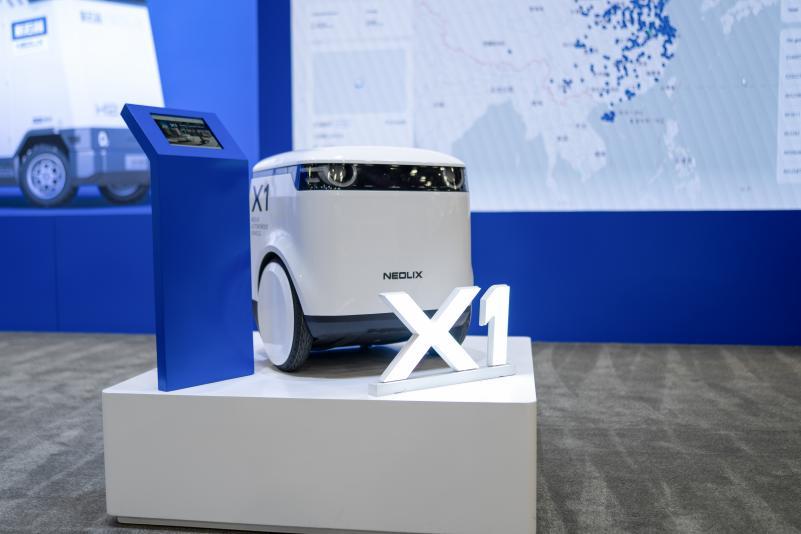
新石器无人车亮相CES 2026:累计部署超过16000台L4级无人车
Xin Hua Cai Jing· 2026-01-07 08:11
Core Insights - Neolix, a global leader in autonomous delivery, unveiled its AI-driven next-generation logistics solution at CES 2026, showcasing its complete RoboVan product lineup [1] - The launch of Neolix X1 addresses the "last 100 meters" delivery challenge, with a cargo space range from 0.5 to 12 cubic meters, catering to diverse urban logistics needs [1][2] - Neolix's CEO highlighted a pivotal shift in autonomous logistics from pilot phases to large-scale commercial deployment, aiming for significant global market expansion by 2025 [1] Technology Advancements - The new logistics solution integrates two core technological breakthroughs: a comprehensive intelligent scheduling system that enhances fleet efficiency by 30% and a map-free L4 autonomous driving capability that enables centimeter-level positioning [2] - Neolix X1 is designed for seamless indoor and outdoor navigation, capable of autonomously accessing sidewalks, office lobbies, and elevators, thus completing the delivery chain [2] Market Expansion - Neolix has rapidly diversified its logistics applications beyond express delivery, with non-express scenarios now accounting for over 50% of total sales [3] - The company is accelerating its global expansion, having become the first RoboVan company to obtain a delivery vehicle license in the UAE and making significant progress in Japan and South Korea [3] - Plans for 2026 include establishing offices in key regions worldwide, with a target of delivering over 50,000 autonomous vehicles overseas by 2027 [3]
新石器无人车亮相CES 2026:全球首发下一代无人驾驶物流解决方案
Jin Rong Jie· 2026-01-07 07:10
Core Insights - Neolix, a leading global player in autonomous delivery, unveiled its AI-driven next-generation logistics solutions at CES 2026, showcasing the RoboVan product matrix designed to address the "last 100 meters" of delivery [1][4]. Product Development - The newly launched Neolix X1 is part of a comprehensive RoboVan family, with cargo space ranging from 0.5 to 12 cubic meters, tailored to meet diverse urban logistics needs [1]. - The next-generation logistics solution features a dual-engine architecture optimized for large-scale autonomous vehicle fleets, integrating a comprehensive intelligent scheduling system that automates the entire logistics lifecycle [4][6]. Technological Advancements - Neolix has commercialized L4-level autonomous driving without relying on high-definition maps, achieving centimeter-level positioning through advanced perception technology and AI decision-making [6]. - The X1 is designed for seamless indoor and outdoor navigation, capable of autonomously accessing sidewalks, office lobbies, and elevators, thus completing the delivery chain from office buildings to communities [6]. Market Position and Expansion - Neolix has deployed over 16,000 L4 autonomous vehicles, accumulating nearly 80 million kilometers in total mileage, solidifying its leadership in the autonomous delivery sector [8]. - The company has expanded its service offerings beyond express delivery to include a variety of urban logistics scenarios, with non-express segments now accounting for over 50% of total sales [8]. Strategic Partnerships and Global Expansion - Neolix has accelerated its global expansion, becoming the first RoboVan company to obtain a delivery vehicle license in the UAE and forming strategic partnerships in Japan, South Korea, and Europe [10]. - The company aims to establish offices in key regions worldwide, targeting the delivery of over 50,000 autonomous vehicles overseas by 2027 [10].
中通快递20250820
2025-08-20 14:49
Summary of ZTO Express Conference Call Company Overview - **Company**: ZTO Express (中通快递) - **Period**: Q2 2025 Key Industry Insights - The express delivery industry experienced a **17.3% year-over-year growth** in Q2 2025, indicating robust market dynamics [2][3]. - ZTO's parcel volume grew by **16.5%**, reaching **9.85 billion parcels**, slightly below the industry average [2][3]. Financial Performance - ZTO's **adjusted net income** was **RMB 2.05 billion**, reflecting a **26.8% decrease** due to intense market competition and price declines [2][14]. - **Total revenue** increased by **10.3%** to **RMB 11.8 billion**, driven by volume growth despite a **4.7% decline** in average selling price (ASP) [14]. - **Total cost of revenue** rose to **RMB 8.9 billion**, marking a **25.1% increase** from the previous year [14]. - **Gross profit** decreased by **18.7%**, with a gross margin drop of **8.9 points** to **24.9%** [14][15]. Operational Strategies - ZTO focused on **optimizing volume structure**, which contributed **RMB 0.17** in revenue and **RMB 0.02** in gross profit per unit for the core express delivery business [2][6]. - **Digitization and intelligent operations** led to a **RMB 0.07** per unit cost reduction in transportation and sortation [2][7]. - The company is enhancing its competitive edge through: 1. Optimizing network policies and costs [8][11]. 2. Deploying automation in sorting and transportation [8]. 3. Engaging with scattered parcel customers to increase revenue [8]. 4. Strengthening digital operations for efficient resource allocation [8]. Market Trends - A shift towards **light and small parcels** was noted, with more merchants opting for economical delivery services [4]. - ZTO's retail parcel volume grew over **50% year-over-year**, now accounting for over **8%** of total volume [5]. Future Outlook - ZTO revised its annual guidance for parcel volume growth to **14% to 18%**, lower than initial expectations [15]. - The company anticipates that **pricing dynamics** and **macroeconomic uncertainties** will impact future growth [15]. - ZTO remains confident in the long-term growth prospects of China's logistics industry, emphasizing the importance of **digitalization** and **intelligent operations** [9][13]. Technological Advancements - ZTO has integrated **AI tools** across various business segments, enhancing operational efficiency and service quality [16][19]. - The implementation of a **3D digital twin model** at central hubs has reduced management personnel by one-third and decreased error rates by over **60%** [17][18]. Pricing and Competition - Recent price adjustments in the industry are viewed as a **rational return** to sustainable pricing, with the lowest price in Guangdong now at **RMB 1.40** per unit [22][32]. - The company expects a more stable pricing environment moving forward, driven by rational market behavior [23][29]. Shareholder Returns - ZTO plans to maintain robust shareholder returns, considering both dividends and share repurchases [26][28]. Conclusion - ZTO Express is navigating a competitive landscape with a focus on operational efficiency, technological integration, and strategic pricing adjustments to ensure sustainable growth and shareholder value amidst evolving market conditions [10][34].
2025年中国无人驾驶物流车产业最具潜力企业:新石器、白犀牛、行深智能、九识智能、行深智能、小马智行
Qian Zhan Wang· 2025-07-21 01:51
Core Insights - The logistics industry is facing unprecedented efficiency anxiety and cost challenges due to a 20% annual increase in e-commerce order volume and an 8% annual rise in labor costs. Autonomous delivery vehicles are emerging as a significant force driving industry transformation [2] Group 1: Industry Trends - The labor shortage crisis is particularly pronounced in the logistics sector, with the State Post Bureau reporting that daily express delivery volume is expected to exceed 500 million pieces by 2024, while the number of frontline workers has decreased by 12% compared to three years ago [2] - Autonomous delivery vehicles can operate 24/7, demonstrating remarkable efficiency in last-mile delivery. For instance, JD Logistics' pilot in Xiong'an New Area shows that autonomous delivery vehicles can handle three times the order volume of traditional methods, with delivery costs per order reduced by 45% [2] - Policy support is accelerating the implementation of technology, with the release of guidelines in late 2024 that include autonomous driving in pilot applications for intelligent transportation [2] Group 2: Industry Structure - The autonomous delivery vehicle industry chain is complex and highly integrated, consisting of upstream core technologies and components, midstream vehicle manufacturing and system integration, and downstream application scenarios and operational services [5] - Upstream components include perception layers (e.g., LiDAR, cameras), decision layers (e.g., AI chips), and execution layers (e.g., control chassis) [5] - Midstream development features both traditional automakers and tech companies pursuing two technological paths: incremental (led by automakers) and leapfrog (direct development by tech firms) [5] Group 3: Key Players - Notable companies in the autonomous delivery vehicle sector include: - **Xinshiqi**: Founded in 2018, it has raised over 2 billion RMB and is a leading player in the autonomous delivery vehicle market, with a production capacity of 10,000 vehicles per year [9][10] - **Bai Xiniu**: Established in 2019, it focuses on L4-level autonomous driving technology and has secured 200 million RMB in funding for product development and market expansion [11][13] - **Yika Zhiche**: Founded in 2017, it specializes in L4-level autonomous driving chassis technology and has raised over 500 million RMB for production capacity expansion [14][15] - **Jiushi Intelligent**: Established in 2021, it has delivered over 3,000 autonomous vehicles and has a market share exceeding 90% in vehicle sales [16][17] - **Xing Shen Intelligent**: Founded in 2017, it has developed multiple series of autonomous vehicles and has established partnerships with major companies like JD and Meituan [18][19] - **Pony.ai**: Founded in 2016, it has raised over 1.2 billion USD and is a global leader in autonomous driving technology, with significant advancements in commercial operations [22][23] Group 4: Market Dynamics - The autonomous delivery vehicle industry is experiencing a price war, with prices dropping from over 1 million RMB to around 19,800 RMB due to scale expansion and accelerated technological iteration [28] - The industry is projected to see a significant increase in value, with an estimated growth of 594.8 billion RMB by 2030 [28][30] - The cost of autonomous delivery vehicles is expected to align with that of conventional electric vehicles by 2024, indicating readiness for large-scale application [30]
无人驾驶深度之一:无人物流专题:万事具备,爆发元年
Soochow Securities· 2025-06-10 15:14
Investment Rating - The report indicates a strong investment outlook for the unmanned logistics industry, highlighting a significant growth potential in the coming years [4]. Core Insights - The unmanned logistics sector is poised for explosive growth in 2025, driven by favorable policies, technological advancements, and economic viability. The market is expected to see sales surpassing 30,000 units in 2025, with a penetration rate exceeding 1.2% [4][41]. - The industry is characterized by a dual revenue model of vehicle sales and operational services, with a projected market size of 245 billion yuan for vehicle sales and 413.4 billion yuan for operational services by 2030 [4]. - Key players in the market include Jiushi and New Stone, which together hold over 80% market share and are expanding their operations both domestically and internationally [4]. Summary by Sections Part 1: Market Readiness - The unmanned logistics market is ready for a breakthrough, with applications primarily in short-distance transportation (3-100 km) within urban areas, potentially replacing 2.1 million light commercial vehicles [4]. - The report emphasizes that the combination of policy support, mature L4 autonomous driving technology, and reduced costs makes 2025 a pivotal year for sales growth [4]. Part 2: Focus on Unmanned Logistics Companies - The operational profit margins for unmanned logistics companies are substantial, with a projected sales volume of over 30,000 units in 2025 and a growth rate of 207% expected in 2026 [4]. - The report identifies Jiushi and New Stone as industry leaders, with Jiushi's new model priced at 19,800 yuan, significantly disrupting the market [4]. Part 3: Mainstream Companies Driving Growth - The report highlights the strong momentum of mainstream companies that are leveraging both vehicle sales and operational services to drive growth [4]. - Jiushi and New Stone are leading the charge, with extensive coverage across over 200 cities and plans for significant international expansion [4]. Part 4: Investment Recommendations - The report recommends focusing on unmanned logistics companies such as Wenyan Zhixing and Jinlong Automobile, as well as potential IPO candidates like Jiushi and New Stone [4]. - Additionally, it suggests looking into companies benefiting from autonomous driving technologies, including Sutech, Hesai Technology, and Desay SV [4].