
日本军事化

Search documents
有理儿有面:日本彻底失控
Xin Lang Cai Jing· 2026-02-10 08:46
Core Viewpoint - Japan's political landscape is experiencing a significant shift towards the right, with the ruling Liberal Democratic Party (LDP) gaining overwhelming control, leading to concerns about the loss of democratic checks and balances [1] Group 1: Political Dynamics - The current political situation in Japan is likened to a "car without brakes," indicating a lack of opposition and accountability in governance [1] - The LDP's acquisition of a two-thirds majority in the Senate allows it to bypass opposition and pass legislation unchallenged [1] - The traditional balance of power in Japanese politics, characterized by conservative dominance and moderate checks, has been fundamentally disrupted [1] Group 2: Military and Security Implications - The rise of militarization in Japan, driven by the LDP's policies, is expected to escalate regional security risks in Northeast Asia [1] - Under pressure from the United States, Japan is likely to significantly increase its defense budget and enhance its military capabilities, including the development of "counterattack capabilities" [1] - The concept of Japan's "defensive posture" is becoming increasingly obsolete, raising alarms among neighboring countries about a potential arms race in the region [1]
中国对日两用物项出口管制影响有多大
Guo Ji Jin Rong Bao· 2026-01-09 02:31
Core Viewpoint - The Chinese Ministry of Commerce announced strengthened export controls on dual-use items to Japan, prohibiting exports to military users and any entities that enhance Japan's military capabilities, in response to Japanese Prime Minister Fumio Kishida's controversial remarks regarding Taiwan [1][2][4]. Group 1: Export Control Measures - The export control measures encompass a wide range of dual-use items, including strategic minerals like rare earths, gallium, germanium, and indium, as well as chemicals, drones, sensors, and nuclear materials [3][6]. - Violations of these regulations will lead to legal consequences for organizations and individuals transferring or providing dual-use items from China to Japan [1]. Group 2: Economic Impact on Japan - The measures are expected to impact Japan's economy and industries, particularly in the automotive, semiconductor, and electronics sectors [2][5]. - Japan's dependency on China for critical strategic minerals is significant, with approximately 40% of gallium supplies coming from China, which is crucial for defense and high-tech industries [6][7]. Group 3: Military Implications - The export controls may constrain Japan's military equipment production capacity and development, particularly in high-end military equipment manufacturing and potential nuclear capabilities [7][8]. - Specific military applications, such as the lithium battery-driven motors in submarines and radar systems, rely on rare earth materials that may be affected by these controls [8]. Group 4: Future Considerations - In the long term, Japan may seek to diversify its supply chains and reduce reliance on single sources, which could lead to significant shifts in procurement strategies in both civilian and military sectors [8].
拉夫罗夫警告日本
中国能源报· 2025-12-28 05:48
Group 1 - The core viewpoint of the article emphasizes Russia's firm stance on Taiwan, asserting that Taiwan is an inseparable part of China and opposing any form of Taiwanese independence [2][3] - Russian Foreign Minister Lavrov warns Japan about its accelerated militarization, suggesting that Tokyo should carefully consider any rash decisions that could impact regional stability [3] - Lavrov calls for Japan to fully acknowledge the outcomes of World War II, including the implications of the Japanese surrender, and stresses the importance of recognizing the responsibilities Japan holds due to its wartime actions [3]

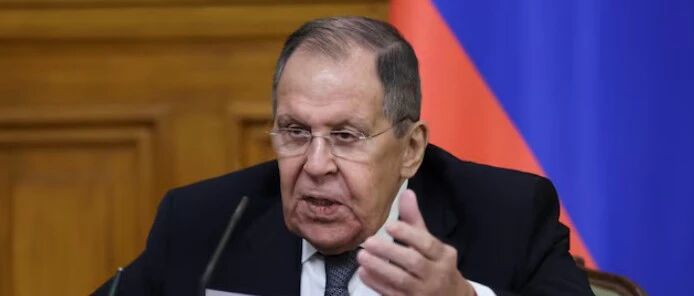
俄外长拉夫罗夫:台湾是中国不可分割的一部分,反对任何形式“台独”
Xin Lang Cai Jing· 2025-12-28 03:56
Group 1 - Russia's Foreign Minister Lavrov clearly stated that Russia opposes any form of "Taiwan independence" and recognizes Taiwan as an inseparable part of China [1][2] - Lavrov emphasized that the Taiwan issue is an internal matter for China, asserting that Beijing has sufficient legal grounds to defend its national sovereignty and territorial integrity [2] - Lavrov also commented on Japan's accelerating militarization, advising Tokyo to carefully consider any hasty decisions that could negatively impact regional stability [2] Group 2 - Lavrov urged Japanese authorities to fully acknowledge the outcomes of World War II, including the Japanese surrender document, as integral to the post-war world order [2] - He called for Japan to recognize the legal consequences of the anti-fascist allies' victory and the responsibilities Japan bears for initiating the war [2] - Russia will continue to collaborate with like-minded entities to reveal new evidence regarding Japan's wartime crimes from the 1930s and 1940s [2]
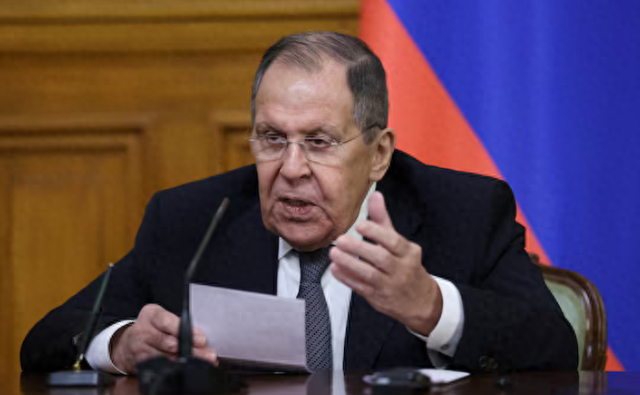
俄外长拉夫罗夫:反对任何形式的“台独”
Xin Lang Cai Jing· 2025-12-28 03:55
Group 1 - Russia's Foreign Minister Lavrov stated that Russia opposes any form of "Taiwan independence" and recognizes Taiwan as an inseparable part of China [1][2] - Lavrov emphasized that the Taiwan issue is an internal matter for China, asserting that Beijing has sufficient legal basis to defend its national sovereignty and territorial integrity [2] - Lavrov also commented on Japan's accelerating militarization, advising Tokyo to carefully consider any rash decisions that could negatively impact regional stability [2] Group 2 - Lavrov urged Japanese authorities to fully acknowledge the outcomes of World War II, including the Japanese surrender document, as integral to the post-war world order [2] - He called for Japan to recognize the legal consequences of the anti-fascist alliance's victory and the responsibilities Japan bears for initiating the war [2] - Russia plans to continue collaborating with like-minded entities to reveal new evidence regarding Japan's wartime crimes from the 1930s and 1940s [2]
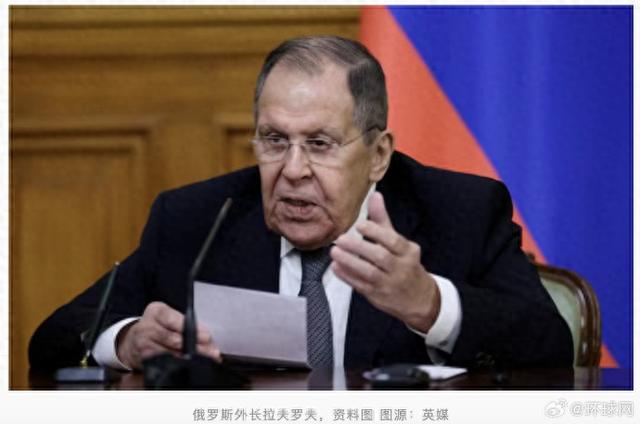
拉夫罗夫警告日本:在做任何草率决定前都应“慎重考虑”
Huan Qiu Wang· 2025-12-28 03:18
Group 1 - Russia's Foreign Minister Lavrov clearly stated that Russia opposes any form of "Taiwan independence" and recognizes Taiwan as an inseparable part of China [1][3] - Lavrov emphasized that the Taiwan issue is an internal matter for China, asserting that Beijing has sufficient legal basis to defend its national sovereignty and territorial integrity [3] - Lavrov reiterated Russia's consistent stance on the Taiwan issue, which has been confirmed at the highest levels multiple times [3] Group 2 - Lavrov expressed concerns about Japan's accelerated militarization, advising Tokyo to carefully consider any rash decisions that could negatively impact regional stability [3] - He urged Japanese authorities to fully acknowledge the outcomes of World War II, including the Japanese surrender document, as integral to the post-war world order [3] - Lavrov indicated that Russia will continue to collaborate with like-minded countries to reveal new evidence regarding Japan's wartime crimes from the 1930s and 1940s [3]
俄学者:军国主义抬头,日本军事扩张趋势已酝酿多年丨世界观
Zhong Guo Xin Wen Wang· 2025-12-17 12:43
Group 1 - The core viewpoint of the article highlights international criticism towards Japanese Prime Minister Sanae Takaichi's recent remarks regarding Taiwan, indicating a growing concern over Japan's militarization driven by the United States as a strategic tool against China [1] - Russian scholar Vladimir Nelidov emphasizes that Japan's military path has been ongoing for a long time, with the U.S. being the primary force behind this militarization [1] - Nelidov points out Japan's economic vulnerability and heavy reliance on China in trade, suggesting that Japan is unlikely to take aggressive actions regarding Taiwan, viewing Takaichi's statements as symbolic gestures aimed at the domestic audience [1]
扎哈罗娃:俄方始终坚持台湾问题是中国内政
Yang Shi Xin Wen Ke Hu Duan· 2025-11-20 23:41
Group 1 - Russia's Foreign Ministry spokesperson Zakharova stated that Russia recognizes Taiwan as an inseparable part of China's territory and opposes any form of "Taiwan independence," emphasizing that the Taiwan issue is an internal matter for China [1] - Russia expresses its willingness to continue providing firm support for China's sovereignty and territorial integrity [1] Group 2 - Zakharova indicated that Russia is closely monitoring Japan's actions in the defense sector, noting that Japan's current moves clearly indicate a path towards accelerated militarization [1] - The spokesperson warned Japan to learn from historical lessons to avoid repeating the mistakes of 1945 and urged adherence to the peace clause still effective in Japan's constitution [1]
俄罗斯驻日本大使尼古拉·诺兹德列夫:日本军事化可能对俄罗斯的安全构成挑战。
news flash· 2025-05-05 03:42
Core Viewpoint - The Russian ambassador to Japan, Nikolai Nozdrilev, expressed concerns that Japan's militarization could pose a security challenge to Russia [1] Group 1 - The statement highlights the potential implications of Japan's military developments on regional security dynamics [1]
俄罗斯驻日本大使尼古拉·诺兹德列夫表示,日本军事化可能对俄罗斯的安全构成挑战。
news flash· 2025-05-05 03:40
Group 1 - The Russian ambassador to Japan, Nikolai N. Nozdryov, expressed concerns that Japan's militarization could pose a security challenge to Russia [1]